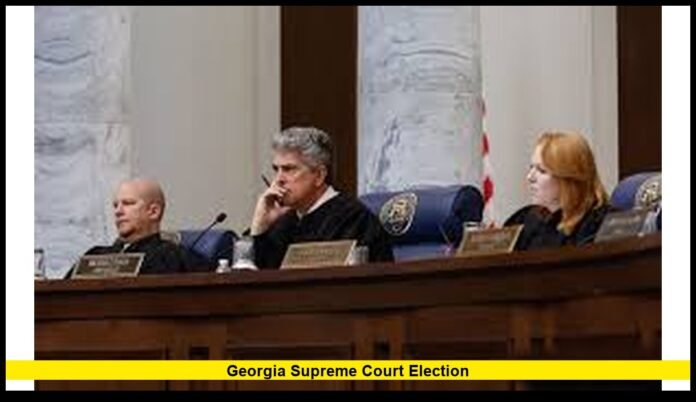

The georgia supreme court election is drawing major statewide and national attention as voters decide critical judicial races that could shape Georgia law and constitutional rulings for years to come.
Georgia residents are voting in several important Supreme Court contests during the 2026 election cycle, including highly watched races involving incumbent justices and challengers with strong political backing. Although the contests are technically nonpartisan, the campaigns have become deeply connected to larger debates surrounding voting laws, abortion rights, constitutional interpretation, and judicial independence.
Interest in the races has increased sharply during recent months as political groups, legal organizations, and voters recognize how much influence state supreme courts now hold in American politics. In Georgia, that attention has transformed what was once a low-profile judicial election into one of the state’s most important statewide contests.
Why the Georgia Supreme Court Matters
The Supreme Court of Georgia serves as the highest court in the state. Its decisions affect public policy, constitutional law, criminal justice, and election procedures across Georgia.
The court reviews major legal disputes involving:
- State constitutional issues
- Election laws
- Criminal appeals
- Civil rights claims
- Abortion restrictions
- Government authority
- Business disputes
- Public policy challenges
Because Georgia remains one of America’s most competitive battleground states, many legal battles eventually reach the state’s highest court. That reality has increased public focus on who serves on the bench.
The court also plays a major role in interpreting state laws passed by the Georgia legislature. Those decisions can influence voting access, government powers, and individual rights for millions of residents.
Three Supreme Court Seats Head to Voters
This year’s election includes three Georgia Supreme Court seats.
Two of the races have become especially competitive because challengers are attempting to unseat incumbent justices with years of judicial experience.
Justice Charlie Bethel Faces Miracle Rankin
Justice Charlie Bethel is seeking reelection to remain on the Georgia Supreme Court.
Bethel previously served in the Georgia Senate before moving into the judiciary. Supporters describe him as an experienced conservative jurist focused on constitutional interpretation and legal consistency.
His challenger, Miracle Rankin, is a Georgia attorney who has built her campaign around judicial fairness, public trust, and access to justice.
Rankin’s candidacy has attracted attention from progressive activists and organizations seeking change within the state judiciary. Her campaign has emphasized the importance of judicial accountability and equal treatment under the law.
The race has generated significant public discussion because both candidates present very different perspectives on the future direction of the court.
Bethel’s supporters argue stability and experience remain essential for the state’s highest judicial body.
Rankin’s campaign, meanwhile, has focused on voter engagement and broader public participation in judicial elections.
Justice Sarah Warren Defends Her Seat
Another closely watched contest involves Justice Sarah Warren and challenger Jen Jordan.
Warren currently serves on the Georgia Supreme Court after previously holding leadership roles in state government and the judiciary. Her campaign has emphasized legal experience and judicial restraint.
Jen Jordan, a former Georgia state senator, entered the race with strong name recognition from previous statewide campaigns.
Jordan’s supporters believe the court needs broader perspectives and stronger protections involving constitutional rights and public accountability.
The contest has received intense political attention because of larger statewide debates involving reproductive rights, election laws, and government authority.
Campaign advertisements, public appearances, and voter outreach efforts increased dramatically during the final weeks before Election Day.
Justice Ben Land Runs Without Opposition
Justice Ben Land is also on the ballot this year.
Unlike the other two contests, Land’s race remains uncontested after no challenger officially qualified for the election.
As a result, Land is expected to retain his seat on the court without difficulty.
Even so, his position remains important because every justice contributes to the court’s overall ideological balance and legal direction.
How Georgia Supreme Court Elections Work
Many voters are unfamiliar with how judicial elections operate in Georgia.
The state elects Supreme Court justices through statewide nonpartisan elections. Candidates do not run with official Republican or Democratic labels on the ballot.
However, political endorsements and ideological alignments still play a large role in campaigns.
Key Election Facts
| Category | Information |
|---|---|
| Court | Supreme Court of Georgia |
| Election Type | Nonpartisan statewide election |
| Term Length | Six years |
| Seats on Ballot | Three |
| Majority Needed | More than 50% |
| Runoff Possible | Yes |
Georgia voters can participate in these judicial races regardless of which party primary they choose during statewide elections.
That system allows Supreme Court contests to reach a broad range of voters across the state.
Why State Supreme Courts Are Under a National Spotlight
State supreme courts have become increasingly important across the United States.
Major legal disputes tied to abortion access, voting rules, district maps, executive authority, and constitutional rights now frequently reach state courts instead of federal courts.
Because of that shift, judicial races attract more money, media coverage, and political organizing than in previous decades.
Georgia stands at the center of that trend.
Political groups on both sides understand that Supreme Court justices can influence state law for many years after election season ends.
The growing attention surrounding judicial races reflects how voters now view courts as major decision-making institutions rather than distant legal bodies.
Abortion Rights Debate Influences the Campaign
One of the biggest issues surrounding the election involves abortion policy in Georgia.
The state’s abortion laws remain politically and legally significant following major national legal changes during recent years.
Candidates have discussed constitutional protections, personal freedoms, and judicial interpretation throughout the campaign season.
Conservative supporters argue judges should strictly interpret laws passed by elected lawmakers.
Progressive organizations have argued courts must also protect constitutional rights and equal legal treatment.
Although judicial candidates traditionally avoid discussing controversial legal matters directly, modern campaigns increasingly involve broader policy debates.
That shift has made the races more visible to voters statewide.
Campaign Spending Reaches Record Levels
Fundraising in the Georgia Supreme Court races has climbed sharply compared with previous election cycles.
Political organizations, legal groups, and advocacy networks invested heavily in advertising and voter outreach during the final months of the campaign.
Television commercials, digital campaigns, direct mail pieces, and social media advertisements appeared across Georgia as candidates fought for voter attention.
The growing financial investment highlights how valuable state judicial seats have become politically.
Observers note that judicial races once operated quietly with limited public interest.
Today, statewide Supreme Court contests often resemble competitive races for governor or attorney general.
Judicial Independence Becomes a Major Theme
Many voters and legal experts have raised concerns about maintaining judicial independence amid rising political involvement.
Candidates repeatedly discussed whether courts should remain fully separate from political pressure and partisan influence.
Supporters of incumbent justices argue experienced judges help preserve legal stability and protect the integrity of the court system.
Challengers have argued voters deserve transparency and accountability from judicial candidates.
The debate reflects a broader national conversation about the role courts should play in politically divided states.
Voter Turnout Could Decide the Outcome
Turnout patterns may determine the winners in these statewide races.
Judicial elections historically attract lower participation than gubernatorial or presidential contests. However, this year’s increased attention could bring far more voters into the process.
Metro Atlanta counties may play an especially important role because suburban areas continue shaping statewide election outcomes in Georgia.
Early voting participation has already shown strong interest in statewide contests.
Political strategists from both sides spent months encouraging voters to pay attention to races that many residents previously ignored.
Read More – When Is the Next Presidential Election After Trump
Georgia’s Political Transformation Adds Pressure
Georgia’s political landscape has changed dramatically during the last decade.
The state evolved from a reliable Republican stronghold into one of the nation’s most competitive battlegrounds.
Recent elections for president, governor, and U.S. Senate revealed how closely divided the electorate has become.
That transformation increased the importance of every statewide race, including judicial contests.
Supreme Court elections now carry political and legal consequences far beyond the courtroom.
Ethics Complaints Intensify Public Attention
The final weeks of campaigning brought additional controversy to the election.
Complaints involving campaign conduct and judicial ethics increased tensions between supporters of the candidates.
The disputes centered on whether judicial candidates should discuss issues that may eventually come before the court.
Supporters of the challengers criticized the complaints as politically motivated attacks.
Backers of incumbent justices argued judicial candidates must avoid statements that could compromise impartiality.
The controversy generated additional media coverage and public discussion throughout Georgia.
Governor Brian Kemp’s Influence Remains Strong
Governor Brian Kemp continues to hold major influence within Georgia politics.
Several conservative political organizations connected to Kemp’s allies supported incumbent judicial candidates during the campaign.
Progressive groups responded with aggressive voter mobilization efforts and statewide organizing campaigns.
The election therefore became tied to broader political battles involving Georgia’s future direction.
Although judicial races remain officially nonpartisan, many voters view the contests through a political lens.
The Court’s Future Direction Is at Stake
The current Georgia Supreme Court is widely viewed as conservative in its judicial philosophy.
If challengers succeed in winning seats, the court’s approach to major legal questions could evolve over time.
Even a single seat change may influence future rulings involving close constitutional disputes.
Legal experts expect the court to handle major cases involving:
- Election administration
- Voting access
- Redistricting disputes
- Criminal sentencing
- Executive branch authority
- Abortion law challenges
- Constitutional interpretation
Those future decisions could affect both Georgia residents and national political debates.
Public Awareness of Judicial Elections Continues Growing
One of the biggest changes during this election cycle involves voter awareness.
In previous years, many residents paid little attention to judicial races appearing lower on statewide ballots.
This year looks very different.
Candidates held public forums, participated in interviews, launched digital campaigns, and increased direct voter outreach efforts.
Social media also helped increase awareness among younger voters who historically participated less in judicial elections.
Political observers believe this shift may permanently change how Georgia voters approach future court races.
How Judicial Elections Affect Everyday Life
Many legal experts say voters often underestimate how much influence state supreme courts hold.
Court decisions can affect:
- Access to voting
- Criminal justice policies
- Public education funding
- Healthcare regulations
- Business operations
- Constitutional protections
- State election procedures
Because of that authority, Supreme Court elections now receive much closer public attention than before.
For many Georgia residents, the election represents more than a legal contest. It reflects competing visions for the future of the state.
Georgia Joins a National Trend
Georgia is not alone in experiencing heightened judicial election activity.
States across the country have seen growing political involvement in supreme court contests during recent years.
Wisconsin, Pennsylvania, North Carolina, and Ohio all experienced expensive and highly visible judicial races.
Georgia now stands among the most closely watched examples of this national trend.
Political organizations increasingly see state courts as long-term opportunities to shape legal outcomes and constitutional interpretation.
What Makes This Election Different
Several factors make the 2026 Georgia Supreme Court contests especially significant:
- High-profile challengers
- Increased campaign spending
- National political attention
- Strong voter interest
- Debates over abortion rights
- Concerns about judicial independence
- Growing turnout expectations
Longtime political observers say judicial elections in Georgia have never received this level of sustained statewide attention.
That visibility reflects how important courts have become in shaping public policy across the United States.
Potential Long-Term Impact on Georgia Politics
The results of these races may influence Georgia politics for many years.
Supreme Court justices serve long terms, meaning their decisions can affect multiple election cycles and legislative battles.
Future disputes involving voting laws, constitutional rights, and government authority could eventually reach the court.
Because of that reality, political groups continue investing heavily in judicial races even after campaign season ends.
The outcome may also shape how future judicial candidates campaign, raise money, and communicate with voters.
Judicial Campaigns Continue Evolving
Modern judicial campaigns now look very different from those of past decades.
Candidates increasingly rely on digital outreach, television advertising, and organized political networks to build statewide recognition.
Public interest groups also spend more money educating voters about court races.
As a result, judicial elections have become more visible and more competitive.
Georgia’s 2026 contests may become a model for how future judicial campaigns operate nationwide.
Voters Hold the Final Decision
Ultimately, Georgia voters will determine who serves on the state’s highest court.
The election represents an important moment for the judiciary, state politics, and public trust in legal institutions.
With major legal issues likely to reach the court in coming years, the justices chosen during this election cycle could influence Georgia law far into the future.
Public attention surrounding the races demonstrates how deeply judicial decisions now affect everyday life across the state.
What are your thoughts on the growing importance of judicial elections in Georgia? Share your opinion and follow the latest developments as election results continue coming in.