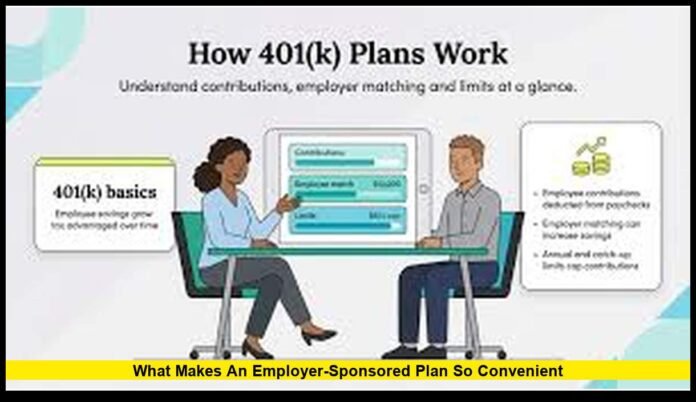

What makes an employer-sponsored plan so convenient? In 2026, millions of American workers continue choosing workplace retirement plans because they offer automatic payroll deductions, employer matching contributions, tax advantages, and easier long-term financial planning. As retirement costs rise across the United States, these plans remain one of the simplest and most effective ways for employees to build future savings without changing their daily routines.
Retirement planning has become a bigger priority for households dealing with inflation, healthcare expenses, and economic uncertainty. Employers across the country are responding by improving workplace retirement benefits through automatic enrollment, expanded Roth options, student loan matching programs, and digital financial tools. These updates are helping workers save more consistently while making retirement accounts easier to manage.
For many employees, convenience plays a major role in financial decision-making. When savings happen automatically through payroll systems, workers often contribute more regularly and stay invested longer. That structure continues to make employer-sponsored plans one of the strongest financial benefits available in the American workplace.
Why Workplace Retirement Plans Continue to Grow
Employer-sponsored retirement plans remain central to financial planning in the United States because they combine automation with long-term investment opportunities.
Most workplace plans allow employees to contribute directly from each paycheck before spending the money elsewhere. This process creates a disciplined savings habit that many workers find easier than manually transferring funds into personal investment accounts.
Several types of employer-sponsored plans are widely used across the country:
- 401(k) plans
- 403(b) plans
- Government-sponsored 457 plans
- SIMPLE IRA plans
- SEP IRA plans
Among these options, the 401(k) remains the most common retirement account offered by private employers.
In recent years, employers have focused heavily on improving employee participation rates. New retirement law changes are encouraging businesses to make enrollment easier while helping workers increase contributions over time.
Automatic Enrollment Is Becoming Standard
One of the biggest reasons employees find workplace plans convenient is automatic enrollment.
Many employers now enroll workers in retirement plans shortly after hiring them. Employees can still adjust contribution percentages or opt out completely, but automatic enrollment removes the burden of taking the first step.
This system has increased retirement participation significantly, especially among younger employees who might otherwise delay saving for years.
Automatic enrollment typically works like this:
| Feature | How It Works |
|---|---|
| Initial enrollment | Employees join automatically |
| Default contribution | Usually between 3% and 10% |
| Annual increases | Contribution rates may rise gradually |
| Employee control | Workers can change or stop contributions |
Financial experts have long argued that automatic systems improve retirement outcomes because workers tend to stay enrolled once contributions begin.
For employees balancing housing costs, insurance premiums, childcare, and student loans, automated retirement saving reduces the stress of monthly financial planning.
Payroll Deductions Simplify Long-Term Saving
Another major advantage involves payroll deductions.
Instead of requiring employees to transfer money manually every month, employer-sponsored plans deduct retirement contributions automatically from wages.
This creates several practical benefits:
- Consistent retirement contributions
- Reduced temptation to spend savings
- Easier monthly budgeting
- Faster account growth over time
- Better financial discipline
Many employees describe payroll deductions as “set-it-and-forget-it” retirement saving.
Because the contributions occur before money reaches checking accounts, workers often adapt naturally to slightly smaller paychecks while steadily increasing retirement balances.
That convenience becomes especially valuable during periods of economic pressure.
Employer Matching Contributions Increase Retirement Savings
Employer matching remains one of the strongest features of workplace retirement plans.
When employers match employee contributions, workers receive additional retirement money simply for participating in the plan.
Common matching structures include:
- Dollar-for-dollar matching up to a certain percentage
- Partial matching contributions
- Annual profit-sharing contributions
- Fixed company retirement deposits
For example, an employer may match 100% of the first 4% of employee contributions. If a worker contributes 4% of salary, the employer contributes the same amount.
That extra money can significantly increase long-term retirement savings.
Workers who fail to contribute enough to receive the full employer match may lose one of the most valuable financial benefits available through their jobs.
As labor competition increases in many industries, employers continue using retirement matches to attract and retain workers.
Tax Benefits Continue to Drive Participation
Employer-sponsored retirement plans remain attractive because they provide tax advantages that regular savings accounts usually do not offer.
Traditional 401(k) contributions generally lower taxable income during the contribution year.
For example:
| Annual Salary | Retirement Contribution | Possible Taxable Income |
|—|—|
| $90,000 | $9,000 | $81,000 |
This structure helps workers reduce current tax burdens while building retirement savings.
Roth workplace plans offer a different benefit. Employees contribute after-tax income, but qualified withdrawals during retirement can be tax-free.
More employers now offer both traditional and Roth options, giving workers greater flexibility based on income level, retirement goals, and future tax expectations.
Higher Contribution Limits Are Helping Older Workers
Retirement contribution limits increased again in 2026, allowing workers to save larger amounts annually.
Current contribution limits include:
| Contribution Category | 2026 Limit |
|---|---|
| Standard employee contribution | $24,500 |
| Catch-up contribution age 50+ | $8,000 |
| Enhanced catch-up age 60–63 | $11,250 |
These higher limits help Americans accelerate retirement savings later in their careers.
Workers nearing retirement often increase contributions aggressively to prepare for healthcare costs, housing expenses, and longer life expectancy.
The enhanced catch-up provision for workers between ages 60 and 63 has become especially important for employees who lost savings during inflationary periods or market downturns.
Roth Catch-Up Changes Are Reshaping Retirement Planning
A major retirement update taking effect in 2026 affects higher-income workers making catch-up contributions.
Employees aged 50 or older who earned more than $150,000 in prior-year FICA wages generally must make catch-up contributions using Roth accounts instead of pretax traditional accounts.
This change affects retirement tax planning for many upper-income households.
Workers now need to evaluate:
- Current tax rates
- Expected retirement income
- Future withdrawal strategies
- Long-term tax exposure
Employers and retirement providers have spent much of the past year updating payroll systems and plan administration processes to comply with the new rules.
Student Loan Matching Programs Are Expanding
Student loan debt continues affecting retirement participation among younger Americans.
To address this issue, more employers are adopting student loan matching programs tied to workplace retirement accounts.
Under these programs, employers can contribute retirement matches based on qualifying student loan payments even if employees are not contributing directly to retirement accounts.
This feature helps workers balance two major financial priorities:
- Paying down education debt
- Saving for retirement
Without these programs, many younger employees missed years of employer matching contributions while focusing on student loans.
The newer matching structure allows workers to continue building retirement savings during debt repayment years.
Digital Retirement Platforms Are Improving Accessibility
Technology has changed how employees interact with retirement accounts.
Modern workplace retirement systems now provide:
- Mobile account access
- Real-time balance tracking
- Automated retirement calculators
- Investment allocation tools
- Personalized savings projections
- Educational dashboards
Employees can often adjust contribution percentages within minutes using smartphone apps or online portals.
This accessibility has made retirement planning less intimidating for younger workers entering the workforce.
Many platforms also include educational content explaining investment diversification, retirement income planning, and contribution strategies in simpler language.
Portability Helps Workers Keep Retirement Savings
American workers now change jobs more frequently than previous generations.
Because of this trend, retirement portability has become increasingly important.
Most employees can move retirement savings when switching jobs through:
- Direct rollovers
- IRA transfers
- New employer plan rollovers
- Consolidated retirement accounts
Automatic portability services are also becoming more common.
These systems help prevent workers from losing track of small retirement balances left behind after changing employers.
Retirement account consolidation can simplify long-term financial planning and reduce administrative confusion later in life.
Small Businesses Are Offering More Retirement Benefits
Retirement access historically varied widely between large corporations and small businesses.
That gap is beginning to narrow.
Federal incentives introduced through retirement legislation now help smaller employers launch workplace retirement plans more affordably.
Eligible small businesses may receive financial incentives tied to:
- Startup costs
- Administrative fees
- Employer contribution expenses
As a result, more employees working for small companies now have access to retirement plans that previously existed mainly at larger corporations.
This expansion matters because millions of American workers still lack consistent retirement coverage.
Part-Time Employees Are Gaining More Access
Long-term part-time employees are also benefiting from retirement law changes.
Historically, many part-time workers struggled to qualify for workplace retirement programs because of minimum hour requirements.
Recent changes expanded eligibility standards, allowing more workers to participate in employer-sponsored plans after meeting service requirements.
Industries likely to see the largest impact include:
- Retail
- Hospitality
- Healthcare
- Food service
- Seasonal employment sectors
Expanded retirement access could help reduce long-term savings gaps among lower-income workers.
Read More – 2026 IRS 401(k) Contribution Limits
Emergency Savings Features Are Becoming More Common
Many Americans struggle balancing retirement saving with unexpected expenses.
Employers are responding by adding emergency savings features connected to workplace plans.
Some newer retirement systems now allow:
- Limited emergency withdrawals
- Linked emergency savings accounts
- Penalty-free hardship distributions under certain conditions
These options aim to help workers manage short-term financial emergencies without abandoning retirement goals completely.
Employees increasingly want financial systems that support both long-term security and immediate flexibility.
Paper Statements Are Returning for Some Retirement Accounts
While digital retirement management continues growing, paper statements are making a partial comeback.
Some retirement plans must now provide periodic paper account statements unless employees opt out.
Supporters believe printed statements may help workers stay more engaged with retirement planning.
Paper records can also reduce the risk of forgotten accounts after job changes or extended inactivity.
This update reflects broader concerns about retirement awareness across the country.
Why Younger Workers Are Paying More Attention to Retirement Plans
Younger employees once focused heavily on salary alone when evaluating job offers.
Today, retirement benefits have become a larger factor in employment decisions.
Several issues are driving this shift:
- Rising housing costs
- Concerns about Social Security
- Healthcare inflation
- Economic uncertainty
- Longer life expectancy
Many younger workers now understand the importance of starting retirement contributions earlier.
Even modest monthly investments can grow substantially over several decades through compounded returns.
Automatic enrollment systems have helped many first-time workers begin retirement saving without feeling overwhelmed by investment decisions.
Employer-Sponsored Plans Compared With Personal Savings Accounts
Employer-sponsored retirement plans often provide advantages that traditional savings accounts cannot match.
| Employer-Sponsored Plan | Standard Savings Account |
|---|---|
| Employer matching possible | No employer contributions |
| Tax benefits available | Limited tax benefits |
| Long-term investment growth | Lower average returns |
| Automatic payroll deductions | Manual saving required |
| Higher annual contribution limits | Lower savings flexibility |
This combination of automation, tax efficiency, and employer support explains why workplace retirement plans remain one of the most effective savings tools available to American workers.
Retirement Readiness Remains a National Concern
Despite stronger workplace retirement programs, retirement readiness remains a major issue across the United States.
Many households still have limited retirement savings.
Financial pressures affecting retirement preparation include:
- Credit card debt
- Student loans
- Inflation
- Housing affordability
- Medical expenses
Federal and state retirement initiatives continue expanding in response to these challenges.
Several states now operate automatic IRA programs for workers whose employers do not provide retirement plans.
These programs aim to increase retirement participation among underserved workers and smaller businesses.
The Future of Employer-Sponsored Retirement Plans
Workplace retirement systems continue evolving rapidly.
Employers increasingly view retirement benefits as a critical part of compensation packages. Workers now expect financial wellness tools alongside traditional salaries and healthcare coverage.
Future workplace retirement trends may include:
- More automated enrollment systems
- Personalized investment recommendations
- AI-powered financial planning tools
- Expanded emergency savings programs
- Faster account portability
- Greater Roth account adoption
Convenience remains the driving force behind many of these changes.
When retirement saving becomes easier, participation rates often increase. Employees are more likely to stay consistent when contributions happen automatically and accounts remain simple to manage.
That reality explains why employer-sponsored retirement plans continue playing a major role in American financial planning.
For millions of workers, these plans offer a practical path toward long-term financial stability while reducing the complexity of retirement saving.
As retirement planning becomes more important for households across the country, employer-sponsored plans continue helping workers save consistently, build wealth gradually, and prepare more confidently for the future.
FAQ
What makes an employer-sponsored plan so convenient?
Employer-sponsored plans are convenient because retirement contributions are deducted automatically from paychecks. Many plans also include employer matching and tax advantages.
What is automatic enrollment in a retirement plan?
Automatic enrollment allows employers to place eligible workers into retirement plans automatically unless they choose to opt out.
What is an employer match?
An employer match is a retirement contribution made by a company when employees contribute to their workplace retirement accounts.
Can part-time workers join employer-sponsored plans?
Many long-term part-time workers now qualify for workplace retirement plans under updated retirement rules.
What is a Roth 401(k)?
A Roth 401(k) allows employees to contribute after-tax income, with qualified retirement withdrawals generally remaining tax-free.
Disclaimer
This article is for informational purposes only and should not be considered financial, investment, tax, or legal advice. Retirement laws and contribution limits may change over time. Readers should consult qualified financial professionals or retirement plan administrators before making financial decisions.