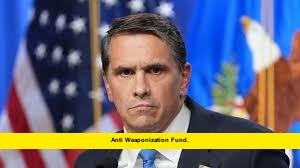

The growing debate around the anti weaponization fund intensified this week as Acting Attorney General Todd Blanche appeared before a Senate Appropriations subcommittee to defend the Justice Department’s controversial new initiative. The proposed $1.8 billion program has quickly become one of the most politically charged issues in Washington, triggering fierce arguments over government accountability, taxpayer funding, and the future role of the Department of Justice.
Lawmakers questioned Blanche for hours about how the fund would operate, who could receive compensation, and whether individuals connected to politically sensitive investigations — including January 6 defendants — could qualify for payouts. The hearing highlighted the widening divide between Republicans who argue the federal government has been weaponized for political purposes and Democrats who claim the initiative represents a dangerous misuse of public money.
What Is the Anti Weaponization Fund?
The anti weaponization fund is a newly announced Justice Department compensation program valued at approximately $1.776 billion. According to administration officials, the fund was designed to provide financial relief or formal apologies to individuals who believe they were unfairly targeted by federal investigations or prosecutions motivated by politics or ideology.
The fund emerged as part of a settlement tied to a lawsuit involving leaked tax return information connected to President Donald Trump and his family. Administration officials insist the program is lawful and intended to restore trust in federal institutions. Critics, however, argue the initiative lacks precedent and raises constitutional concerns.
The Justice Department has stated that applications for compensation would be reviewed by a commission overseen by the attorney general’s office. Blanche repeatedly emphasized during testimony that eligibility would not be restricted by political affiliation.
Todd Blanche Defends the Program
During the Senate oversight hearing, Blanche defended the anti weaponization fund as a mechanism for Americans to seek redress if they believe government agencies acted improperly against them.
Blanche argued that concerns over political targeting are not limited to one political party and claimed the process would be handled independently through commissioners responsible for reviewing applications. He also maintained that the initiative is not without precedent, comparing it to previous federal compensation programs established under earlier administrations.
The hearing marked Blanche’s first major congressional appearance since assuming leadership responsibilities at the Justice Department. Senators pressed him repeatedly about transparency, oversight standards, and the legal authority behind the initiative.
Blanche insisted that the commission would establish guidelines designed to ensure fairness and prevent abuse. Still, he declined to rule out certain controversial applicants from being considered.
January 6 Questions Dominate the Hearing
One of the most contentious moments occurred when senators asked whether people convicted in connection with the January 6 Capitol riot could potentially receive compensation through the anti weaponization fund.
Blanche responded that anyone who believes they were unfairly targeted could apply, while stressing that commissioners would ultimately decide eligibility standards. His refusal to explicitly exclude violent offenders sparked immediate backlash from Democratic lawmakers.
Several senators argued that compensating individuals convicted of assaulting police officers or participating in the Capitol attack would undermine public trust in the Justice Department. Critics characterized the possibility as politically explosive and ethically indefensible.
Supporters of the administration, however, countered that the fund’s purpose is to examine claims of selective prosecution and government misconduct rather than automatically reward criminal behavior.
The exchange quickly became one of the most discussed moments from the hearing, dominating political coverage throughout the day.
Critics Call the Fund a “Slush Fund”
Opponents of the anti weaponization fund used especially sharp language during the hearing, accusing the administration of creating what some described as a taxpayer-funded political reward system.
Democratic lawmakers argued that the initiative could potentially benefit political allies, donors, or individuals tied to controversial investigations involving Trump-era prosecutions. Several senators questioned whether enough independent oversight exists to prevent favoritism.
Some legal analysts have also raised concerns about how the program was established and whether Congress should have a larger role in approving or monitoring its structure.
Republican reactions have been mixed. While many conservatives support investigations into alleged government overreach, some GOP lawmakers have also expressed uncertainty about the need for such a large compensation program.
Questions surrounding transparency and eligibility standards remain unresolved, and critics are already discussing possible legal challenges.
Supporters Say Government Accountability Matters
Despite the controversy, supporters of the anti weaponization fund argue that it addresses legitimate public frustration about politically motivated investigations and unequal treatment under federal law.
Conservative lawmakers and administration allies have pointed to past investigations involving Trump associates, media leaks, and prosecutorial decisions they believe demonstrate bias within federal institutions.
They argue that Americans deserve a process to seek accountability when government agencies misuse investigative powers or pursue politically motivated actions.
Backers also emphasize Blanche’s statements that the program would theoretically remain open to applicants regardless of ideology, meaning individuals from across the political spectrum could attempt to seek compensation.
For supporters, the broader issue is not simply financial restitution but restoring confidence in the fairness of the Justice Department and federal law enforcement agencies.
Oversight Concerns Continue to Grow
One of the largest unresolved issues involves how the anti weaponization fund will actually operate in practice.
According to current plans, a five-member commission would review claims and determine who qualifies for compensation or formal apologies. Blanche would reportedly appoint most of the commissioners, which has fueled criticism from lawmakers worried about political influence.
Questions also remain about:
- How applicants will prove political targeting
- Whether criminal convictions automatically disqualify someone
- What standards commissioners will use
- How payouts would be calculated
- Whether records and decisions would become public
Legal experts say the answers to these questions will likely determine whether the program survives future court challenges and congressional scrutiny.
Transparency advocates are already demanding public reporting requirements and stronger oversight mechanisms before the fund becomes fully operational.
The Political Impact Could Last for Years
The anti weaponization fund is likely to remain a major political flashpoint heading into future congressional battles over federal spending and Justice Department authority.
The controversy touches on broader national debates surrounding law enforcement independence, executive power, prosecutorial discretion, and political retaliation.
For Democrats, the program symbolizes what they describe as the dangerous politicization of federal institutions. For supporters of the administration, it represents a long-overdue response to perceived abuses of government power.
The hearing also underscored how deeply divided lawmakers remain over the legacy of investigations connected to Trump, January 6 prosecutions, and allegations of politically motivated law enforcement decisions.
As more details emerge, pressure is expected to increase on the Justice Department to clarify eligibility rules and disclose how taxpayer funds would ultimately be distributed.
Why the Anti Weaponization Fund Is Becoming a National Issue
The rapid national attention surrounding the anti weaponization fund reflects growing public concern over fairness, accountability, and political influence inside federal agencies.
Whether the initiative ultimately survives legal and political scrutiny may depend on how transparently the administration handles implementation and whether bipartisan confidence in the process can be restored.
For now, Todd Blanche’s testimony has only intensified the debate, ensuring that the fund will remain under heavy scrutiny from lawmakers, legal experts, and the public alike.
What do you think about the anti weaponization fund and the growing debate around DOJ oversight? Share your thoughts and stay tuned for more updates on this developing political story.