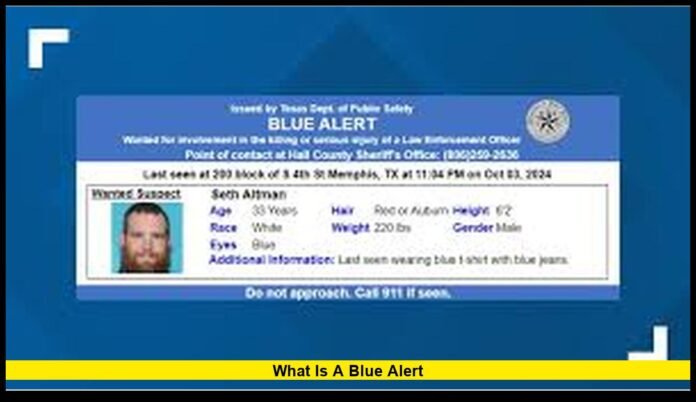

What is a Blue Alert? This question often trends across the United States whenever emergency notifications appear on mobile phones, television screens, radio broadcasts, or highway message boards. As of June 2026, Blue Alerts remain an important public safety tool designed to help law enforcement agencies quickly locate suspects accused of killing, seriously injuring, or threatening police officers. The system allows authorities to distribute critical information to the public within minutes of a qualifying incident.
Many Americans are familiar with AMBER Alerts because of their role in child abduction cases. Blue Alerts serve a different purpose. They focus on incidents involving attacks against law enforcement personnel and help investigators gather information that could lead to the arrest of dangerous suspects. Understanding how the system works can help people respond appropriately when a notification appears on their devices.
Understanding the Purpose of a Blue Alert
A Blue Alert is a specialized emergency notification system created to assist law enforcement agencies during critical investigations involving attacks on police officers.
The alert is activated when authorities determine that public assistance could help identify, locate, or apprehend a suspect who poses a serious threat. The goal is to spread information rapidly across a wide area so that citizens, businesses, transportation officials, and neighboring law enforcement agencies can remain vigilant.
Unlike general crime bulletins, Blue Alerts use emergency communication systems that can reach millions of people almost instantly. This speed is considered essential during the early stages of an investigation.
How the Blue Alert Program Began
The Blue Alert concept emerged after lawmakers and law enforcement leaders sought better ways to respond to violent attacks on officers.
The success of AMBER Alerts demonstrated how emergency communication networks could mobilize the public and increase awareness within minutes. Public safety officials believed a similar system could improve officer safety and support investigations involving dangerous suspects.
Federal legislation signed in 2015 established the National Blue Alert Network. The program encouraged states to develop compatible alert systems and improve coordination between jurisdictions.
Today, many states participate in the network and maintain their own procedures for issuing alerts.
What Situations Qualify for a Blue Alert?
States use slightly different criteria, but most follow similar standards.
A Blue Alert may be issued when:
- A law enforcement officer is killed while performing official duties.
- A law enforcement officer suffers serious bodily injury in the line of duty.
- An officer is missing under circumstances connected to official duties.
- Authorities identify a suspect who presents a serious and ongoing threat to law enforcement personnel.
- Investigators have enough descriptive information to make public assistance useful.
Not every assault on an officer results in a Blue Alert. Officials typically evaluate the seriousness of the incident, the risk posed by the suspect, and whether releasing information publicly could aid the investigation.
How a Blue Alert Is Activated
The activation process is designed to ensure alerts are reserved for significant public safety situations.
When a qualifying incident occurs, investigators gather available information about the suspect and circumstances of the case. The agency handling the investigation then submits a request through established state procedures.
Authorized officials review the request before activation. Once approved, the information is distributed through multiple communication channels.
This review process helps maintain the credibility and effectiveness of the alert system.
How Blue Alerts Reach the Public
One reason Blue Alerts receive significant attention is their ability to appear on mobile devices with a distinctive emergency notification tone.
Authorities can distribute alerts through:
- Wireless Emergency Alerts on smartphones
- Television emergency broadcasts
- Radio interruption systems
- Digital highway signs
- State emergency management platforms
- Government communication networks
- Social media accounts
- Public safety websites
The combination of these methods allows information to spread quickly across large geographic areas.
What Information Is Included in a Blue Alert?
The information included in an alert depends on what investigators know at the time.
A Blue Alert may contain:
| Alert Component | Typical Details |
|---|---|
| Suspect Information | Name, age, physical description |
| Vehicle Information | Make, model, color, license plate |
| Incident Location | City, county, or region |
| Public Safety Warning | Threat information |
| Contact Details | Law enforcement tip lines |
Officials focus on details that could help citizens recognize the suspect or identify relevant information.
In many cases, alerts are updated when investigators receive new leads.
Why Blue Alerts Are Important
Law enforcement investigations often move quickly after a serious attack on an officer.
The first few hours can be critical. A suspect may travel across county lines, move into another state, or attempt to avoid detection. Public awareness can increase the chances that someone recognizes a vehicle, spots a suspect, or provides information that leads investigators in the right direction.
Blue Alerts also strengthen cooperation between local, state, and federal agencies.
By sharing information rapidly, agencies can coordinate resources and respond more effectively.
The Role of the Public
The public plays an important role in the effectiveness of Blue Alerts.
Citizens who receive notifications may notice a vehicle matching the description or observe suspicious activity related to the alert.
However, law enforcement officials strongly advise against direct intervention.
People should never attempt to stop, confront, or follow a suspect. Instead, they should contact authorities through the phone numbers or reporting channels listed in the alert.
This approach protects public safety while still allowing citizens to contribute valuable information.
How Blue Alerts Differ From Other Emergency Notifications
The United States uses several alert systems designed for specific emergencies.
Each serves a unique purpose.
Blue Alert
Used when a suspect has killed, seriously injured, or threatened a law enforcement officer.
AMBER Alert
Used during child abduction cases when authorities believe a child faces serious danger.
Silver Alert
Used to locate missing older adults or individuals with cognitive impairments.
Ashanti Alert
Used for missing adults who do not qualify for AMBER or Silver Alert criteria.
Emergency Weather Alerts
Used for tornadoes, hurricanes, floods, and other hazardous weather conditions.
Because each alert category serves a different mission, activation standards vary considerably.
Can Blue Alerts Be Sent Across State Lines?
Yes.
The National Blue Alert Network was designed to improve communication beyond local jurisdictions.
If investigators believe a suspect has crossed into another state, authorities can share information with neighboring jurisdictions. This coordination helps agencies track suspects who attempt to flee long distances.
Interstate cooperation has become increasingly important because modern transportation allows suspects to travel quickly after a crime.
How Geographic Targeting Works
Modern emergency alert systems allow authorities to target notifications more precisely than in the past.
Instead of sending alerts nationwide, officials often focus on areas where a suspect is believed to be located.
A Blue Alert may be distributed to:
- A single city
- Multiple counties
- A large metropolitan area
- An entire state
- Several neighboring states
The targeted area depends on investigative information available at the time.
This approach aims to provide relevant information while reducing unnecessary notifications.
Technology Behind the Blue Alert System
The technology supporting Blue Alerts has evolved significantly.
Modern emergency communication networks integrate multiple platforms that work together to deliver information quickly.
Key technologies include:
- Wireless Emergency Alert infrastructure
- Emergency Alert System broadcasts
- Digital transportation displays
- Public safety communication platforms
- Geographic targeting software
- State emergency management systems
These systems allow authorities to issue notifications within minutes rather than hours.
Rapid communication often improves investigative efficiency and public awareness.
Why People Often Search for Blue Alerts
Search interest in Blue Alerts usually increases after a notification is sent to large numbers of mobile phones.
Recipients frequently want answers to several common questions:
- Why did I receive this alert?
- Is there danger near me?
- Who decides when alerts are sent?
- What should I do after receiving one?
- Why was my area included?
These questions are understandable because Blue Alerts can arrive unexpectedly and often involve serious criminal investigations.
Understanding the purpose of the system helps reduce confusion and improve public response.
What Should You Do When You Receive a Blue Alert?
The most effective response is to review the information carefully and remain observant.
Recommended actions include:
- Read the alert completely.
- Note any suspect or vehicle descriptions.
- Stay aware of your surroundings.
- Avoid spreading inaccurate information.
- Report credible sightings to authorities.
- Follow instructions provided in the notification.
Most importantly, citizens should prioritize personal safety.
Law enforcement officers receive specialized training for encounters with dangerous suspects. Members of the public should leave apprehension efforts to trained professionals.
Common Misconceptions About Blue Alerts
Several misconceptions often appear after high-profile alerts.
A Blue Alert Means Immediate Danger Everywhere
Not necessarily.
Many alerts are issued because authorities want assistance locating a suspect. The notification does not automatically mean the threat is present in every area that receives it.
Every Attack on an Officer Triggers a Blue Alert
False.
Officials review incidents carefully before deciding whether they meet established criteria.
Blue Alerts Are the Same as AMBER Alerts
No.
The systems serve entirely different purposes and follow separate activation standards.
Citizens Should Search for the Suspect
No.
Authorities encourage observation and reporting, not direct involvement.
Understanding these distinctions helps people respond appropriately.
How Blue Alerts Support Officer Safety
Law enforcement agencies view Blue Alerts as one part of a broader officer safety strategy.
The system helps:
- Increase public awareness
- Improve suspect identification
- Enhance interstate communication
- Accelerate information sharing
- Support investigative efforts
When dangerous suspects remain at large, rapid communication can make a meaningful difference.
The Future of Blue Alert Notifications
Emergency communication technology continues to improve.
Public safety agencies are exploring ways to make alerts more precise, timely, and effective. Geographic targeting capabilities continue advancing, allowing notifications to reach the most relevant audiences.
Officials also continue refining coordination between states, emergency management agencies, and law enforcement organizations.
These improvements aim to strengthen public safety while ensuring alerts remain useful and actionable.
Why Blue Alerts Continue to Matter
Blue Alerts have become an established part of America’s emergency notification system. They provide a fast and organized method for sharing critical information when law enforcement officers are attacked and suspects remain at large.
The system combines technology, public awareness, and interagency cooperation to support investigations during high-risk situations. While most people will encounter Blue Alerts only occasionally, the program remains an important tool for helping authorities respond to serious threats and protect communities across the country.
Have you received a Blue Alert recently? Share your thoughts and stay informed about important public safety notifications affecting your community.