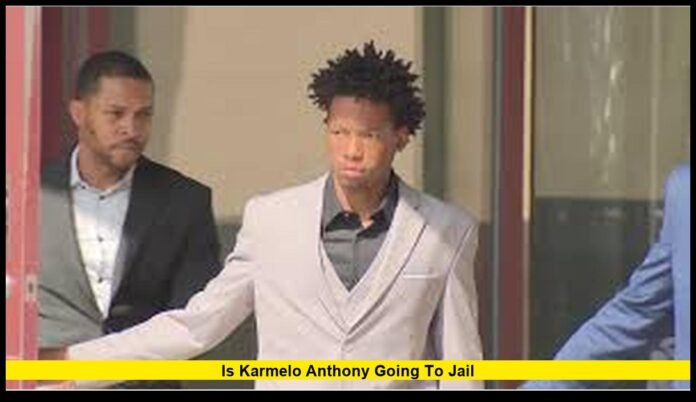

Is Karmelo Anthony going to jail? That remains one of the most frequently asked questions surrounding the high-profile Texas murder trial that has captured national attention. As of June 2026, Karmelo Anthony has not been convicted, sentenced, or sent to prison. The legal process is still unfolding, and a jury must determine whether he is criminally responsible for the death of Austin Metcalf during a confrontation at a high school track meet in Frisco, Texas.
The case has generated widespread discussion across the United States because it involves two teenagers, a fatal incident at a school athletic event, and a legal defense centered on self-defense. With courtroom proceedings continuing and public interest remaining high, many people are seeking clear and factual information about Anthony’s current legal status and whether a prison sentence is possible.
Karmelo Anthony Sentenced to 35 Years
In a major development in the high-profile Texas track meet stabbing case, Karmelo Anthony has been sentenced to 35 years in prison for the killing of Austin Metcalf. The verdict and sentencing conclude a case that has drawn widespread public attention since the deadly incident occurred during a school sporting event in Frisco.
Prosecutors argued that Anthony’s actions led to the fatal stabbing of Metcalf following a confrontation between the two teenagers. Throughout the trial, jurors reviewed surveillance footage, heard testimony from eyewitnesses, and examined forensic evidence presented by medical experts.
The defense contended that Anthony acted in self-defense, but the jury ultimately rejected that argument and found him guilty. The 35-year sentence represents a significant milestone in the case, bringing a measure of closure to a tragedy that deeply affected students, families, and the broader community.
Why Is Karmelo Anthony Facing a Murder Charge?
Karmelo Anthony is facing a murder charge in connection with the death of Austin Metcalf following an incident that occurred on April 2, 2025, during a high school track and field meet at Kuykendall Stadium in Frisco, Texas.
According to investigators, the incident began as a disagreement between Anthony and Metcalf during the sporting event. Authorities allege that the confrontation escalated into a physical altercation, during which Metcalf sustained a stab wound to the chest. Emergency medical personnel responded quickly and attempted lifesaving measures at the scene before Metcalf was transported for further treatment. Despite those efforts, he later died from his injuries.
Following the incident, officers from the Frisco Police Department launched an immediate investigation, interviewing witnesses, collecting evidence, and reviewing details surrounding the confrontation. Based on the findings of that investigation, prosecutors moved forward with a murder charge against Anthony.
The case has attracted significant public attention across Texas and beyond due to the ages of those involved, the circumstances surrounding the incident, and the legal questions that have emerged during the proceedings. As the criminal case continues through the court system, prosecutors and defense attorneys are expected to present evidence and arguments addressing what occurred, while the court determines Anthony’s legal responsibility under Texas law.
Current Answer to the Question: Is Karmelo Anthony Going to Jail?
As of June 2026, the answer is still not known.
Karmelo Anthony has not been convicted, has not been sentenced, and has not been ordered to serve a prison term. Under the American legal system, he remains presumed innocent unless and until a jury finds him guilty beyond a reasonable doubt. The ongoing trial is designed to determine whether prosecutors have met that burden of proof.
Latest Developments in the Case
The murder trial is currently in its final stages in Collin County, Texas. Testimony has concluded after several days of witnesses, evidence presentations, and arguments from both the prosecution and defense. Closing arguments were scheduled following the end of testimony, bringing the case closer to jury deliberations and a verdict.
Anthony has pleaded not guilty and maintains that he acted in self-defense during the confrontation that resulted in Austin Metcalf’s death. His defense team argues that he feared for his safety during the encounter. Prosecutors, however, contend that the use of deadly force was not justified and have asked jurors to convict him of murder.
One of the most closely watched developments came when the defense rested its case without Anthony testifying in his own defense. Legal analysts noted that this could affect how jurors evaluate his self-defense claim, although the decision not to testify cannot legally be used as evidence of guilt.
What Happens Next?
Several outcomes remain possible:
- The jury could find Anthony not guilty.
- The jury could convict him of murder.
- The jury could convict him of a lesser included offense, depending on the instructions provided by the judge.
- Jurors could fail to reach a unanimous verdict, resulting in a mistrial.
If Anthony is ultimately convicted of murder, Texas law allows for a significant prison sentence, potentially ranging from several years to life imprisonment depending on the conviction and sentencing determination.
How the Case Reached National Headlines
While many criminal cases remain local stories, the case involving Karmelo Anthony quickly gained national attention due to the tragic circumstances surrounding the incident and the broader issues it raised.
The confrontation occurred during a high school track and field event, a setting generally associated with student competition and community support rather than violence. The death of Austin Metcalf shocked students, parents, educators, and sports communities across the country. As details emerged, the story spread rapidly through television broadcasts, online news outlets, and social media platforms, drawing widespread public interest.
Attention intensified because the incident took place in a public setting with numerous witnesses present. Questions about what occurred before, during, and after the confrontation fueled intense discussion online and in traditional media. Court filings, witness testimony, and legal arguments were closely followed by people both inside and outside Texas.
The case also became part of larger national conversations involving:
- School and event security
- Youth violence and conflict resolution
- Self-defense claims in criminal cases
- The role of eyewitness testimony
- Criminal justice procedures and due process
- Online fundraising campaigns connected to high-profile cases
- The influence of social media on public opinion and legal proceedings
As the legal process unfolded, supporters and critics on both sides voiced strong opinions, further increasing public attention. The combination of a fatal incident involving teenagers, competing legal narratives, and extensive online discussion transformed the case from a local tragedy into one of the most closely watched criminal proceedings in the United States. Even as the trial moves toward a verdict, the case continues to generate debate about accountability, justice, and the impact of social media on high-profile legal matters.
What Prosecutors Must Prove
In any murder trial, the burden of proof rests entirely with the prosecution. This fundamental principle of the American legal system requires prosecutors to establish a defendant’s guilt beyond a reasonable doubt—the highest standard of proof used in courts.
In the case against Karmelo Anthony, prosecutors must convince jurors that the evidence presented during the trial supports the allegation that he unlawfully and intentionally caused Austin Metcalf’s death during the April 2025 confrontation. To do so, the state has relied on witness testimony, physical evidence, investigative findings, and expert analysis introduced throughout the proceedings.
Jurors are tasked with carefully reviewing all evidence presented in court. This includes evaluating the credibility of witnesses, examining forensic evidence, considering expert opinions, and assessing the arguments made by both the prosecution and defense. Their responsibility is not to determine what might have happened, but whether the evidence proves the charge beyond a reasonable doubt.
A major focus of the trial has been the defense’s claim that Anthony acted in self-defense. Prosecutors have sought to challenge that argument by presenting evidence intended to show that the use of deadly force was not legally justified under the circumstances. The defense, meanwhile, has argued that Anthony reasonably feared for his safety during the confrontation.
Importantly, the filing of criminal charges does not establish guilt. An arrest, indictment, or prosecution simply initiates the legal process. To secure a conviction, prosecutors must persuade the number of jurors required under Texas law that the evidence satisfies the legal standard for guilt. If they fail to do so, the jury must return a not-guilty verdict, regardless of the seriousness of the allegations.
Ultimately, the outcome depends on how jurors interpret the evidence and whether they conclude that the prosecution has met its burden of proof beyond a reasonable doubt.
The Defense Strategy
A central element of Karmelo Anthony’s defense has been the claim that he acted in self-defense during the confrontation that led to Austin Metcalf’s death. Throughout the trial, Anthony’s attorneys have argued that the events unfolded in a way that caused their client to believe he was facing an immediate threat, making his actions legally justified under the circumstances.
Rather than carrying the burden of proving Anthony’s innocence, the defense’s primary objective is to challenge the prosecution’s version of events and create reasonable doubt in the minds of jurors. Under the American legal system, a defendant is presumed innocent, and it is the state’s responsibility to prove guilt beyond a reasonable doubt. If jurors are left with significant uncertainty about what occurred or whether Anthony’s actions were legally justified, they may be required to return a not-guilty verdict.
Self-defense claims often become the defining issue in cases involving violent confrontations because they require jurors to examine not only what happened, but also what the defendant reasonably believed at the time. As a result, much of the trial has focused on the crucial moments leading up to the stabbing, including witness accounts, physical evidence, and the actions of everyone involved during the encounter.
Defense attorneys have sought to highlight facts and testimony that support their argument that Anthony perceived a threat and reacted accordingly. Prosecutors, meanwhile, have worked to convince jurors that the use of deadly force was not legally justified. Ultimately, the jury must determine whether the prosecution has successfully disproved the self-defense claim and established criminal responsibility beyond a reasonable doubt.
The outcome may depend on how jurors interpret the evidence surrounding those critical seconds before the fatal injury occurred and whether they believe Anthony’s actions met the legal standards for self-defense under Texas law.
What Jurors Have Heard in Court
As the trial continues, jurors have been presented with a wide range of evidence and testimony aimed at helping them determine exactly what happened during the fatal confrontation involving Karmelo Anthony and Austin Metcalf.
A significant portion of the proceedings has focused on witness accounts from individuals who attended the track meet where the incident occurred. Students, spectators, and others present at the scene have described their observations, offering varying perspectives on the moments leading up to the confrontation and the events that followed. Jurors have carefully listened to testimony regarding the interactions between the two teenagers before the stabbing took place.
In addition to eyewitness testimony, the jury has reviewed physical evidence gathered by investigators. Prosecutors and defense attorneys have used this evidence to support their competing narratives about the circumstances surrounding the incident.
Law enforcement officers who responded to the scene have also testified, explaining how the investigation unfolded, what evidence was collected, and what statements were obtained during the case. Their testimony has helped provide a timeline of events and details about the investigative process.
Medical experts have played a crucial role as well. They have explained the injuries suffered by Austin Metcalf, discussed the cause of death, and provided professional analysis of the medical findings.
Together, these testimonies and pieces of evidence form the foundation of the case that jurors must evaluate before reaching a verdict.
The Importance of Witness Testimony
Witness testimony often becomes one of the most important forms of evidence presented during a criminal trial. In cases involving fast-moving and emotionally charged events, eyewitness accounts can help jurors understand what occurred before, during, and after a confrontation.
At the same time, courts recognize that witnesses do not always recall events in exactly the same way. People observing the same incident may have different perspectives based on where they were standing, what they were focusing on, and how quickly events unfolded. Stress, fear, and confusion can also influence how details are remembered.
Because of these factors, jurors are instructed to carefully evaluate the reliability of each witness. They consider whether a witness’s testimony remains consistent throughout questioning, whether the account matches other evidence presented in court, and whether the witness appears truthful and credible while testifying.
Attorneys for both sides often devote substantial effort to examining witness statements, highlighting details that support their arguments while challenging testimony they believe is inaccurate or incomplete. Physical evidence, video recordings, and expert testimony may also be used to confirm or contradict witness accounts.
Ultimately, the jury must determine which testimony it finds most credible. Their assessment of witness reliability and accuracy could play a crucial role in deciding the facts of the case and reaching a final verdict.
Medical Evidence in the Trial
Medical evidence has become an important part of the trial, providing jurors with scientific and factual information about the injuries sustained by Austin Metcalf and the circumstances surrounding his death. Unlike eyewitness testimony, which can vary based on perception and memory, medical findings are based on physical examinations, forensic analysis, and professional expertise.
During the proceedings, medical experts have explained the nature of Metcalf’s injuries, the cause of death, and the medical factors that contributed to the fatal outcome. Their testimony helps jurors better understand the physical consequences of the confrontation and the severity of the injuries involved.
Medical evidence can also assist in establishing a timeline of events. By analyzing the injuries and related forensic findings, experts may provide information that helps clarify questions about how the incident unfolded. This can be especially valuable when witness accounts differ or when certain details remain disputed.
Attorneys on both sides often rely on medical testimony to support their arguments. Prosecutors may use the evidence to explain the extent of the harm caused, while defense attorneys may examine expert conclusions and challenge interpretations when appropriate.
Although medical experts do not decide whether a defendant is guilty or innocent, their findings often play a crucial role in helping jurors evaluate the facts. As a result, medical evidence frequently becomes one of the most significant components of a homicide trial.
Why Anthony’s Decision Not to Testify Matters
One of the most closely watched moments of the trial was the decision by Karmelo Anthony and his legal team not to have him testify in court. While such a choice often generates public discussion, it is a well-established constitutional right within the American legal system.
Under the Fifth Amendment to the United States Constitution, a criminal defendant cannot be compelled to testify against himself. This protection allows defendants to remain silent throughout a trial if they choose. Judges routinely instruct jurors that a defendant’s decision not to testify must not be considered evidence of guilt and should not influence their verdict.
Despite these legal safeguards, the decision often attracts attention because many observers expect defendants to personally explain their actions or respond to allegations. Testifying can provide jurors with a firsthand account, but it also exposes a defendant to cross-examination by prosecutors, who may challenge statements and credibility.
By choosing not to testify, Anthony’s defense team placed its focus on the evidence presented through other witnesses, physical evidence, expert testimony, and legal arguments. The defense may have concluded that the existing evidence was sufficient to support its case without subjecting Anthony to questioning on the witness stand.
As a result, jurors must base their decision solely on the testimony, exhibits, and arguments introduced during the trial, while following the court’s instruction that Anthony’s silence cannot be used against him in determining the verdict.
Understanding Self-Defense Under Texas Law
Self-defense is one of the central issues jurors must consider in the trial. Under Texas law, individuals may be legally justified in using force to protect themselves if they reasonably believe it is immediately necessary to defend against another person’s unlawful use of force. However, whether a self-defense claim is valid depends entirely on the specific facts and circumstances of each case.
In evaluating the claim, jurors must carefully review all available evidence and testimony presented during the trial. They are tasked with determining what occurred before the confrontation, how the interaction between the individuals developed, and whether either person posed an immediate threat to the other.
Several key questions are likely to guide the jury’s deliberations. Jurors may consider what actions or statements preceded the incident, whether there was a genuine and imminent threat, how the confrontation escalated, and whether the force used was legally justified under the circumstances. They may also evaluate whether other options were available and whether the defendant’s perception of danger was reasonable at the time.
The prosecution and defense have presented competing interpretations of these events, making the jury’s assessment especially important. Ultimately, jurors must apply the law as instructed by the judge to the facts they find credible. Their conclusions regarding self-defense could become one of the most significant factors in determining whether the defendant is convicted or acquitted.
What Happens If Anthony Is Convicted?
If the jury returns a guilty verdict on the murder charge, the case will move into the sentencing stage.
At that point, the court would determine the appropriate punishment under Texas law.
Murder convictions can carry severe penalties, including lengthy prison sentences.
The specific punishment depends on numerous legal factors considered during sentencing proceedings.
A conviction would also result in a formal criminal record connected to the offense.
Because no verdict has been announced, sentencing remains a future possibility rather than a current reality.
What Happens If Anthony Is Acquitted?
An acquittal would mean jurors determined that prosecutors failed to prove guilt beyond a reasonable doubt.
If the jury returns a not-guilty verdict, Anthony would not face punishment for the charge being tried in this case.
An acquittal does not require jurors to agree on every detail of the evidence.
Instead, it reflects a conclusion that the legal standard required for conviction was not satisfied.
The criminal case would effectively come to an end following a not-guilty verdict.
What Is a Hung Jury?
Many people following the case focus only on guilty or not guilty outcomes.
However, another possibility exists.
A hung jury occurs when jurors cannot reach the level of agreement required by law.
When that happens, a judge may declare a mistrial.
Prosecutors would then evaluate whether they wish to pursue a new trial.
Although less common than verdicts, hung juries remain a possible outcome in complex criminal cases.
Why the Trial Has Drawn Such Strong Public Interest
Several elements have kept the public focused on the proceedings.
The ages of those involved have made the case particularly emotional.
Many people see the tragedy as a reminder of how quickly conflicts can escalate.
Others have followed the case because of the legal questions surrounding self-defense.
The extensive discussion on social media has also fueled continued interest.
As coverage increased, more people began searching for updates regarding Anthony’s legal status and potential future.
That is why searches asking whether Karmelo Anthony is going to jail continue to generate significant attention.
The Difference Between Being Charged and Being Convicted
One of the most important distinctions in the criminal justice system involves the difference between a charge and a conviction.
A criminal charge represents an allegation.
A conviction occurs only after legal proceedings establish guilt.
This distinction is essential because public attention can sometimes create confusion regarding a defendant’s status.
Anthony currently faces a murder charge.
Whether that charge results in a conviction remains for the jury to decide.
Until then, the legal process continues.
What Happens After Jury Deliberations Begin?
Once attorneys complete their presentations, jurors receive legal instructions from the court.
They then begin deliberations.
During deliberations, jurors review evidence and discuss the case privately.
They examine testimony, exhibits, legal definitions, and arguments presented during trial.
The process can take hours or even days depending on the complexity of the case.
Jurors must ultimately reach a decision consistent with the law and evidence presented in court.
Their verdict will answer the question that has attracted nationwide attention.
The Bottom Line on Karmelo Anthony’s Future
The question “is karmelo anthony going to jail” remains unanswered because the legal process has not concluded. Karmelo Anthony is currently standing trial on a murder charge connected to the death of Austin Metcalf at a Frisco track meet. No conviction has been entered, no sentence has been imposed, and no prison term has been ordered. The jury’s verdict will determine what happens next. Until that decision arrives, Anthony’s legal future remains uncertain, and the case continues to be one of the most closely watched criminal proceedings in Texas.
What are your thoughts on this case? Follow the latest developments and join the conversation as new courtroom updates emerge.