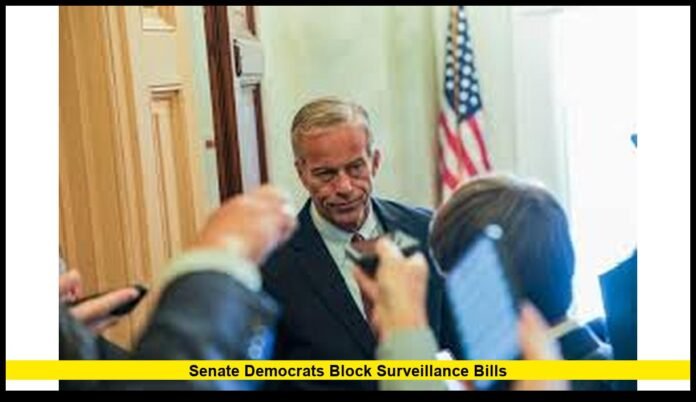

Senate Democrats block surveillance bills has become one of the most closely watched developments on Capitol Hill as lawmakers continue a fierce battle over federal intelligence authorities, privacy protections, and national security policy. The ongoing dispute centers on Section 702 of the Foreign Intelligence Surveillance Act, commonly known as FISA, a program that has shaped American intelligence operations for years and now faces intense scrutiny from lawmakers across the political spectrum.
The latest Senate action highlights growing divisions over how much surveillance power the federal government should have and what safeguards should exist to protect Americans’ constitutional rights. While intelligence officials continue to defend Section 702 as a vital security tool, opponents argue that reforms are necessary before Congress grants any further authority.
The result is a political and policy standoff that could influence surveillance law, intelligence oversight, and privacy protections for years to come.
Why the Surveillance Debate Matters
Few issues in Washington create as much tension between security and privacy as federal surveillance programs.
Supporters of surveillance authorities often point to the growing number of threats facing the United States. Terrorism, cyberattacks, foreign espionage operations, and hostile nation-state activities continue to challenge intelligence agencies responsible for protecting the country.
Critics acknowledge those threats but argue that security objectives should not come at the expense of civil liberties.
The current Senate dispute reflects this broader national debate. Lawmakers are attempting to determine where the balance should exist between effective intelligence gathering and protecting the rights of American citizens.
That question has become increasingly important as technology evolves and digital communications play a larger role in daily life.
What Is Section 702 of FISA?
Section 702 is a surveillance authority that allows U.S. intelligence agencies to collect communications involving non-U.S. persons located outside the United States.
Federal officials use the authority to gather foreign intelligence information that may relate to terrorism, cyber threats, espionage, military activities, and international security concerns.
Unlike traditional surveillance warrants, Section 702 does not require individual court approval for every foreign target.
Government officials argue that this flexibility helps intelligence agencies respond quickly to emerging threats around the world.
For years, national security leaders have described Section 702 as one of the most valuable intelligence tools available to the federal government.
Supporters maintain that the authority has helped disrupt terrorist plots, identify foreign hackers, locate hostile actors, and support military and diplomatic operations.
The program remains a major component of America’s intelligence framework.
Why Senate Democrats Opposed the Bills
The recent Senate confrontation developed because many Democratic lawmakers expressed concerns regarding surveillance oversight and privacy protections.
Several senators argued that surveillance authorities require stronger accountability measures before Congress considers renewal legislation.
Their concerns focus on how collected information is accessed, reviewed, and used by government agencies.
Some lawmakers have also questioned whether current safeguards adequately protect communications involving Americans.
Democrats supporting reform have repeatedly emphasized the need for stronger transparency measures and additional congressional oversight.
Many believe that surveillance programs should operate under tighter controls to prevent misuse and strengthen public confidence.
As negotiations continued, those concerns became significant obstacles to passing surveillance legislation.
A Rare Bipartisan Coalition Emerges
One of the most notable aspects of the debate is the unusual alliance that developed inside the Senate.
Although surveillance issues often divide lawmakers along party lines, the recent votes revealed a different political reality.
Several Republicans joined Democrats in opposing legislation related to Section 702.
These senators share concerns about government surveillance powers and constitutional protections.
The coalition brought together lawmakers with very different political views but similar concerns about privacy and government authority.
That partnership helped prevent legislation from advancing and demonstrated the growing influence of surveillance reform advocates in Congress.
The alliance also signaled that surveillance policy can no longer be viewed as a purely partisan issue.
Republican Leaders Push for Renewal
While some Republicans opposed the legislation, many Republican leaders strongly supported extending surveillance authorities.
Supporters argue that Section 702 remains essential because foreign threats continue to evolve rapidly.
National security officials frequently point to cyberattacks, foreign intelligence operations, and terrorism-related investigations as examples of why the authority remains necessary.
Proponents warn that weakening surveillance capabilities could reduce the government’s ability to identify and stop emerging threats.
They also argue that intelligence agencies operate under multiple layers of oversight and legal review.
For these lawmakers, preserving operational effectiveness remains the highest priority.
As a result, they continue advocating for renewal legislation despite resistance from reform-minded senators.
The Growing Focus on Privacy Rights
Privacy concerns have played a central role throughout the debate.
Many lawmakers believe technological advances have increased the importance of protecting personal communications.
Modern surveillance systems can collect large volumes of digital information, making oversight and accountability increasingly important.
Critics of current surveillance practices argue that Americans deserve stronger protections when their communications become part of government databases.
Several proposals have emerged that seek to address those concerns.
Common reform ideas include:
- Stronger warrant requirements
- Enhanced reporting obligations
- Increased transparency measures
- Additional congressional reviews
- Tighter limits on data access
- Improved auditing procedures
Supporters of these reforms argue that stronger privacy protections would improve public trust while preserving legitimate intelligence capabilities.
How Congress Reached This Point
The current dispute did not emerge overnight.
Congress has debated Section 702 for years.
Each reauthorization cycle has generated discussions about privacy, intelligence collection, and constitutional rights.
Lawmakers have repeatedly examined questions such as:
- How surveillance data is collected
- Who can access the information
- How long data should be retained
- What protections exist for Americans
- Whether reforms are needed
As concerns accumulated, support for major changes gradually increased.
The latest Senate action reflects years of frustration among lawmakers who believe surveillance authorities require additional safeguards.
Read More – United States Senate Enters Critical Election-Year Battle Over Security, Spending, and Economic Policy
Civil Liberties Advocates Increase Pressure
Outside Congress, privacy organizations and civil liberties advocates have continued pushing for surveillance reforms.
These groups argue that government powers should be narrowly tailored and subject to strong oversight.
Many advocates believe surveillance authorities have expanded significantly over the past two decades.
They contend that Congress should update existing laws to address modern technology and evolving privacy expectations.
Their efforts have helped shape public discussion and influence lawmakers from both parties.
As surveillance legislation moved through Congress, these organizations intensified calls for reform.
Their concerns have become an important part of the national conversation surrounding intelligence policy.
National Security Concerns Remain Front and Center
Despite criticism of surveillance programs, many lawmakers continue emphasizing the security benefits of Section 702.
Supporters point to numerous intelligence priorities that depend on foreign communications collection.
These priorities include:
Counterterrorism Operations
Intelligence agencies use foreign surveillance authorities to identify potential threats and monitor extremist networks.
Cybersecurity Protection
Federal officials rely on intelligence gathering to track cybercriminal groups and foreign hackers targeting American infrastructure.
Foreign Intelligence Collection
Surveillance programs provide insight into activities conducted by rival governments and hostile actors.
Military and Strategic Planning
Intelligence gathered under existing authorities supports military operations and broader national security objectives.
Supporters argue that these capabilities remain critical in a rapidly changing global environment.
The Constitutional Debate
The dispute surrounding surveillance legislation ultimately extends beyond policy details.
Many lawmakers view the issue through a constitutional lens.
Supporters of reform frequently reference Fourth Amendment protections against unreasonable searches and seizures.
They argue that surveillance laws should evolve in ways that preserve those protections.
Others maintain that existing oversight mechanisms already provide necessary safeguards while allowing intelligence agencies to fulfill their responsibilities.
This constitutional debate has become one of the most important aspects of the broader discussion.
It reflects competing views about government authority, privacy expectations, and national security obligations.
What Happens if Congress Cannot Reach an Agreement?
The possibility of legislative deadlock has generated significant attention in Washington.
If lawmakers fail to reach a compromise, surveillance authorities could face uncertainty.
Government officials warn that intelligence operations benefit from legal clarity and predictable authorization frameworks.
At the same time, reform advocates argue that congressional pressure is necessary to secure meaningful changes.
The ongoing negotiations demonstrate how difficult it can be to reconcile security objectives with privacy concerns.
Both sides continue advocating for their preferred outcomes, making a quick resolution difficult.
Key Issues Driving Future Negotiations
Several major questions are likely to shape future discussions.
Warrant Standards
Lawmakers remain divided over whether agencies should obtain warrants in additional circumstances.
Oversight Procedures
Congress continues examining whether current monitoring systems are sufficient.
Transparency Requirements
Many senators want more information regarding how surveillance authorities are used.
Privacy Safeguards
Additional protections for Americans remain a major focus of reform efforts.
Operational Flexibility
National security officials continue advocating for authorities that allow rapid responses to emerging threats.
The outcome of these discussions will influence future legislation.
The Political Impact in Washington
The surveillance battle has become more than a policy disagreement.
It now represents a broader political struggle involving trust in government institutions, intelligence oversight, and constitutional rights.
Lawmakers from both parties recognize the significance of the issue.
Many believe the decisions made during this debate will shape future intelligence policy long after the current legislative fight ends.
The controversy has also demonstrated the growing influence of lawmakers who prioritize privacy protections and government accountability.
Their ability to block legislation has altered the dynamics of congressional negotiations.
Why Americans Are Paying Attention
For many Americans, surveillance policy may seem like a distant issue discussed only inside Washington.
In reality, the debate touches on questions that affect everyday life.
People increasingly rely on digital communication, online services, cloud storage, and connected devices.
As technology becomes more integrated into society, concerns about privacy and government access to information become more relevant.
The Senate battle highlights those concerns.
It also illustrates the challenge lawmakers face when attempting to protect both national security and individual freedoms.
That balance remains one of the most difficult policy questions confronting Congress.
Current Status of the Senate Fight
As of June 2026, Senate Democrats continue opposing efforts to move certain surveillance legislation forward. Their resistance, combined with support from several Republican senators, has prevented key proposals from advancing.
Negotiations remain active, and lawmakers continue discussing potential compromises that could address both privacy concerns and national security needs.
No final legislative resolution has been reached.
The debate surrounding Section 702 and federal surveillance powers remains ongoing, ensuring that intelligence policy will continue to be a major issue on Capitol Hill in the months ahead.
The outcome could influence how the United States approaches surveillance, privacy rights, intelligence gathering, and government oversight well into the future.
As Congress continues debating the future of surveillance law, Americans across the political spectrum will be watching closely to see how lawmakers balance security needs with constitutional protections.