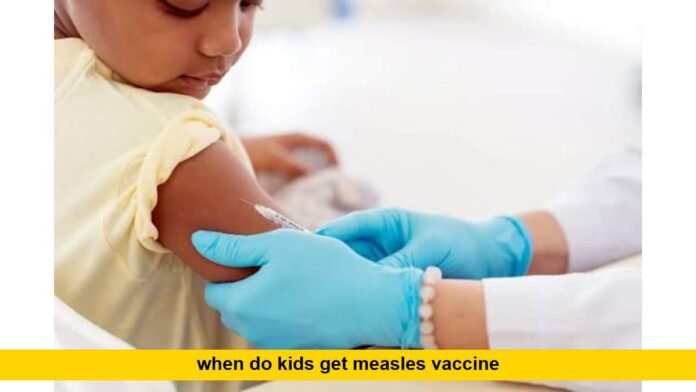

Measles remains a serious infectious disease that can spread rapidly among children who have not developed immunity. Understanding when do kids get measles vaccine is important for parents who want to protect their families, meet school immunization requirements, and reduce the risk of infection. In the United States, routine childhood protection begins during the second year of life, with another recommended dose before most children start elementary school.
The vaccine is commonly administered as the measles, mumps, and rubella (MMR) combination. It offers protection against three contagious viral illnesses and plays an important role in preventing outbreaks in schools, childcare centers, and communities.
As measles activity continues to receive attention across the country, parents are encouraged to review their children’s immunization records and discuss any missing doses with their healthcare providers.
Understanding the Childhood Measles Immunization Timeline
The standard childhood vaccination plan involves two MMR doses. Each serves a different purpose in establishing strong protection against infection.
The first injection is generally scheduled when a child reaches 12 to 15 months. The second is recommended between 4 and 6 years of age.
This timing allows children to develop immunity after infancy and strengthens protection before they enter environments where infectious diseases can spread more easily.
The recommended schedule is:
| Age | Vaccination recommendation |
|---|---|
| Before 6 months | Routine MMR vaccination is not recommended |
| 6–11 months | Early dose may be recommended for international travel or certain outbreak situations |
| 12–15 months | First routine MMR dose |
| 4–6 years | Second routine MMR dose |
| Older children | Catch-up vaccination if doses are missing |
The second dose does not always have to be delayed until kindergarten age. Healthcare professionals can recommend an earlier second injection when circumstances require it.
For a standard MMR catch-up series, the minimum interval between doses is 28 days.
Why Vaccination Before Kindergarten Matters
Children spend considerable time around other students, teachers, and caregivers once they begin attending school. These environments can allow contagious illnesses to spread quickly.
Measles is particularly concerning because an infected person can transmit the virus through the air. People without immunity can become infected after entering a space where an infected individual has recently been present.
Completing the recommended vaccination series helps reduce this risk.
The second MMR dose is especially valuable because not every child develops sufficient immunity following the initial injection. Giving another dose increases the likelihood of achieving reliable protection.
Vaccine effectiveness estimates show that:
- One MMR dose provides approximately 93% protection against measles.
- Two MMR doses provide approximately 97% protection.
Although vaccination cannot guarantee that infection will never occur, completing the series substantially reduces the likelihood of contracting measles.
Early Measles Protection for Babies Under 12 Months
Routine vaccination generally begins at 12 months, but certain situations call for earlier protection.
Infants between 6 and 11 months may receive an additional MMR dose before traveling internationally. Public health authorities may also recommend early vaccination when measles is spreading in a community and younger babies face increased exposure.
This early injection is considered an additional dose rather than a replacement for the standard childhood series.
Parents should understand the following schedule:
- First early dose between 6 and 11 months when indicated.
- First routine dose at 12–15 months.
- Second routine dose at 4–6 years.
An early vaccination may not produce the same level of lasting protection as doses administered after the first birthday. Maternal antibodies can interfere with the immune response in younger infants.
Babies younger than 6 months generally should not receive the MMR vaccine. Parents concerned about exposure should seek immediate medical advice.
International Travel Can Change the Recommended Schedule
Families planning international vacations should review childhood vaccination records well before departure.
Measles continues to circulate in several parts of the world, and international travel can introduce infections into communities where vaccination coverage is lower.
Children aged 6–11 months should receive one MMR dose before international travel. They must subsequently complete the regular two-dose series after turning 12 months.
Children aged 12 months or older who lack evidence of immunity should generally receive two MMR doses separated by at least 28 days before traveling.
Healthcare professionals generally recommend completing vaccination at least two weeks before departure to allow time for an immune response.
Even when a trip is approaching quickly, parents should contact a healthcare provider rather than automatically assuming vaccination is no longer worthwhile.
What If a Child Has Missed an MMR Appointment?
A missed appointment does not mean a child has lost the opportunity to become protected.
Catch-up vaccination is available for children who did not receive their injections at the recommended ages.
The appropriate plan depends on the child’s age, vaccination history, and medical circumstances.
For example, an unvaccinated school-age child may need two MMR doses separated by at least four weeks. A child who already received one valid dose may only need the remaining injection.
Parents should not restart the vaccination series simply because several months or years have passed between appointments.
If vaccination records are incomplete, a pediatrician or local health department can help determine what documentation or additional doses are necessary.
MMR and MMRV: Which Vaccine Do Children Receive?
Parents may encounter two options when arranging childhood immunization.
The MMR vaccine protects against measles, mumps, and rubella. The MMRV vaccine provides protection against those three illnesses along with varicella, commonly known as chickenpox.
Both options can be used in eligible children.
However, there are differences parents should discuss with their healthcare providers.
For the first vaccination in children aged 12–47 months, separate MMR and chickenpox injections are generally preferred because the combined MMRV vaccine has a slightly higher risk of fever-related seizures in this age group.
MMRV is licensed for children between 12 months and 12 years.
The appropriate choice depends on the child’s age, medical history, and parental preferences.
Recognizing Possible Side Effects
The MMR vaccine has a well-established safety record. Most children tolerate it without significant problems.
Some experience temporary reactions as their immune systems respond to the vaccine.
Possible side effects include:
- Mild fever.
- Soreness or swelling around the injection site.
- Temporary skin rash.
- Swollen glands.
- Occasional joint discomfort.
A mild fever or rash may appear several days after vaccination rather than immediately.
Serious allergic reactions are rare. Children with severe immune deficiencies or a history of serious allergic reactions to vaccine components may not be suitable candidates for MMR vaccination.
Parents should provide their healthcare providers with relevant medical information before an appointment.
What Parents Should Do After Possible Measles Exposure
A suspected measles exposure requires prompt attention, particularly when a child has not completed vaccination.
Parents should contact their healthcare provider or local public health department immediately. They should explain when the exposure occurred and provide information about the child’s vaccination history.
There are time-sensitive preventive options.
An eligible person may receive an MMR vaccine within 72 hours of initial exposure. This may prevent illness or reduce its severity.
Certain individuals at increased risk of serious complications may instead need immune globulin within six days of exposure.
These decisions depend on age, immune status, pregnancy status, and other medical considerations.
If a child develops a fever, cough, red eyes, or a spreading rash after possible exposure, parents should call before visiting a medical facility. This helps healthcare workers prevent exposure to other patients.
School Immunization Requirements and Family Records
School vaccination rules differ across states, but MMR documentation is an important enrollment requirement in much of the United States.
Parents may need to submit proof of completed vaccinations before kindergarten or when enrolling a child in a new school.
State rules also determine whether medical or other exemptions are available and how unvaccinated students are handled during outbreaks.
Families should maintain copies of official vaccination records rather than relying entirely on appointment reminders or verbal information.
Children’s pediatricians, state immunization information systems, and local health departments can help families retrieve missing documentation.
Frequently Asked Questions
Can a child receive the measles vaccine at 9 months?
Routine vaccination is not generally recommended at 9 months in the United States. Special circumstances may require an individualized medical assessment, but the standard early-dose recommendation for international travel and certain outbreaks begins at 6 months.
Does a child need another dose after receiving two MMR injections?
Most children do not routinely require another dose after completing the recommended two-dose series. Additional vaccination may be recommended for particular groups during certain outbreaks.
Can children get measles even after vaccination?
Yes, breakthrough infections are possible. However, two MMR doses provide approximately 97% protection against measles.
Is the measles vaccine free for children?
Eligible children may receive recommended vaccines at no cost through the federal Vaccines for Children program. Parents can ask participating healthcare providers or local health departments about eligibility.
Should parents delay vaccination when a child has a mild cold?
A mild illness, such as a common cold, generally does not require postponing MMR vaccination. However, healthcare professionals should evaluate moderate or severe illnesses and other medical circumstances.
Final Takeaway
Childhood measles prevention depends on timely immunization and accurate vaccination records. Most children should complete their first MMR vaccination at 12–15 months and receive another dose between 4 and 6 years.
International travel, community outbreaks, and missed appointments can create situations in which the usual timing needs adjustment. Parents who are uncertain about their child’s protection should consult a pediatrician rather than wait until an exposure occurs.
Maintaining recommended immunization coverage protects individual children while helping limit the spread of measles throughout American communities.