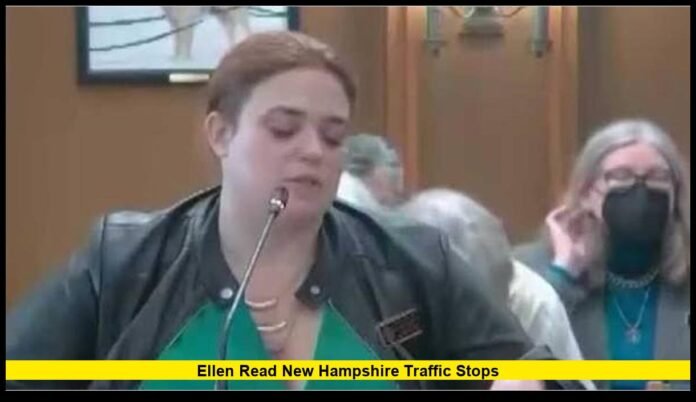

The Ellen Read New Hampshire traffic stop controversy has become one of the state’s most closely watched legal and political stories. What began as a pair of speeding stops on Interstate 93 has evolved into a constitutional dispute over the scope of legislative privilege, drawing attention from lawmakers, attorneys, and residents across New Hampshire. The case raises important questions about whether elected officials enjoy special legal protections while traveling to and from legislative sessions and how those protections should be interpreted in the modern era.
Although the courts have not yet issued a final ruling on every issue involved, the proceedings have already sparked debate over constitutional law, public accountability, and the responsibilities of elected representatives. Here is a comprehensive look at the events, the legal arguments, and where the case stands today.
Key Points Summary
╔════════════════════════════════════════════════════════════════════╗
║ – State Rep. Ellen Read faces legal proceedings stemming from two separate Interstate 93 traffic stops. ║
║ – Authorities allege she was driving well above the posted speed limit during both incidents. ║
║ – Read argues that New Hampshire’s Constitution protects legislators traveling to and from official legislative duties. ║
║ – The constitutional claim has generated statewide discussion about legislative privilege and equal application of the law. ║
║ – Court proceedings remain ongoing, making the case one of New Hampshire’s most closely followed legal disputes involving a sitting lawmaker. ║
╚════════════════════════════════════════════════════════════════════╝
Who Is Ellen Read?
Ellen Read serves as a Democratic member of the New Hampshire House of Representatives, representing the town of Newmarket. During her time in office, she has participated in legislative debates on a range of state issues and has developed a reputation for advancing constitutional arguments on matters involving government authority and civil rights.
Her public profile grew significantly after two separate traffic stops resulted in legal proceedings that have since become the subject of statewide attention. Rather than treating the incidents as routine traffic matters, Read has challenged the authority of law enforcement officers to stop her under specific constitutional provisions relating to members of the Legislature.
That legal strategy has transformed what might otherwise have been ordinary traffic cases into a broader constitutional debate.
How the Controversy Began
The controversy stems from two separate traffic stops that occurred months apart on Interstate 93, one of New Hampshire’s busiest highways.
According to prosecutors, the first incident occurred in December 2024, when deputies observed Read allegedly traveling at a speed significantly above the posted limit. She was stopped and later cited for the alleged violation.
Several months later, another traffic stop occurred after authorities again alleged that she exceeded the highway speed limit.
While the underlying allegations involve speeding, the focus of the public debate quickly shifted away from the traffic violations themselves and toward the constitutional arguments raised in court.
The First Traffic Stop
The first stop became the foundation for much of the legal battle.
Authorities allege that Read was traveling at approximately 107 miles per hour in a 65-mile-per-hour zone while driving on Interstate 93. Officers initiated a traffic stop and issued citations connected to the incident.
The case eventually proceeded through the court system, where Read challenged both the traffic stop and the authority of law enforcement officers to detain her.
The matter later resulted in a negligent driving finding, although additional legal issues surrounding sentencing and related proceedings have continued to receive attention.
Because the constitutional questions remain central to the dispute, the legal discussion has extended far beyond the original speeding allegation.
The Second Traffic Stop
The second incident occurred in June 2025.
Authorities allege that Read was again stopped while driving on Interstate 93 after being recorded at approximately 92 miles per hour in a 65-mile-per-hour zone.
Unlike many repeat speeding cases, this incident immediately attracted additional public interest because it occurred while litigation over the earlier traffic stop was still underway.
The second stop reinforced public scrutiny of both the factual allegations and the constitutional defense advanced by Read.
As legal proceedings continue, this second case remains an important part of the broader controversy.
The Constitutional Argument
At the center of the dispute is an interpretation of the New Hampshire Constitution that dates back hundreds of years.
Read argues that members of the Legislature receive constitutional protection from arrest or detention while traveling to, attending, or returning from legislative sessions.
Her legal filings contend that these protections are intended to prevent interference with the work of elected lawmakers. According to that interpretation, officers lacked authority to stop or detain her while she was traveling in connection with legislative responsibilities.
Because of that argument, Read has asked the courts to suppress evidence obtained during the traffic stops and to recognize broader constitutional protections for legislators.
The constitutional language involved originated long before automobiles or interstate highways existed. As a result, modern courts must determine how historical constitutional provisions should apply to present-day traffic enforcement.
That question has become one of the most discussed aspects of the litigation.
Why Legislative Privilege Exists
Legislative privilege has deep historical roots.
Many state constitutions and the U.S. Constitution include provisions intended to protect lawmakers from politically motivated arrests that could prevent them from participating in legislative sessions.
Historically, these protections were designed to preserve the independence of legislative bodies by ensuring that members could travel to the capitol without fear of arbitrary detention by political opponents.
The modern dispute, however, centers on whether those historical protections extend to routine traffic enforcement conducted for public safety rather than political purposes.
Supporters of a narrow interpretation argue that traffic stops differ fundamentally from the types of arrests the constitutional provision was originally intended to prevent.
Those favoring a broader reading contend that constitutional language should be applied as written unless amended.
The courts are now tasked with resolving those competing interpretations.
Public and Political Reaction
The case has generated strong reactions throughout New Hampshire.
Many residents believe elected officials should be held to exactly the same traffic laws as every other driver. Critics argue that allowing legislators to avoid routine traffic enforcement could undermine public confidence in government and create the appearance of unequal treatment.
Others emphasize that constitutional protections exist for a reason and should not be ignored simply because a case attracts media attention.
Several lawmakers from both major political parties have commented publicly on the controversy, with many expressing skepticism about the constitutional defense while acknowledging that courts—not politicians—must ultimately determine its validity.
The debate has extended beyond New Hampshire, with legal observers around the country discussing the implications for legislative privilege in other states.
The Court Proceedings
As the litigation progressed, Read sought review from the New Hampshire Supreme Court regarding the constitutional issues involved in her defense.
The state’s highest court declined to hear an early appeal, allowing the lower court proceedings to continue rather than issuing an immediate ruling on the constitutional questions.
Importantly, the decision not to hear the appeal did not determine whether Read’s interpretation of the Constitution is correct or incorrect. Instead, it meant that the existing court process would continue before higher courts consider additional issues if necessary.
That procedural decision became another significant milestone in the ongoing legal battle.
Why the Case Matters Beyond One Driver
The Ellen Read New Hampshire traffic stop case has attracted attention because it could influence how constitutional legislative protections are interpreted in the future.
If courts ultimately accept a broad interpretation of legislative privilege, the decision could affect how similar constitutional provisions are applied in future cases involving elected officials.
If courts reject the argument, the ruling could reinforce the principle that routine traffic enforcement generally falls outside historical legislative protections.
Either outcome has the potential to become an important legal precedent.
For that reason, constitutional scholars, attorneys, lawmakers, and public policy observers continue following developments closely.
Broader Questions Raised by the Case
The litigation raises several broader legal and public policy questions.
One issue concerns the balance between constitutional protections and public safety. Traffic laws exist to protect everyone using public roads, and excessive speeding presents significant risks to other motorists.
Another issue involves equal treatment under the law. Public confidence in government often depends on the belief that elected officials are subject to the same legal standards as ordinary citizens.
The dispute also highlights how courts interpret constitutional language written centuries ago when technology, transportation, and law enforcement practices differed dramatically from those of today.
Resolving these competing principles is one of the central challenges facing the courts.
Current Status
As of today, the legal proceedings remain active.
The negligent driving finding connected to the first incident remains part of the case history, while issues relating to sentencing and subsequent proceedings continue through the judicial process.
Meanwhile, the second speeding case has not yet reached its final resolution.
Because the constitutional questions have not been fully resolved, additional hearings and potential appeals remain possible.
Until the courts issue final decisions, the legal arguments surrounding legislative privilege are expected to remain at the center of public discussion.
Frequently Asked Questions
Why is Ellen Read’s case receiving so much attention?
The case combines routine traffic allegations with a constitutional argument that could influence how legislative privilege is interpreted in New Hampshire. That combination has made it far more significant than an ordinary speeding case.
What constitutional protection is Ellen Read relying on?
She argues that legislators are protected from arrest or detention while traveling to, attending, or returning from legislative sessions, and that the traffic stops violated those protections.
Has the New Hampshire Supreme Court ruled on the constitutional issue?
No. The court declined to hear an early appeal, meaning the legal proceedings continue through the normal judicial process without a final ruling on the constitutional questions.
Could the outcome affect future cases?
Yes. Depending on how the courts interpret legislative privilege, the decision could influence future cases involving lawmakers and constitutional protections while performing official duties.
Is the case finished?
No. Court proceedings are still ongoing, and additional rulings may shape both the traffic cases and the broader constitutional issues involved.
Final Thoughts
The Ellen Read case has evolved from a pair of alleged speeding incidents into a significant constitutional dispute with implications that extend well beyond one legislator. It highlights the continuing challenge of applying centuries-old constitutional language to modern legal questions while balancing public safety, governmental accountability, and the independence of elected representatives.
Whatever the final outcome, the courts’ decisions are likely to become an important reference point for future discussions about legislative privilege in New Hampshire. Until those rulings are issued, the case will remain one of the state’s most closely watched legal matters.
What are your thoughts on the constitutional questions raised in this case? Share your perspective in the comments and stay tuned for the latest updates as the legal proceedings continue.