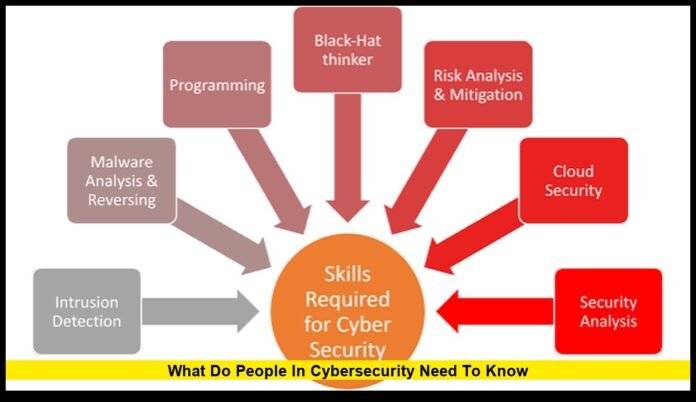

Cybersecurity professionals need to understand modern cyber threats, artificial intelligence (AI), network protection, cloud security, data privacy, and incident response. For anyone searching what do people in cybersecurity need to know, the answer includes both technical expertise and the ability to recognize risks, protect digital assets, and respond effectively to security incidents.
Cybersecurity plays a critical role in the United States as businesses, government agencies, healthcare organizations, financial institutions, and individuals depend on connected technologies. Digital systems store sensitive information and support essential operations, making them attractive targets for cybercriminals.
The threat landscape includes phishing, ransomware, stolen credentials, software vulnerabilities, and attacks against cloud environments. AI has also created new challenges by allowing criminals to produce convincing fraudulent messages and impersonate trusted individuals more easily.
Organizations must therefore combine preventive security controls with effective monitoring, employee awareness, and reliable recovery plans. Established cybersecurity frameworks provide practical guidance, but professionals must understand how to apply that guidance to their own environments.
Whether someone is beginning a cybersecurity career or already works in information technology, continuous learning remains essential. Strong technical foundations, critical thinking, ethical conduct, and clear communication can help professionals protect systems and reduce organizational risk.
1. The Latest Cybersecurity Trends Professionals Should Understand
Cybersecurity professionals must keep up with changing attack methods and defensive technologies. Understanding the current threat environment helps organizations prioritize security investments and prepare for potential incidents.
Artificial intelligence and cybercrime
AI can help criminals generate phishing messages, personalize fraudulent communications, imitate writing styles, and create synthetic audio or video. These capabilities can make social engineering attacks more convincing.
Professionals should understand that suspicious messages do not always contain spelling mistakes or unusual formatting. Attackers can produce polished communications that appear to come from executives, coworkers, suppliers, or service providers.
Security teams should emphasize identity verification and established approval procedures. Employees should independently verify unusual requests involving payments, passwords, confidential documents, or account changes.
Ransomware and data theft
Ransomware remains a major concern because successful attacks can interrupt operations, prevent access to files, and expose confidential information.
Some attackers combine file encryption with data theft. They may threaten to publish stolen information even if an organization can restore its systems from backups.
Organizations need secure backup arrangements, tested recovery procedures, network segmentation, endpoint protection, and timely software updates.
Cloud security and third-party risks
Businesses increasingly depend on cloud services, external software providers, and connected applications. A security weakness in one component can create risks for other systems that depend on it.
Cybersecurity professionals should understand vendor assessments, access restrictions, software inventories, cloud configuration reviews, and third-party incident response.
Continuous security improvement
Cybersecurity is not a one-time project. Organizations must regularly review their defenses, assess vulnerabilities, investigate incidents, and update their procedures.
Professionals should monitor credible security advisories and determine whether newly disclosed vulnerabilities affect their systems. They should prioritize practical defensive actions rather than relying on general awareness alone.
2. Essential Technical Skills in Cybersecurity
Technical knowledge helps professionals understand how systems work, identify weaknesses, and investigate suspicious activity. Although individual positions require different skills, several foundations are useful across the cybersecurity field.
Networking fundamentals
Networking is important because cyberattacks frequently involve communication between devices, servers, applications, and external systems.
Cybersecurity professionals should understand:
- TCP/IP and common networking protocols.
- DNS, DHCP, HTTP, and HTTPS.
- IP addresses, ports, routing, and subnetting.
- Firewalls, VPNs, and network segmentation.
- Network traffic analysis and intrusion detection.
- Internal networks and internet-facing services.
These concepts help analysts determine whether network activity appears legitimate or requires investigation.
For example, an unfamiliar connection might belong to a legitimate software update, an improperly configured application, or an attacker communicating with a compromised system. Understanding normal network behavior helps narrow down the possibilities.
Operating systems and endpoint security
Professionals should understand the operating systems used by their organizations, particularly Windows and Linux.
Important skills include reviewing logs, examining running processes, managing permissions, investigating account activity, and identifying unauthorized system changes.
Endpoint detection and response tools help organizations identify suspicious behavior across computers and servers. However, security analysts still need to understand the evidence these tools provide.
Attackers may also misuse legitimate administrative utilities. Security teams must examine how a tool was used, which account executed it, and whether the activity matches expected behavior.
Programming and scripting
Programming is not mandatory for every cybersecurity job, but basic scripting can improve efficiency.
Python is useful for processing logs, analyzing data, and automating repetitive tasks. PowerShell supports Windows administration and investigation, while Bash helps automate work in Linux environments.
Professionals should learn to read scripts, identify risky operations, and test automation before deploying it.
Automation must include appropriate safeguards. Incorrect scripts can disable legitimate accounts, change important settings, or interrupt business services.
Identity and access management
Identity security helps determine who can access systems, applications, and information.
Cybersecurity professionals should understand multi-factor authentication, single sign-on, role-based access control, privileged access management, and passwordless authentication.
They should also know how to manage service accounts and application identities.
Organizations should grant only the permissions necessary for each role. Regular access reviews help identify excessive privileges and remove accounts that no longer require access.
3. Artificial Intelligence and Cybersecurity Risks
AI is an increasingly important consideration in security planning. Professionals need to understand the ways attackers misuse AI and the risks that arise when organizations deploy AI applications.
AI-powered phishing
AI can generate realistic messages that imitate business communications and adapt to specific targets. Criminals may use publicly available information to make fraudulent requests appear more credible.
Employees should evaluate the request rather than relying solely on the message’s appearance.
Unexpected demands for money, credentials, confidential files, or urgent changes to business procedures should receive additional scrutiny.
Deepfake fraud
Synthetic audio and video can imitate familiar people. Criminals may use these techniques to impersonate executives, suppliers, or employees.
Organizations should establish independent verification procedures for high-risk activities. For example, employees should confirm unusual payment instructions through a previously trusted phone number or approved business process.
A familiar voice or realistic video should not serve as the sole proof of identity.
Protecting information in AI applications
Employees may enter confidential information into AI services without understanding how the provider processes or retains that information.
Organizations should define which AI tools employees may use and establish rules for sensitive data, account permissions, retention, and external processing.
Security professionals should assess whether applications receive customer records, proprietary source code, employee information, or confidential business documents.
Securing AI systems
AI applications can introduce risks involving unauthorized access, exposed information, manipulated inputs, and insecure connections to external services.
Organizations should test these applications according to their intended use and potential impact. They should also review the permissions granted to automated tools and ensure that sensitive actions require appropriate controls.
AI security should complement traditional protections such as authentication, encryption, access management, and secure software development.
4. Major Cyber Threats Every Professional Should Recognize
Understanding common attack methods helps security teams select appropriate controls and respond quickly when suspicious activity occurs.
Phishing and credential theft
Phishing attempts trick users into revealing passwords, opening malicious attachments, visiting fraudulent websites, or approving unauthorized requests.
Attackers may impersonate banks, government agencies, software providers, coworkers, or business partners.
Organizations can reduce exposure through email filtering, multi-factor authentication, security training, and straightforward reporting procedures.
Security teams should also monitor suspicious sign-ins, unfamiliar devices, unusual account changes, and unexpected authentication attempts.
Ransomware
Ransomware can disrupt operations by encrypting files or preventing access to essential systems. Some attackers also steal data and threaten to publish it.
Organizations should maintain secure backups, restrict administrative privileges, segment networks, monitor endpoints, and apply security updates promptly.
Recovery plans should receive regular testing. Businesses need to know whether they can restore critical applications and data within an acceptable period.
Software vulnerabilities
Attackers frequently look for weaknesses in unpatched applications, remote access systems, internet-facing services, and other exposed technologies.
Professionals should maintain an accurate asset inventory and identify vulnerabilities affecting their environments.
Remediation priorities should reflect active exploitation, exposure, business importance, and the availability of patches or temporary mitigations.
A vulnerability’s severity score provides useful context, but it should not be the only factor in deciding which issue to address first.
Business email compromise
Business email compromise involves fraudulent communications designed to persuade employees to transfer money, change payment details, or disclose confidential information.
Attackers may compromise legitimate accounts or impersonate executives and suppliers.
Organizations should independently verify changes to supplier banking information and separate payment approval from payment execution when appropriate.
Insider threats
Insider threats can result from malicious actions, careless behavior, compromised accounts, or misuse of authorized access.
Useful protections include access reviews, audit logs, least-privilege permissions, and separation of duties.
Security teams should evaluate evidence objectively and distinguish suspicious activity from confirmed misconduct.
5. Cloud Security and Remote Work
Cloud services allow organizations to store information, operate applications, and manage infrastructure without maintaining every underlying component themselves. However, cloud adoption does not eliminate security responsibilities.
The shared responsibility model helps explain which security tasks belong to the provider and which remain with the customer.
Important cloud security skills include:
- Managing cloud identities and access permissions.
- Protecting databases, storage services, and application interfaces.
- Securing passwords, encryption keys, and application secrets.
- Monitoring administrative activity and configuration changes.
- Understanding APIs, containers, and infrastructure as code.
- Reviewing cloud security configurations.
- Monitoring third-party integrations and exposed services.
Incorrect permissions can expose confidential information even when the underlying cloud infrastructure operates correctly.
Remote work also creates security challenges. Employees may use different devices, connect through home networks, and access company systems from outside traditional office environments.
Organizations should apply suitable authentication, endpoint protection, device management, and access restrictions. They should not automatically trust a connection simply because it originates from a familiar network.
6. Data Privacy and Cybersecurity Compliance
Cybersecurity professionals must understand how organizations collect, store, process, and share information. Data protection involves more than preventing unauthorized logins.
Sensitive information may include health records, financial details, employee files, customer communications, Social Security numbers, and proprietary business documents.
Data classification
Organizations should classify information according to its sensitivity and business importance.
Classification helps determine whether information requires encryption, restricted access, enhanced monitoring, limited retention, or additional approval before sharing.
Data minimization also reduces risk. Collecting only necessary information and deleting it when appropriate limits the amount of data exposed in a potential breach.
U.S. legal requirements
Legal obligations depend on an organization’s industry, activities, location, and the information it handles.
HIPAA establishes requirements relevant to protected health information handled by covered entities and business associates. Certain financial institutions face obligations under the Gramm-Leach-Bliley Act. State privacy and data breach notification laws may create additional responsibilities.
Cybersecurity professionals should work with legal and compliance teams to determine which requirements apply to their organizations.
They should not assume that one certification or security framework automatically satisfies every legal obligation.
Incident documentation
Organizations need clear procedures for reporting suspected security incidents and determining whether notification requirements apply.
Documentation should identify relevant events, actions taken, responsible personnel, and unresolved questions.
Accurate records support investigations and help organizations improve their security practices after an incident.
7. Understanding the NIST Cybersecurity Framework 2.0
The NIST Cybersecurity Framework 2.0 provides a structured approach to managing cybersecurity risk. It is designed to support organizations across different industries and of different sizes.
The framework includes six functions.
Govern: Establish policies, responsibilities, oversight, and accountability.
Identify: Understand systems, data, assets, dependencies, and vulnerabilities.
Protect: Apply safeguards such as authentication, access controls, employee training, and data protection.
Detect: Monitor systems and identify suspicious behavior or potential compromises.
Respond: Analyze incidents, contain threats, coordinate communications, and reduce damage.
Recover: Restore affected systems, resume operations, and improve resilience.
These functions work together. Organizations must continue identifying risks and improving their defenses while preparing for and responding to potential incidents.
The framework does not provide a universal checklist that every organization must implement identically. Professionals should select controls based on their organization’s risks, resources, operational needs, and legal obligations.
8. Incident Response and Recovery
Cybersecurity professionals must know how to respond when an attack succeeds or a suspicious event requires investigation.
An effective incident response process includes several activities.
Identify the incident. Analysts review alerts, logs, endpoint activity, and employee reports to determine whether an incident has occurred.
Contain the threat. Authorized responders may isolate affected devices, disable compromised accounts, revoke credentials, or restrict network connections.
Preserve evidence. Investigators document events, record timestamps, preserve logs, and maintain the integrity of collected information.
Remove the cause. Teams eliminate malicious components, close exploited weaknesses, and address the access path that enabled the incident.
Restore operations. Responders recover systems from trusted sources, verify their integrity, and monitor for renewed suspicious activity.
Review the response. Organizations evaluate what happened, identify weaknesses, and improve their procedures and controls.
Communication is important throughout the process. Security teams should explain what they know, what remains uncertain, and which decisions require management involvement.
Regular incident response exercises help organizations identify gaps before a real emergency occurs.
9. Vulnerability Management and Security Updates
Vulnerability management requires organizations to identify weaknesses, assess their potential impact, prioritize remediation, and verify that corrective actions succeeded.
Professionals should consider several factors when deciding which vulnerabilities need immediate attention:
- Whether attackers are actively exploiting the weakness.
- Whether the affected system is exposed to the internet.
- Whether exploitation could provide extensive access.
- How important the system is to business operations.
- Whether a patch or effective mitigation is available.
- Whether evidence suggests prior exploitation.
Organizations should maintain an accurate inventory of hardware, software, cloud services, and internet-facing systems.
They also need procedures for patch testing, emergency updates, exception approval, and verification.
After installing an update, security teams should confirm that remediation succeeded. If attackers could have exploited the weakness before the patch, additional investigation may be appropriate.
10. Cybersecurity Careers and Professional Qualifications
Cybersecurity includes technical, investigative, engineering, and risk management positions. People entering the field should select a career path that matches their interests and develop the necessary skills.
| Career path | Essential skills |
|---|---|
| Security analyst | Log analysis, alert investigation, threat detection |
| Security engineer | Network defense, system hardening, security architecture |
| Penetration tester | Authorized testing, vulnerability analysis, technical reporting |
| Incident responder | Forensics, containment, evidence handling, recovery |
| Cloud security specialist | Cloud access management, configuration security, workload protection |
| Governance and risk professional | Risk assessments, compliance, audits, security policies |
| Application security specialist | Secure coding, code review, software testing |
Certifications can demonstrate foundational knowledge or specialized training, but they do not guarantee employment.
Beginners may benefit from networking and security fundamentals. More experienced professionals may pursue training in cloud security, incident response, security operations, penetration testing, or auditing.
Practical experience also matters. Candidates can build portfolios using authorized lab exercises, sample log investigations, security reports, and documented projects.
All security testing must remain within systems they own or have explicit permission to assess.
11. Communication, Ethics, and Critical Thinking
Cybersecurity professionals need more than technical knowledge. They must communicate clearly, evaluate evidence, and follow appropriate ethical standards.
Communication
Business leaders need to understand how security weaknesses could affect operations, customer information, revenue, and regulatory responsibilities.
Professionals should explain risks in clear language and recommend practical actions. Clear communication also encourages employees to report suspicious activity promptly.
Ethical responsibility
Security professionals may have access to confidential records, privileged accounts, and powerful administrative tools.
They should use those capabilities only for authorized purposes, protect collected evidence, respect confidentiality, and follow approved testing procedures.
Access to a system does not automatically authorize every possible action within it.
Critical thinking
Security alerts do not always indicate attacks, and the absence of alerts does not guarantee safety.
Professionals should compare evidence, test assumptions, and communicate uncertainty. These habits help teams investigate incidents more accurately and allocate resources according to risk.
12. How Beginners Can Prepare for a Cybersecurity Career
People interested in cybersecurity can develop their skills through a structured learning plan.
- Learn networking and operating systems. Understand how computers communicate, how permissions work, and how systems record activity.
- Study common attacks. Learn how phishing, credential theft, ransomware, and software vulnerabilities affect organizations.
- Practice security monitoring. Use authorized training environments to examine sample logs, investigate alerts, and document findings.
- Understand security frameworks. Learn how organizations identify risks, implement safeguards, detect threats, respond to incidents, and recover.
- Choose a specialization. Focus on security operations, cloud security, application security, penetration testing, or governance and risk management.
- Build a portfolio. Document practical exercises, security assessments, scripts, and technical reports.
- Continue learning. Review security advisories, study relevant vulnerabilities, and develop skills that match changing job requirements.
Beginners should concentrate on developing a strong foundation before trying to master every security tool or specialty.
13. What Cybersecurity Professionals Should Prioritize
Organizations face different risks, but several practices can strengthen security across many environments.
- Strengthen authentication and monitor account activity.
- Prioritize actively exploited vulnerabilities.
- Protect sensitive information in cloud and on-premises systems.
- Maintain secure backups and test recovery procedures.
- Evaluate AI applications and AI-enabled threats.
- Review third-party access and software dependencies.
- Maintain accurate inventories and useful security logs.
- Train employees to recognize and report suspicious activity.
- Document security decisions and measure control effectiveness.
Organizations should adapt these practices to their systems, budgets, and regulatory obligations.
Security teams should also distinguish verified threat information from speculation. Confirmed advisories, documented incidents, and investigation findings provide a stronger basis for action than unverified online claims.
The most effective approach combines prevention, detection, response, and recovery. No single tool can replace a coordinated security program.
Frequently Asked Questions
1. What do people in cybersecurity need to know?
People in cybersecurity need to understand networking, operating systems, identity protection, common cyberattacks, cloud security, data privacy, vulnerability management, and incident response. Communication, critical thinking, and ethical decision-making are also important.
2. What skills are most important for cybersecurity beginners?
Beginners should focus on networking fundamentals, Windows and Linux, authentication, security monitoring, basic scripting, and common attack methods. Practical exercises can help them apply these concepts in controlled environments.
3. Is coding required to work in cybersecurity?
Coding is not required for every cybersecurity role. However, Python, PowerShell, and Bash can help automate tasks and investigate security events. Application security and security engineering positions may require stronger programming skills.
4. What are the biggest cybersecurity threats today?
Major threats include phishing, ransomware, credential theft, software vulnerabilities, business email compromise, cloud misconfigurations, and insider threats. AI-assisted fraud also creates challenges for identity verification and social engineering defenses.
5. Why is artificial intelligence important in cybersecurity?
AI can help security teams analyze information and automate repetitive work, but attackers can also use it to create convincing scams and impersonations. Professionals must evaluate AI-related risks and protect sensitive information used by AI applications.
6. Which cybersecurity framework should professionals learn?
The NIST Cybersecurity Framework 2.0 is a useful starting point. Its six functions—Govern, Identify, Protect, Detect, Respond, and Recover—help organizations organize cybersecurity risk management activities.
7. How can cybersecurity professionals prevent ransomware attacks?
Organizations can reduce ransomware risk through timely security updates, restricted administrative access, network segmentation, endpoint monitoring, phishing defenses, and secure backups. They should also test recovery plans and prepare an incident response process.
8. What certifications are useful for cybersecurity careers?
Useful certifications depend on the intended role and current experience. Beginners may benefit from foundational networking and security qualifications, while experienced professionals may pursue credentials focused on security operations, cloud security, auditing, penetration testing, or incident response.
9. How can someone gain cybersecurity experience without a job?
Beginners can use authorized training labs, analyze sample logs, practice secure system configurations, document vulnerability assessments, and complete security projects. A portfolio of practical work can help demonstrate technical ability to employers.
10. How often should cybersecurity professionals update their skills?
Cybersecurity learning should be continuous. Professionals should review relevant security advisories, monitor vulnerabilities affecting their systems, practice incident response, and update their knowledge as threats and technologies change.
11. What is the difference between cybersecurity and information security?
Cybersecurity focuses on protecting digital systems, networks, applications, and data from cyber threats. Information security has a broader scope that includes protecting information in digital and physical forms. The two fields overlap significantly.
12. Can cybersecurity professionals work remotely?
Some cybersecurity positions support remote or hybrid work, particularly in security monitoring, risk management, and certain engineering roles. Other positions require on-site access, specialized equipment, or work within restricted environments. Remote work availability depends on the employer and job responsibilities.
Conclusion
Understanding what people in cybersecurity need to know requires a combination of technical expertise, threat awareness, risk management, and practical decision-making. Professionals must protect identities, address vulnerabilities, secure cloud environments, prepare for ransomware, and understand the risks associated with AI.
Cybersecurity also depends on communication, ethical conduct, and continuous improvement. By developing strong foundations and applying security practices consistently, professionals can help organizations reduce exposure, protect sensitive information, and respond more effectively to incidents.
Which cybersecurity skill do you think matters most in today’s digital environment? Share your thoughts in the comments and stay informed as cybersecurity practices continue to evolve.