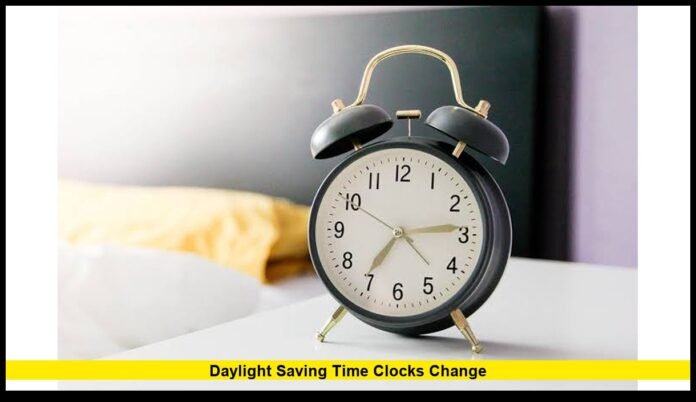

The daylight saving time clocks change will take place on Sunday, November 1, 2026, when most Americans turn their clocks back one hour and return to standard time. At 2 a.m. local time, clocks move to 1 a.m., creating an extra hour on the clock. The transition also brings earlier sunrises and sunsets according to local time, affecting morning routines, evening activities, and travel schedules across much of the country.
The latest confirmed update is that the United States will continue using its existing seasonal clock-change schedule. Lawmakers have considered making daylight saving time permanent, but the proposed federal change has not become law. As a result, participating states will follow the November transition, with the next scheduled spring change on March 14, 2027.
For households, the adjustment may involve little more than checking alarm clocks and preparing for earlier darkness. For overnight workers, travelers, businesses, and people coordinating appointments across time zones, the repeated hour deserves closer attention.
Understanding the November schedule, regional exceptions, and the ongoing federal debate can help Americans prepare for the transition without confusion.
When Do Clocks Change in November 2026?
Daylight saving time ends on Sunday, November 1, 2026, at 2 a.m. local time in areas that observe the seasonal adjustment. At that moment, clocks move backward to 1 a.m. standard time.
The United States follows a federal schedule that places the beginning of daylight saving time on the second Sunday in March and its end on the first Sunday in November. The current dates reflect rules that took effect in 2007.
Here are the key dates for the 2026–2027 cycle:
| Event | Date | What happens |
|---|---|---|
| Daylight saving time began | March 8, 2026 | Clocks moved forward one hour |
| Daylight saving time ends | November 1, 2026 | Clocks move back one hour |
| Standard time continues | November 2026 through March 2027 | Participating areas remain on standard time |
| Daylight saving time returns | March 14, 2027 | Clocks move forward one hour |
The November adjustment takes place at 2 a.m. local time, not simultaneously across the entire country. Each participating time zone makes the change according to its own local clock.
The easiest way to remember the November adjustment is “fall back.” If you live in an area that observes daylight saving time, set manual clocks back one hour before going to bed on Saturday, October 31.
What Does Falling Back One Hour Mean?
When clocks move backward, the hour between 1 a.m. and 2 a.m. occurs twice in participating locations. This makes the calendar day 25 hours long by the local clock.
For example, a clock reaches 1:59 a.m. and then returns to 1:00 a.m. instead of advancing to 2:00 a.m. The clock proceeds through that hour again before reaching 2 a.m. standard time.
This adjustment changes the time displayed on clocks, but it does not alter the Sun’s actual movement. Instead, the official time returns to the standard time used during the winter months.
The practical effects include:
- An extra hour on the clock: People have the opportunity to sleep longer, although not everyone will do so.
- Earlier morning light: Sunrise generally appears earlier according to the clock.
- Earlier evening darkness: Sunset also appears earlier on the clock.
- A change in time-zone offsets: Participating regions return to their standard offsets.
- Possible scheduling complications: Overnight work, digital records, and transportation schedules may require attention.
The repeated hour can be especially important for computer systems that record events by local time. Two separate moments may share the same clock reading, so systems must distinguish between them to maintain accurate records.
Which States Observe the November Clock Change?
Most U.S. states observe daylight saving time and will turn their clocks back on November 1. This includes states such as California, Washington, Texas, Florida, New York, Illinois, Georgia, Colorado, and Pennsylvania.
Participating areas across the Eastern, Central, Mountain, Pacific, and Alaska time zones follow the federal schedule. Local clocks change at 2 a.m. within their respective time zones.
However, daylight saving time does not apply everywhere in the United States. Federal law allows states to opt out of the seasonal adjustment and remain on standard time throughout the year.
Hawaii and Most of Arizona
Hawaii observes standard time year-round. Most of Arizona also stays on standard time and does not turn its clocks back in November.
The Navajo Nation is an important exception within Arizona because it observes daylight saving time. This creates a regional difference that can confuse travelers unfamiliar with local time rules.
Anyone traveling within Arizona should check the time zone used by the specific destination rather than assume the entire state follows one schedule.
U.S. Territories That Do Not Observe Daylight Saving Time
Several U.S. territories also remain on standard time throughout the year. These include Puerto Rico, the U.S. Virgin Islands, American Samoa, Guam, and the Northern Mariana Islands.
People contacting family, scheduling meetings, or arranging travel between these territories and the mainland should account for the different time rules.
The absence of a seasonal change does not mean these places use the same clock time. Their time zones differ, and the time difference between a territory and a mainland city may change when the mainland transitions to standard time.
Why Does Daylight Saving Time End in November?
Daylight saving time shifts the clock forward by one hour during the warmer part of the year. This arrangement moves more daylight into the evening hours according to the clock.
When the United States returns to standard time in November, morning and evening daylight appear earlier. The change also brings the seasonal clock system back to its winter schedule.
The present arrangement comes from federal timekeeping rules. The Energy Policy Act of 2005 extended the daylight saving period, and the revised schedule took effect in 2007.
The history of daylight saving time in the United States goes back much further. The country first adopted daylight saving time nationally during World War I. Its use changed over the years, and Congress later established a more consistent national framework through the Uniform Time Act of 1966.
Under the current framework, states that observe daylight saving time must use the federally established dates. States may choose to remain on standard time year-round, but they cannot independently adopt permanent daylight saving time under existing federal law.
How the November Change Affects Sunrise and Sunset
One of the most noticeable effects of the clock adjustment is the shift in daylight during everyday activities.
After clocks return to standard time, sunrise and sunset occur earlier according to the clock than they did immediately before the transition. People may find that the morning commute feels brighter while the evening commute becomes darker.
The exact sunrise and sunset times depend on the date and location. Latitude, longitude, and local geography influence when daylight reaches a particular place.
The clock change also coincides with the natural seasonal shortening of days in the Northern Hemisphere. Daylight hours continue to decrease toward the winter solstice in December.
Why Evenings Become Darker Earlier
During daylight saving time, clocks run one hour ahead of standard time. This makes sunset appear later according to the clock.
When the country returns to standard time, sunset appears roughly an hour earlier on the clock than it would under daylight saving time at a comparable point in the solar cycle.
That adjustment can change how people plan outdoor activities, exercise, shopping trips, and evening travel. Activities that previously took place in daylight may now occur after sunset.
Households can prepare by checking local sunset times and arranging activities around available daylight.
What the Change Means for Morning Travel
Earlier clock-based sunrises can help some early commuters and students experience more daylight during their morning routines.
However, the effect varies by location and season. As winter progresses, the days continue to shorten, and people in many areas will still travel before sunrise.
Drivers should remain alert during both morning and evening commutes. Pedestrians and cyclists should use appropriate visibility equipment when traveling in low-light conditions.
Will Phones and Computers Change Automatically?
Most modern smartphones, tablets, computers, and connected devices adjust automatically when their time-zone settings are correct and automatic time updates are enabled.
Still, not every device handles the change without attention. Older electronics, traditional clocks, and some appliances require manual adjustments.
Before going to bed on October 31, check the devices you rely on for important appointments and morning alarms.
Common items to review include:
- Smartphones and tablets
- Desktop and laptop computers
- Smartwatches
- Alarm clocks and wall clocks
- Microwave and oven displays
- Vehicle dashboards
- Programmable thermostats
- Home security and automation equipment
Checking Your Smartphone Settings
On an iPhone, open the Date & Time settings and check that automatic time adjustment is enabled. On Android devices, look for automatic date and time and automatic time-zone settings. The precise menu names vary by manufacturer and software version.
A device with the correct time zone and automatic updates enabled should display the appropriate standard time after the transition.
If a device displays an incorrect time, review its time-zone settings before changing the clock manually. Incorrect settings can cause problems with calendars, reminders, and scheduled notifications.
Which Devices Need Manual Changes?
Analog clocks, older alarm clocks, vehicle clocks, and many kitchen appliances may need manual adjustment.
A practical approach is to review these devices on Saturday evening and confirm their displayed times on Sunday morning. This helps prevent missed appointments and confusion during the first day after the transition.
Smart-home devices may also require attention if they rely on outdated time-zone settings. Check essential systems rather than assuming every connected device will adjust correctly.
How the Time Change Affects Sleep and Daily Routines
The November transition gives people the opportunity to spend an additional hour in bed, but it does not guarantee an extra hour of sleep.
Some people will naturally wake at their usual biological time. Others may adjust their bedtime or morning routine to take advantage of the clock change.
The body follows an internal timing system influenced by light, daily habits, and sleep schedules. Moving the clock backward changes official time immediately, but the body may take longer to adapt.
Ways to Make the Adjustment Easier
A consistent routine can help people settle into standard time.
- Maintain a regular bedtime and waking schedule.
- Get natural light after waking when practical.
- Prepare for earlier sunsets and darker evening activities.
- Check alarms and digital calendars before the transition.
- Allow a few days to adjust if sleep timing feels different.
People who already follow a stable sleep schedule may find the change relatively easy. Others, including families with young children and overnight workers, may need additional time to adapt.
Anyone experiencing persistent sleep difficulties should seek advice from a qualified health professional.
What Overnight Workers Need to Know
The repeated hour can affect employees working overnight shifts on November 1.
Because the hour between 1 a.m. and 2 a.m. occurs twice, an overnight shift may cover an additional clock hour. The effect on recorded hours and pay depends on the actual time worked, the employer’s policies, and applicable wage laws.
Employers should explain how they will record the repeated hour. Workers should check their schedules and follow the instructions provided by their workplace.
Industries that operate continuously, including health care, transportation, hospitality, emergency services, and manufacturing, should pay particular attention to shift records and staffing arrangements.
Digital systems also need to distinguish between the two occurrences of the repeated hour. This is important for payroll, attendance, security logs, and other records that depend on accurate timestamps.
How the Clock Change Affects Travel
Travelers should verify departure times, arrival times, and local time zones around the November transition.
Airlines and other transportation operators publish schedules according to their established timekeeping systems. Passengers should follow the confirmed itinerary rather than assume that every device or printed schedule will handle the change in the same way.
Travel between states that observe daylight saving time and regions that do not can also alter the time difference between destinations.
For example, a traveler connecting with someone in Hawaii or most of Arizona should check the local time at both locations after the November transition.
Keeping devices updated, checking reservations, and confirming local times can reduce the risk of confusion.
Why Is Permanent Daylight Saving Time Still Being Debated?
The United States continues to debate whether it should maintain the seasonal clock changes or adopt one time system throughout the year.
Supporters of permanent daylight saving time favor later sunsets during the winter months. They argue that additional evening daylight could benefit recreation, shopping, and other activities.
Opponents raise concerns about darker winter mornings. In some locations, permanent daylight saving time would delay sunrise considerably, affecting students, commuters, and workers who begin their days early.
Permanent standard time offers a different approach. It would eliminate the twice-yearly adjustment while keeping clocks closer to the Sun’s natural position during winter mornings.
Latest Status of the Sunshine Protection Act
The Sunshine Protection Act has sought to make daylight saving time permanent at the federal level. In July 2026, the House of Representatives passed H.R. 139, the Sunshine Protection Act of 2025, by a recorded vote of 308 to 117.
The measure subsequently went to the Senate, where it was referred to the Committee on Commerce, Science, and Transportation. It has not completed the legislative process required to become law.
Consequently, the November 2026 clock change remains scheduled under the current federal rules. The next spring transition remains March 14, 2027.
A proposal, a vote in one chamber, or public support from political leaders does not independently change the national clock schedule. Congress must complete the necessary process and enact a change before the existing rules can be replaced.
Can States Adopt Permanent Daylight Saving Time Independently?
Under current federal law, states may exempt themselves from daylight saving time and remain on standard time year-round. They cannot independently establish permanent daylight saving time without the necessary federal authorization.
This distinction matters because eliminating seasonal clock changes and choosing which time system to use are separate policy questions.
Until federal law changes, states that observe daylight saving time must follow the national start and end dates.
Preparing for the November 1 Clock Change
A short checklist can help households avoid common mistakes as standard time returns.
- Set manual clocks back one hour before going to bed Saturday night.
- Check that smartphones and computers use the correct time zone.
- Verify alarm clocks for Sunday morning.
- Review overnight work schedules and travel plans.
- Check clocks in vehicles and household appliances.
- Prepare for earlier sunsets and darker evening commutes.
- Confirm appointment times on digital calendars.
Saturday evening is a convenient time to handle manual adjustments. On Sunday morning, check important devices against a reliable time source.
The clock change does not require major changes to daily life, but preparing ahead can prevent missed appointments and scheduling confusion.
Frequently Asked Questions
1. When do clocks change for daylight saving time in 2026?
Clocks move back on Sunday, November 1, 2026, at 2 a.m. local time in participating U.S. locations. The time returns to 1 a.m. as standard time begins.
2. Do Americans gain or lose an hour in November?
People in areas observing the change gain an hour on the clock. However, whether they sleep longer depends on their personal routine and waking time.
3. Will my phone change automatically?
Most modern smartphones adjust automatically when the correct time zone and automatic time settings are enabled. Older devices and traditional clocks may need manual adjustment.
4. Which U.S. states do not observe daylight saving time?
Hawaii and most of Arizona remain on standard time year-round. The Navajo Nation observes daylight saving time, and several U.S. territories do not make the seasonal change.
5. Has permanent daylight saving time become law?
No. The Sunshine Protection Act passed the House in July 2026 but has not completed the federal legislative process. The existing clock-change schedule remains in effect.
6. When will daylight saving time begin again in 2027?
The next scheduled transition is Sunday, March 14, 2027, at 2 a.m. local time. Participating locations will move their clocks forward to 3 a.m.
7. Why does sunset happen earlier after clocks fall back?
The return to standard time shifts sunrise and sunset to earlier clock readings. Seasonal changes in the length of daylight continue independently of the clock adjustment.
8. Do all U.S. locations change clocks on November 1?
No. Most states observe the change, but Hawaii, most of Arizona, and certain U.S. territories remain on standard time throughout the year.
9. Should I adjust my alarm clock on Saturday night?
Yes, if it does not update automatically. Set it back one hour and confirm the displayed time before relying on it for an important appointment.
10. Will the United States stop changing clocks in 2027?
No permanent change has been enacted. Under the current schedule, daylight saving time is set to return on March 14, 2027.
Final Takeaway
The November 2026 clock change will return most of the United States to standard time, creating an extra hour on the clock and shifting daylight earlier in the day. Although lawmakers continue to debate permanent daylight saving time, the existing schedule remains in effect. Checking clocks, confirming appointments, and preparing for darker evenings can help Americans navigate the transition smoothly.
Are you ready for the November clock change, or would you prefer one time system throughout the year? Share your opinion in the comments and follow the latest confirmed developments.