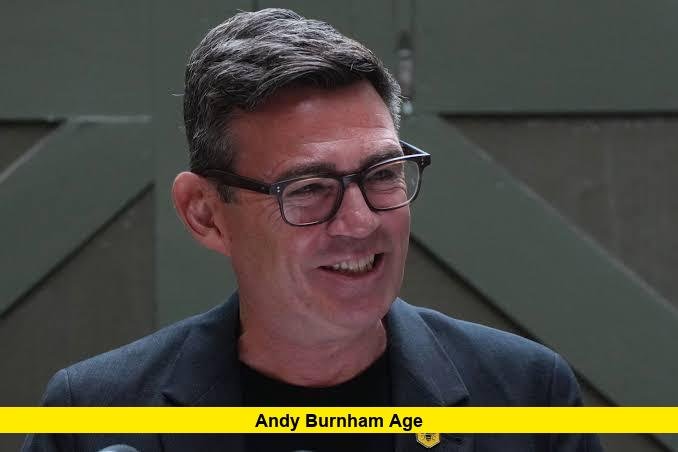

Andy Burnham age has become one of the most searched terms in British politics in recent weeks, as the veteran Labour figure moves closer to becoming the United Kingdom’s next prime minister. Born on 7 January 1970 in Aintree, Liverpool, Burnham is 56 years old as of 2026, and his journey from a working-class upbringing in the north of England to the doorstep of Downing Street has captured widespread public attention. As Andy Burnham prepares to lead Britain, interest in his background, career, and personal life has surged, with readers eager to understand exactly who this politician is and how he arrived at this pivotal moment.
Background and Early Life
Andrew Murray Burnham was born in Aintree, an area that was historically part of Lancashire and now falls within Merseyside. He was raised in Culcheth, Cheshire, and it was during these formative years that he developed the strong regional identity that would later shape his political career. Understanding Andy Burnham age also means understanding the era he came from: a working-class household in the north-west of England during the 1970s and 1980s, a period of significant economic change in industrial Britain.
His zodiac sign is Capricorn, a detail that has drawn curiosity from readers exploring his personal profile alongside his political achievements. Burnham’s early exposure to community life in Lancashire and Cheshire helped cultivate the “everyman” persona that has become central to his public image. He is often described as an amiable, down-to-earth figure who prefers casual clothing over formal suits and enjoys playing soccer and spinning music from the 1990s in his spare time.
Political Career and Rise Through the Ranks
Burnham’s political career spans more than two decades. He first entered Parliament in 2001 as the Member of Parliament for Leigh, a seat he held until 2017. During this period, he served in several high-profile government roles, including as a special adviser to the Culture Secretary between 1998 and 2001, before eventually rising through ministerial positions within the Labour government.
In 2017, Burnham made a significant career shift, becoming the Mayor of Greater Manchester. He held this position for nine years, during which he became widely known as the “King of the North” for his vocal advocacy on behalf of communities outside London. As mayor, his agenda focused on transport integration, bus reform, housing, homelessness services, policing, skills development, and regional devolution. He gained particular national visibility during disputes over financial support for Greater Manchester during the COVID-19 pandemic, a period that cemented his reputation as a defender of northern England’s interests against what critics of the era described as London-centric policymaking.
Burnham was re-elected as mayor in both 2021 and 2024, reflecting sustained public confidence in his leadership at the regional level. His long tenure in Greater Manchester gave him a distinctive political identity, one built on regional advocacy rather than traditional Westminster politics.
The Path Back to Parliament
In June 2026, Burnham made what many observers called a dramatic return to national politics. He contested the Makerfield by-election, triggered after the resignation of the previous MP, Josh Simons, in May 2026. Burnham confirmed his candidacy shortly after Simons stepped down, and his candidacy was formally approved the following day.
He went on to win the by-election in a landslide, securing 54.8% of the vote. This victory was notable not only for its scale but also for its historical significance, as it represented the highest vote share received by a candidate in a parliamentary by-election since Brecon and Radnorshire in 2019. Because UK law does not permit an individual to simultaneously serve as a mayor and a Member of Parliament, Burnham’s win required him to resign from his role as Mayor of Greater Manchester.
Just four days after his by-election victory, Prime Minister Keir Starmer announced his intention to resign, a decision that came amid growing pressure following the 2026 local elections. Starmer indicated he would remain in office only until a new Labour leader was elected. Burnham quickly announced his candidacy for the Labour leadership, positioning himself as the natural successor given his popularity, experience, and standing within the party.
Becoming Labour Leader and Prime Minister-Designate
On 17 July 2026, Andy Burnham was declared the leader of the UK’s Labour Party, having stood as the only candidate in the leadership election. In his acceptance remarks, he pledged to restore hope within the party and the country, signaling a shift in tone from the previous leadership. As of 18 July 2026, Burnham holds the position of prime minister-designate, with his formal appointment expected on 20 July 2026, following the constitutional transition process from Sir Keir Starmer.
It is worth clarifying, for accuracy, that Burnham is set to become Prime Minister of the United Kingdom, not “Prime Minister of England,” since England does not have a separate head of government. This distinction matters for readers researching Andy Burnham age and his incoming role, as the position he is assuming governs the entire United Kingdom rather than England alone.
In the lead-up to his formal appointment, Burnham has spoken about his broader political vision, including a commitment to devolving more power to local governments if he becomes UK leader. He has also sought to distance himself from certain policies associated with the outgoing Starmer government, even as commentators have noted he may find himself constrained by existing commitments once in office.
Personal Life and Family
Beyond his political achievements, public interest in Burnham has extended into his personal life. He is married to Marie-France van Heel, a Dutch-born marketing executive, and the couple have three children together. Van Heel, born in January 1970, is the same age as her husband, and she has become a subject of public curiosity in her own right as Burnham’s national profile has grown.
Burnham’s estimated net worth, as of June 2026, falls between £1 million and £2.5 million. This wealth has been attributed primarily to his mayoral salary, past parliamentary earnings, and additional income from book royalties, speaking engagements, and media appearances. While net worth is not typically central to political analysis, it remains a frequently searched topic among readers wanting a fuller picture of his life beyond policy and governance.
Public Interest and Reputation
Burnham’s rise has generated substantial public and media interest, not only because of the historic nature of his ascension to the premiership but also because of his distinctive political brand. Described by some commentators as a “political insider turned outsider,” he has built his reputation on presenting himself as separate from the traditional Westminster establishment, despite having spent much of his career within it.
His nickname, “King of the North,” reflects the strong regional loyalty he has cultivated throughout his career, particularly during his mayoral years in Greater Manchester. Supporters have consistently viewed his outspokenness as a genuine defense of communities outside London, while critics have at times questioned aspects of his approach and public presentation. This mixture of admiration and scrutiny has followed him throughout his transition from regional mayor to national leader.
Latest Updates
As of the most recent reporting, Burnham officially became Labour leader on 17 July 2026 and is preparing for the formal transition of power, including the selection of his Cabinet. His political focus has now shifted decisively toward Westminster and the formation of the next UK government, even though his personal and political identity remains deeply tied to Greater Manchester and the broader north-west of England.
There is no official confirmation yet regarding the full composition of his incoming Cabinet or the specific policy priorities he will pursue immediately upon taking office, so readers should treat any such details circulating online with appropriate caution until confirmed through official government channels.
Final Thoughts
Andy Burnham age, background, and career trajectory tell the story of a politician who has moved steadily from local government advocacy to the highest office in British politics. At 56, he brings more than two decades of parliamentary and mayoral experience to the role of prime minister-designate, along with a public image built on regional pride and accessibility. As Andy Burnham prepares to lead Britain, his formal appointment on 20 July 2026 will mark a defining moment not just for his own career, but for the direction of the Labour Party and UK governance more broadly.
Stay tuned for further updates on Andy Burnham’s official appointment and his early days as UK prime minister — share your thoughts in the comments below.