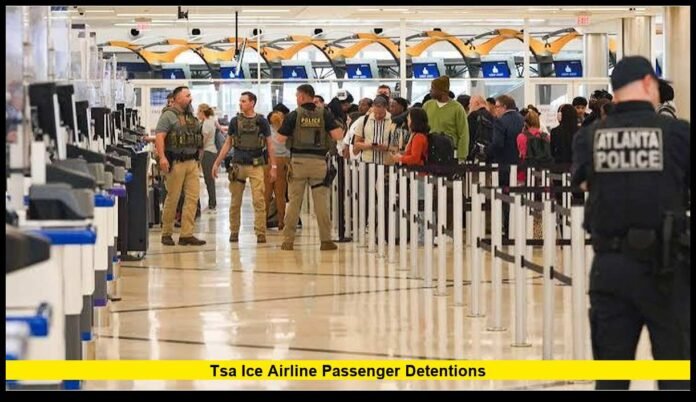

TSA ICE airline passenger detentions have become one of the most closely watched topics in U.S. aviation and immigration policy during 2026. Several high-profile incidents at American airports, along with growing public attention on how federal agencies coordinate with one another, have raised questions about what travelers may encounter while flying within the United States. Although airport security screening remains the primary responsibility of the Transportation Security Administration, recent immigration enforcement actions involving airline passengers have placed renewed focus on the relationship between TSA procedures and ICE operations.
The discussion has intensified because several confirmed airport detentions occurred during July 2026, drawing national attention. These incidents involved travelers at major U.S. airports and highlighted the role that federal immigration officers continue to play in transportation hubs. At the same time, the debate has expanded beyond individual arrests to include how passenger information is used during federal enforcement efforts.
Why the Issue Has Drawn National Attention
Millions of people travel through U.S. airports every day. Most passengers complete the standard security process without any interaction beyond TSA screening.
Recent events have reminded travelers that airports also serve as locations where multiple federal agencies perform different responsibilities. TSA focuses on aviation security, while U.S. Immigration and Customs Enforcement is responsible for enforcing immigration laws.
Because both agencies operate within the Department of Homeland Security, they can share information under federal policies. That coordination has become the center of public discussion after federal records showed that passenger information was used to assist immigration enforcement in selected cases.
The issue is not whether TSA officers perform immigration checks during routine screening. Instead, the focus is on how information collected during the normal travel process may later assist federal immigration investigations involving specific individuals.
Understanding the Difference Between TSA and ICE
Many travelers mistakenly believe TSA and ICE perform similar duties.
In reality, the agencies have very different missions.
TSA exists to protect the nation’s transportation system. Security officers verify identification, inspect baggage, screen passengers, and prevent prohibited items from entering secure airport areas.
ICE has an entirely different responsibility. Its officers investigate immigration violations, enforce federal immigration laws, and carry out arrests involving individuals who are subject to immigration enforcement.
This distinction matters because passengers frequently encounter TSA officers but rarely interact with ICE unless they become part of a targeted enforcement action.
Simply passing through airport security does not mean an immigration investigation has begun.
How Passenger Information Becomes Part of Federal Screening
Before boarding most commercial flights, airlines provide required passenger information through the federal Secure Flight system.
The information generally includes:
- Full legal name
- Date of birth
- Gender
- Flight itinerary
- Additional identifying details required for security screening
The purpose of Secure Flight is aviation security. The system compares passenger information against government watchlists to help identify potential security risks before boarding.
However, information collected during this process can also become available for other authorized federal purposes.
That broader use of passenger information has become one of the biggest topics in the ongoing discussion surrounding airport immigration enforcement.
Read More – Are There ICE Agents at Airports A: 2026 Guide to Their Role, Presence, and What Travelers Should Know
Recent Airport Detentions That Renewed Public Interest
Several incidents during July 2026 brought renewed attention to airport enforcement.
One of the most widely discussed cases occurred at San Francisco International Airport, where immigration officers detained a Ukrainian woman inside the airport. Video recorded by witnesses quickly spread online, leading to widespread public debate about immigration enforcement inside airport terminals.
Federal officials later confirmed the arrest while providing information regarding the individual’s immigration status.
Only days earlier, another case attracted significant attention in Texas.
An 18-year-old student traveling through Houston’s Hobby Airport was detained by immigration officers before later being released.
The detention generated widespread community concern because of the student’s ongoing immigration proceedings.
Although the circumstances differed, both cases demonstrated that immigration enforcement can occur at domestic airports when federal authorities identify individuals they are seeking.
Airport Operations Continue Normally
Despite increased attention, everyday airport operations remain largely unchanged.
Passengers continue to move through TSA checkpoints using the same screening procedures that have existed for years.
Travelers should understand that routine security screening is still designed to identify threats to aviation safety rather than evaluate immigration status.
For the overwhelming majority of domestic passengers, flying remains a straightforward process involving identification verification, baggage screening, and security checks.
The recent airport detentions involved specific individuals rather than random travelers selected during security screening.
How Federal Agencies Coordinate
Federal agencies regularly share information while carrying out their responsibilities.
This cooperation is common throughout government.
Within airports, coordination may involve TSA, ICE, Customs and Border Protection, the Federal Air Marshal Service, airport police, airline personnel, and local law enforcement agencies.
Each organization performs a separate role.
While passengers may notice several uniformed agencies operating inside terminals, each has different legal responsibilities and authorities.
Understanding these distinctions helps explain why different federal officers may be present in the same airport without performing identical duties.
Targeted Enforcement Rather Than Random Arrests
One of the biggest misconceptions surrounding airport enforcement is that immigration officers conduct random immigration checks on domestic airline passengers.
Current confirmed information does not support that conclusion.
Instead, recent enforcement actions have involved individuals already known to immigration authorities through existing investigations or immigration proceedings.
This means that ordinary travelers are not subject to immigration questioning simply because they purchased an airline ticket.
Rather, federal authorities carry out targeted operations involving individuals already identified through immigration enforcement processes.
Why Airports Can Become Enforcement Locations
Airports naturally bring together large numbers of travelers.
Because passengers follow scheduled travel plans, airports may provide opportunities for federal officers to locate individuals already under investigation.
This does not make airports immigration checkpoints.
Instead, airports become one possible location where enforcement actions may occur if officers know a person is expected to travel.
Similar enforcement actions can also occur in other public locations depending on individual circumstances.
The Role of Secure Flight
The Secure Flight program has existed for many years as part of federal aviation security.
Its primary mission has never changed.
The system helps ensure that airlines receive boarding instructions based on government security screening before passengers enter aircraft.
Security screening remains its principal function.
Recent public attention has centered on how information collected through that system has also supported immigration enforcement in selected cases involving specific individuals.
This has prompted renewed discussion about privacy, transparency, and the balance between aviation security and immigration enforcement.
Public Debate Continues
The recent airport detentions have generated strong reactions across the country.
Some lawmakers have called for additional oversight regarding how passenger information is shared among federal agencies.
Others have defended existing policies, arguing that coordination between federal agencies strengthens public safety and supports lawful immigration enforcement.
The discussion continues as immigration policy remains one of the nation’s most debated issues.
Regardless of political viewpoints, confirmed airport enforcement actions have increased public awareness of how multiple federal agencies operate within the nation’s airports.
What Travelers Should Know Before Flying
Most travelers will experience no changes during their next trip.
Passengers should continue arriving early, bringing acceptable identification, and following TSA security instructions.
Routine airport screening remains focused on aviation safety.
Travelers should also remember that TSA officers are responsible for transportation security, while ICE officers handle immigration enforcement under separate legal authority.
Knowing the difference between these agencies helps reduce confusion created by social media posts that sometimes incorrectly describe immigration arrests as TSA actions.
Why July 2026 Became a Turning Point
The events of July brought several separate airport incidents into public view within a short period.
Each received widespread media attention.
Together, they highlighted how immigration enforcement inside airports continues to evolve while drawing greater public interest.
The visibility of these operations also encouraged broader conversations about passenger privacy, government transparency, and the responsibilities of federal agencies working inside transportation hubs.
Although airports remain safe for millions of travelers every day, recent enforcement actions have demonstrated that they can also become locations for targeted federal immigration operations.
What the Current Situation Means
The ongoing conversation surrounding TSA ICE airline passenger detentions reflects broader questions about immigration enforcement rather than changes to routine airport security.
Passengers should understand that TSA security screening continues to function as it always has, with its primary mission centered on aviation safety.
At the same time, confirmed enforcement actions during 2026 show that ICE continues to conduct targeted operations involving certain airline passengers when federal immigration authorities determine enforcement action is appropriate.
These developments have increased public awareness without changing the standard airport experience for the vast majority of travelers.
As additional policy discussions unfold, airports will likely remain an important part of the national conversation about immigration enforcement, passenger privacy, and transportation security.
Airport security and immigration enforcement continue to evolve, making it important for travelers to stay informed about confirmed developments that could affect air travel across the United States.