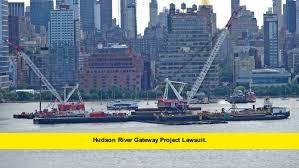

The Hudson River Gateway Project lawsuit has become one of the most closely watched legal disputes in American infrastructure policy, pitting the states of New York and New Jersey against the federal government over billions of dollars in promised funding. At the center of the conflict is the Gateway program’s Hudson Tunnel Project, a massive effort to build a new rail crossing beneath the Hudson River and repair the century-old North River Tunnel. After the Trump administration moved to freeze federal reimbursements tied to the project, state officials and the project’s own governing body went to court to stop construction from grinding to a halt, setting off a high-stakes courtroom fight with national economic implications.
Background on the Gateway Program and the Hudson Tunnel Project
The Gateway program is a sweeping rail infrastructure initiative designed to expand and modernize the Northeast Corridor, the busiest passenger rail line in the United States. Its centerpiece is the Hudson Tunnel Project, a roughly $16 billion undertaking that involves digging a new two-tube rail tunnel beneath the Hudson River while simultaneously rehabilitating the existing North River Tunnel. That century-old tunnel, which is more than 116 years old, suffered significant saltwater damage during Superstorm Sandy in 2012 and has required increasingly intensive maintenance ever since. Engineers and transit officials have long warned that without a new crossing, the region’s rail network remains vulnerable to a major service failure that could cripple commuter and intercity rail travel across the Northeast.
The project is overseen by the Gateway Development Commission, a bi-state entity created by New York and New Jersey to manage planning, funding, and construction. Backers of the plan point out that the corridor served by the tunnels supports roughly 20 percent of the nation’s gross domestic product and carries more than 200,000 passengers each weekday. Notably, an earlier version of a Hudson River rail tunnel was canceled back in 2010 by then-New Jersey Governor Chris Christie, a decision that delayed progress on the crossing for more than a decade before the current Gateway effort took shape.
What Sparked the Hudson River Gateway Project Lawsuit
The roots of the dispute trace back to late 2025, when the U.S. Department of Transportation halted grant and loan disbursements that had already been formally obligated to the project, citing an ongoing compliance review. Project administrators say they responded to every concern raised by federal officials and repeatedly certified that the program was in full compliance with applicable requirements. Despite this, the federal government continued withholding payments. In January 2026, the situation escalated further when President Trump publicly declared the Hudson Tunnel Project “terminated,” a statement that state officials say effectively cut off the flow of federal funds needed to keep construction moving.
With a line of credit that had been sustaining the project for months finally running out, the Gateway Development Commission warned it would have no choice but to begin suspending active construction. This set the stage for two separate but related pieces of litigation. First, the Gateway Development Commission filed a 75-page breach-of-contract lawsuit in the U.S. Court of Federal Claims, accusing the Department of Transportation of improperly withholding more than $205 million in contractually obligated funding. The suit characterizes the dispute as a straightforward breach of contract and seeks both the release of withheld disbursements and damages tied to the disruption.
Shortly after, New York Attorney General Letitia James and New Jersey Acting Attorney General Jennifer Davenport filed a second lawsuit in federal court in the Southern District of New York. This suit sought a judicial declaration that the funding suspension was unlawful, along with an emergency order compelling the Department of Transportation to resume payments immediately. The states’ filing alleges that the funding freeze amounted to political retribution, pointing to public comments in which the administration linked the dispute to disagreements over the prior year’s federal government shutdown.
Key Players and Public Statements
The Hudson River Gateway Project lawsuit has drawn sharp statements from a wide range of officials and stakeholders. New York Governor Kathy Hochul and New Jersey Governor Mikie Sherrill both pledged to fight the funding freeze, framing it as a direct threat to regional infrastructure and thousands of union jobs. Attorney General James argued that allowing the project to stall would put one of the country’s most heavily used transit corridors at serious risk, while Acting Attorney General Davenport emphasized that an extended shutdown could immediately cost roughly 1,000 workers their jobs, with the broader Gateway program supporting closer to 11,000 jobs overall.
Federal officials, for their part, have defended the funding pause. U.S. Transportation Secretary Sean Duffy publicly described aspects of the Gateway program as discriminatory and raised constitutional objections tied to the project’s contracting practices, including provisions related to disadvantaged business participation. Industry voices weighed in as well. Carlo Scissura, president of the New York Building Congress, expressed frustration that a project already employing thousands of construction workers and backed by signed federal commitments had become entangled in political disputes. Regional Plan Association officials similarly warned that halting work at any single job site could disrupt the careful coordination required across the project’s many interconnected construction packages.
Some of the most pointed allegations came from U.S. Senator Kirsten Gillibrand, who said the administration had attempted to tie the release of Gateway funding to unrelated demands, including discussions involving naming rights for the project. These claims added a political dimension to what was already a contentious legal and financial standoff.
Construction Status and Economic Stakes
By the time the lawsuits were filed, the Gateway Hudson Tunnel Project was already well underway. Close to $2 billion had been spent, with approximately 150 contractors and subcontractors actively working at sites across New York and New Jersey for more than two years. Major milestones had been reached, including nearly 75 percent completion of the concrete casing for the new tunnel segment passing beneath Hudson Yards toward Penn Station. A related bridge relocation project in New Jersey, necessary to allow tunnel boring machines to begin operating as early as spring, had also been substantially completed. At Newark Penn Station, large tunnel boring equipment had already been positioned, with digging expected to begin within weeks before the funding dispute intervened.
Officials warned that any stoppage and subsequent restart of work on a project of this scale would significantly raise costs and risk wasting years of planning along with hundreds of millions of dollars already invested. Specialized equipment would need to be demobilized, partially completed excavations secured, and active work zones stabilized, all of which carry substantial expense even before construction could resume. These practical realities became central arguments in the states’ push for emergency judicial relief.
Latest Updates in the Hudson River Gateway Project Lawsuit
As the funding standoff approached a critical deadline, the Gateway Development Commission announced it would begin suspending work at active construction sites, including pausing four major procurement packages tied to the remaining phases of construction. Hours after that suspension was announced, a federal judge granted a temporary restraining order sought by the New York Attorney General’s office, which temporarily barred the Department of Transportation from continuing to withhold the disbursed funds. Governor Hochul described the ruling as a victory for union workers and commuters who depend on the corridor, while Attorney General James said the decision blocked what she called a senseless funding freeze that threatened to derail a project the entire region depends on.
At present, there is no official confirmation of how the underlying breach-of-contract claims in the Court of Federal Claims will ultimately be resolved, nor is there confirmation of a final, permanent outcome regarding long-term federal funding for the Hudson Tunnel Project. The temporary restraining order addressed the immediate threat of a construction shutdown, but further hearings and legal proceedings are expected as both sides continue to litigate the broader funding dispute. Officials on both sides of the Hudson River have indicated they intend to continue pursuing their respective legal strategies in the months ahead.
Why the Lawsuit Matters Beyond New York and New Jersey
The Hudson River Gateway Project lawsuit carries implications that extend well beyond the two states directly involved. Because the Northeast Corridor functions as a critical artery for passenger rail traffic up and down the East Coast, any prolonged disruption to the Hudson Tunnel Project has the potential to affect rail reliability far beyond the immediate New York metropolitan region. The dispute has also drawn attention to broader questions about how federal infrastructure grants are administered and whether previously obligated funding can be unilaterally paused or withdrawn by a new administration, an issue that could have ramifications for other large-scale infrastructure projects nationwide that depend on multi-year federal commitments.
Final Thoughts
The Hudson River Gateway Project lawsuit reflects a broader tension between long-term infrastructure planning and shifting federal funding priorities. With billions of dollars, thousands of jobs, and the daily commutes of hundreds of thousands of riders riding on the outcome, the legal proceedings are likely to remain a significant story in regional and national infrastructure policy for the foreseeable future. While a temporary restraining order has, for now, prevented a full construction shutdown, the underlying legal questions about contractual obligations and federal funding authority remain unresolved.
Stay tuned for further updates on this developing story, and feel free to share your thoughts on what this legal battle could mean for the future of regional rail infrastructure.