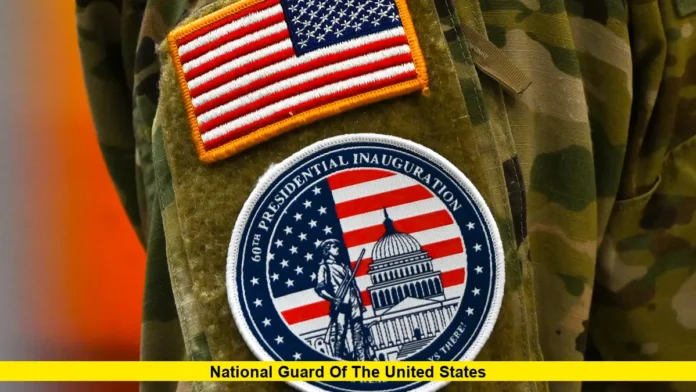

The National Guard of the United States is one of the oldest and most distinctive military institutions in the country, serving a dual role as both a state and federal force. Unlike the active-duty military branches, the National Guard operates under a unique command structure that allows it to respond to natural disasters, civil emergencies, and federal military missions alike. In recent years, the organization has drawn significant public attention due to high-profile domestic deployments, making it one of the most discussed defense topics in the news cycle. This article breaks down the history, structure, mission, and current developments surrounding the National Guard of the United States.
A Brief History and Background
The roots of the National Guard trace back to colonial-era militias, making it older than the United States Army itself in terms of organized community-based defense. Over the centuries, what began as loosely organized state militias evolved into a formally structured reserve component of the U.S. Armed Forces. The modern National Guard of the United States consists of two primary branches: the Army National Guard and the Air National Guard. Together, these branches maintain units in all 50 states, three territories, and the District of Columbia.
What makes the National Guard distinct from other reserve components is its dual-status nature. Guard members can be activated under state authority by a governor, known as Title 32 status, or federalized by the President of the United States under Title 10 status. This flexibility allows the Guard to serve a wide range of functions, from local disaster response to overseas combat deployments, all under the same organizational umbrella.
Organizational Structure and Mission
The National Guard Bureau, headquartered in Arlington, Virginia, oversees both the Army and Air National Guard components nationwide. The Bureau is led by the Chief of the National Guard Bureau, currently General Steven S. Nordhaus, who also serves as a member of the Joint Chiefs of Staff. Supporting leadership includes the Vice Chief of the National Guard Bureau and senior enlisted advisors who represent the interests of Guard personnel at the federal level.
The core missions of the National Guard fall into a few broad categories:
- Responding to natural disasters such as hurricanes, wildfires, and floods at the request of state governors
- Supporting homeland security operations, including border support and infrastructure protection
- Deploying overseas alongside active-duty forces in support of national defense missions
- Participating in the State Partnership Program, which pairs U.S. states with partner nations for military cooperation and training
- Assisting with large-scale public events that require additional security and logistical coordination
Because Guard units are based in local communities, members often serve part-time, balancing civilian careers with military obligations, while remaining ready for activation when needed.
Career Paths and Service in the National Guard
Joining the National Guard offers a different path than full-time active duty service. Recruits can pursue careers ranging from combat arms and aviation to medical, logistics, and cyber operations, often with the added benefit of serving close to home. Guard members typically train one weekend a month and two weeks a year, though deployments and emergency activations can require extended commitments.
Many service members are drawn to the Guard because of education benefits, including tuition assistance and access to the GI Bill, along with retirement credit and healthcare options such as TRICARE. Enlisted advocacy organizations have continued pushing for expanded benefits, including efforts tied to legislative proposals addressing dual-status technician issues and discharge reforms for Guard members affected by combat-related conditions.
Public Interest and Recent Domestic Deployments
The National Guard of the United States has become a focal point of national debate due to a series of domestic deployments ordered during the current presidential administration. Beginning in 2025, National Guard troops were sent to several major U.S. cities, including Los Angeles, Chicago, Portland, Memphis, New Orleans, and Washington, D.C., as part of efforts described by the administration as addressing crime, civil unrest, and immigration enforcement support.
These deployments sparked considerable controversy. Critics, including several state and local officials, argued that the missions amounted to federal overreach and raised concerns about potential violations of the Posse Comitatus Act, a law that restricts the use of military forces for domestic law enforcement. Legal challenges followed in multiple jurisdictions, and a federal judge ruled that the deployment to Los Angeles violated the Posse Comitatus Act. The U.S. Supreme Court also declined to revive the administration’s deployment to Chicago after lower courts blocked it.
By the end of 2025 and into early 2026, the administration began withdrawing troops from several cities. Reports confirmed that National Guard personnel were pulled out of Los Angeles, Chicago, and Portland, with the pullout completed by February 2026. Despite the withdrawals, officials indicated that future deployments to those same cities remained possible depending on conditions on the ground.
Washington, D.C. Deployment Continues
While most city deployments wound down, the National Guard presence in Washington, D.C., has continued and was extended through the end of 2026. As of recent reporting, approximately 2,400 troops remain stationed in the District, drawn primarily from Republican-led states such as Florida, South Carolina, Georgia, and Ohio, alongside members of the D.C. National Guard itself. The mission, referred to internally as an effort to support law enforcement and public safety in the capital, has remained active even as similar deployments elsewhere were rolled back.
The D.C. deployment gained renewed attention following a shooting near the White House in November, in which two West Virginia Guard members were attacked. One of them, Army Specialist Sarah Beckstrom, died from her injuries, while Air Force Staff Sergeant Andrew Wolfe survived after being critically wounded. The incident intensified discussions about the safety and purpose of Guard deployments in the capital and contributed to the decision to extend the mission rather than scale it back.
Adding another layer to the situation, several Democratic-led states sent their own Guard members to Washington, D.C., during the summer of 2026 to assist with crowd management for America’s 250th anniversary celebrations. State officials were careful to distinguish this support, which was tied to the celebratory events, from the broader federal task force operation, although legal observers noted that drawing such a distinction has proven difficult given that all of these troops appear on the same federal task force rosters.
Legal and Political Debate
The expanded use of the National Guard for domestic missions has reignited long-standing debates about the limits of military involvement in civilian affairs. Supporters of the deployments argue that the National Guard’s hybrid state-federal status makes it uniquely suited for addressing urban crime and immigration enforcement needs, especially when local resources are viewed as insufficient. Opponents counter that using military personnel for policing functions blurs constitutional boundaries and risks normalizing federal military presence in cities without the consent of state governors, particularly in jurisdictions led by the opposing political party.
Public opinion data reflected this divide, with polling in Washington, D.C., showing strong opposition among residents to the continued military presence in the city, even as administration officials pointed to reductions in certain crime statistics during the deployment period. Independent assessments and budget office estimates placed the cost of these operations in the hundreds of millions of dollars, fueling additional scrutiny over whether the missions represented an efficient use of taxpayer resources.
Looking Ahead
As 2026 continues, the National Guard of the United States remains at the center of ongoing legal, political, and operational developments. While deployments to several major cities have concluded, the situation in Washington, D.C., illustrates how quickly Guard missions can be extended or reshaped based on political priorities and security concerns. Meanwhile, the Guard continues its traditional responsibilities, including disaster response, overseas troop rotations, and international training partnerships through the State Partnership Program, work that often receives far less media attention than the domestic deployment controversies but remains central to the organization’s mission.
For the men and women who serve, the National Guard continues to represent a unique blend of community commitment and national service, one that asks members to be ready at a moment’s notice, whether the mission involves rebuilding after a hurricane, supporting troops overseas, or responding to an emergency in their own hometown.
Final Thoughts
The National Guard of the United States occupies a singular place in American defense policy, bridging local communities and national security needs in ways no other military branch does. Its evolving role in domestic deployments has made it a recurring subject of public debate, even as its members continue performing the disaster relief, overseas support, and community-based missions that have long defined the organization. As legal battles and political decisions continue to shape how and where the Guard is deployed, its dual identity as both a state resource and a federal military asset will likely remain a defining feature of its mission for years to come.
Stay informed on the latest developments involving the National Guard of the United States, and share your thoughts in the comments below.