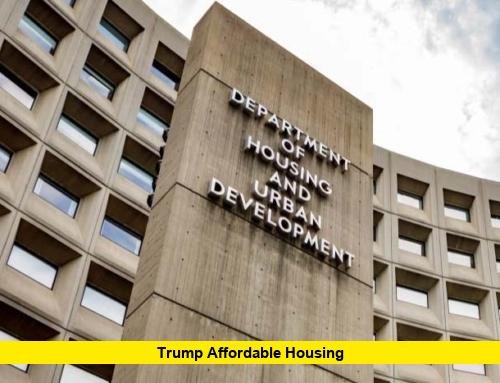

Housing affordability has become one of the defining issues of the year, and President Trump’s affordable housing agenda is now at the center of a high-stakes political standoff in Washington. After months of negotiations, Congress delivered a landmark bipartisan housing package, only for Trump to abruptly cancel his own signing ceremony at the last minute. Here’s a full breakdown of what’s happening, why it matters, and what it could mean for anyone hoping to buy a home.
What Is the 21st Century ROAD to Housing Act?
The 21st Century ROAD to Housing Act is being called the most significant federal housing legislation in nearly two decades. It combines almost 50 individual housing proposals covering supply, financing, zoning, workforce development, and property rehabilitation. The bill cleared the Senate by an 85-5 vote and the House by a commanding 358-32 margin, reflecting rare bipartisan agreement at a time when Washington agrees on very little.
The legislation was negotiated by Senate Banking Committee leaders Tim Scott (R-SC) and Elizabeth Warren (D-MA), along with Representatives French Hill (R-AR) and Maxine Waters (D-CA). Its core goal is straightforward: increase the supply of homes, cut red tape for builders, and make homeownership more attainable for everyday families who have been priced out of the market.
Key Provisions Aimed at Lowering Housing Costs
Several provisions in the bill directly target the affordability crisis that has frustrated voters heading into the midterm elections:
A cap limiting large institutional investors to no more than 350 single-family homes, addressing concerns that Wall Street firms have been outbidding ordinary families with all-cash offers. The cap includes an exception for build-to-rent properties and creates a renter outreach resource at HUD for tenants of institutionally owned properties.
Streamlined environmental and permitting reviews designed to speed up home construction and reduce delays tied to federal regulations.
An increase to the Rental Assistance Demonstration (RAD) program cap by 100,000 units, along with a three-year reauthorization of the Community Development Block Grant Disaster Recovery program.
Expanded eligibility allowing Community Development Block Grant funds to be used for new affordable housing construction, plus incentives for local governments that accelerate homebuilding.
Modernized financing rules for manufactured and modular housing, intended to expand lower-cost housing options nationwide.
Why Did Trump Cancel the Signing?
Despite voicing repeated support for the bill and even referencing housing affordability in his State of the Union address, Trump unexpectedly canceled the planned Capitol signing ceremony just hours before it was scheduled. In a social media post, he announced the event was “hereby cancelled until such time as we pass the desperately needed SAVE AMERICA ACT,” which he described as a national emergency. He also dismissed the housing bill as being “of minor importance” compared to passing stricter voter ID legislation, drawing sharp criticism from lawmakers in both parties.
Senator Elizabeth Warren called the decision a sign of indifference to the financial pressure facing American families, while House Speaker Mike Johnson confirmed that Trump wants to see more movement on the SAVE America Act before signing the housing measure. Because the SAVE America Act lacks the votes to overcome a Senate filibuster, the housing bill’s fate is now tied to an unrelated and far more contentious legislative fight.
What Happens Next?
Under the Constitution, a bill that has passed both chambers and been formally presented to the president automatically becomes law if he neither signs nor vetoes it within ten days, excluding Sundays, as long as Congress remains in session. That means the housing package could still become law even without Trump’s signature, simply by the clock running out. Lawmakers from both parties, along with housing industry groups like the National Association of Realtors and the Mortgage Bankers Association, have continued pushing for the bill to take effect, calling it a milestone moment for federal housing policy.
Trump’s Broader Housing Affordability Agenda
Beyond this specific bill, the Trump administration has pursued affordability through executive action. In March, Trump signed an executive order directing federal agencies to reduce regulatory barriers tied to home construction, targeting stormwater and wetlands permitting rules that have slowed development. A companion order focused on reducing regulatory burdens around mortgage lending, particularly for smaller community banks. The administration has also directed Fannie Mae and Freddie Mac to purchase $200 billion in mortgage bonds in an effort to ease borrowing costs.
Still, progress has been uneven. Mortgage rates dipped below 6% for the first time since 2022, offering some relief, but the median price of an existing home remains close to $398,000, nearly five times the median household income. Polling shows a majority of Americans, including a large share of independents, believe the administration has not done enough to address the cost of living, with housing remaining a particular sore spot.
What This Means for Homebuyers
For now, the practical impact on everyday homebuyers remains limited. Even housing advocates who support the bill acknowledge it won’t deliver immediate relief, since expanding housing supply takes time even after regulatory hurdles are cleared. However, the legislation marks the first time in years that Congress has formally acknowledged a federal role in addressing the housing affordability crisis, and supporters like Senator Warren have already signaled plans for a follow-up package to go further.
FAQs About Trump’s Affordable Housing Plan
Has Trump signed the housing bill yet? As of now, Trump has not signed the 21st Century ROAD to Housing Act despite its passage through both the House and Senate. He has tied his signature to progress on the unrelated SAVE America Act.
Could the bill become law without Trump’s signature? Yes. Under the Constitution, the bill would automatically become law if Trump neither signs nor vetoes it within ten days, excluding Sundays, while Congress is in session.
What does the bill do about institutional investors buying homes? It caps large institutional investors at purchasing no more than 350 single-family homes, with an exception for build-to-rent developments.
Will this bill lower home prices immediately? Not immediately. Experts note that boosting housing supply takes time, even once regulatory barriers are reduced, meaning relief for buyers will likely unfold gradually.
What other housing actions has Trump taken? He has signed executive orders targeting federal permitting barriers and mortgage lending regulations, and directed Fannie Mae and Freddie Mac to purchase $200 billion in mortgage bonds.
What’s the next political battle to watch? Whether Trump eventually signs the housing bill, lets it become law without his signature, or continues to hold it hostage to the SAVE America Act remains one of the central housing storylines heading into the midterms.
Have thoughts on how this housing fight could affect your local market? Drop a comment below and stay tuned for updates as this story develops.