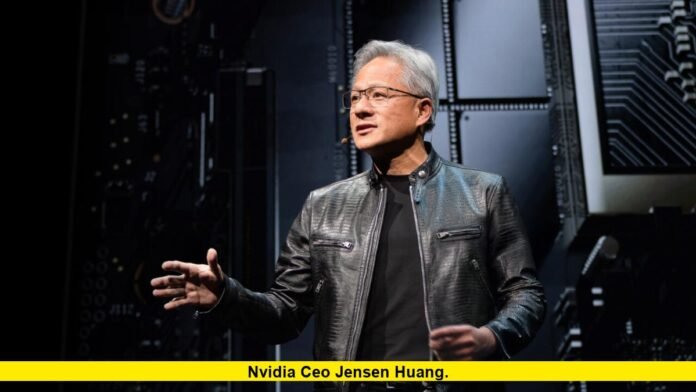

Nvidia CEO Jensen Huang rarely shows frustration in public. But in a recent podcast interview, the usually composed leader nearly lost his cool when the conversation turned to selling advanced AI chips to China.
The moment, captured on the Dwarkesh Patel podcast and now going viral, has sparked fresh debate about U.S. export controls, national security, and America’s edge in the global AI race. Huang’s blunt response — “You’re not talking to someone who woke up a loser” — is already making headlines across tech circles.
Jensen Huang Defends Nvidia’s Stance on China Sales
The exchange happened as host Dwarkesh Patel pressed Huang on the risks of U.S. companies supplying high-end AI compute to Chinese labs. Patel raised national security concerns, suggesting more chips could accelerate offensive cyber capabilities or help rivals catch up.
Huang pushed back firmly. He rejected analogies comparing AI chips to “enriched uranium” and called the idea of fully blocking sales “lunacy.” Instead, he argued that keeping Chinese developers on America’s tech stack — especially Nvidia’s CUDA software ecosystem — benefits the United States long-term.
“You’re not talking to somebody who woke up a loser,” Huang said during the heated moment. “That loser attitude, that loser premise makes no sense to me.” He stressed that conceding the Chinese market would create a rival ecosystem, hurting U.S. innovation rather than protecting it.
US Export Controls on AI Chips Spark Intense Debate
U.S. restrictions currently limit sales of Nvidia’s most advanced chips, such as the Blackwell series, to China. The rules aim to slow potential military or strategic AI advances by Beijing.
Huang countered that China already has massive compute capacity and talent. Blocking American chips, he said, won’t halt progress — it will simply push China to build domestic alternatives faster, like Huawei’s Ascend processors. That shift could erode Nvidia’s — and America’s — software dominance.
He pointed out that AI development involves multiple layers: energy, chips, infrastructure, models, and applications. Restricting one layer to protect another, he argued, weakens the entire U.S. position. “We want to make sure that all the AI developers in the world are developing on the American tech stack,” Huang explained.
Nvidia H200 Restart Signals China Market Rebound
Just weeks earlier, at Nvidia’s GTC conference in March 2026, Huang delivered more positive news on China. The company received U.S. government licenses and customer purchase orders for its H200 AI processors — a version designed to comply with export rules.
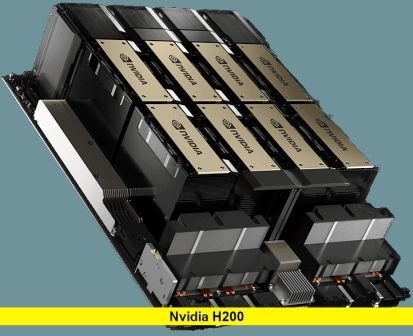
“We’re in the process of restarting our manufacturing,” Huang told reporters on March 17, 2026. “Our supply chain is getting fired up.” He described the development as fresh news and highlighted China’s potential as a $50 billion annual market opportunity for Nvidia.
This restart followed months of uncertainty after tighter U.S. controls took effect. The H200 move shows Nvidia’s strategy of navigating restrictions while maintaining presence in the world’s second-largest economy.
Nvidia AI Computing Leadership Drives Record Growth
Nvidia remains the undisputed leader in accelerated computing for AI. In its fiscal fourth quarter ended January 25, 2026, the company reported record revenue of $68.1 billion — up 73% from the same period a year earlier. Full-year fiscal 2026 revenue hit $215.9 billion, a 65% increase.
CEO Jensen Huang credited surging demand for AI infrastructure, calling Grace Blackwell with NVLink the “king of inference” and pointing to upcoming Vera Rubin advancements. The company continues to expand beyond traditional hyperscalers into broader enterprise and sovereign AI markets.
Analysts and industry watchers note Nvidia’s software moat — built around CUDA — makes its hardware especially sticky. Developers worldwide rely on the ecosystem, creating high switching costs for rivals.
Impact of Export Restrictions on Global AI Race
The podcast debate highlights a core tension in U.S. policy. Supporters of strict controls worry about technology leakage that could aid China’s military AI efforts. Huang acknowledged the concerns but argued that innovation and market competition offer the best defense.
He noted China’s existing 7nm chip production capacity and energy resources. Even with restrictions, Beijing can scale compute through domestic efforts. The real risk, according to Huang, is losing influence over the global AI software stack.
“These ecosystems are hard to replace,” he said, comparing CUDA’s stickiness to x86 or ARM architectures. “It costs an enormous amount of time and energy, and most people don’t want to do it.”
Nvidia’s Moat in Accelerated Computing Faces Scrutiny
Huang also addressed competition from in-house chips like Google’s TPUs. He dismissed the idea that hyperscalers could easily displace Nvidia, calling it a “loser premise.” Nvidia’s grip on scarce advanced manufacturing capacity and its full-stack software advantages keep it ahead, he maintained.
During the podcast, he emphasized ongoing innovation as the key to sustaining leadership. Rather than retreating from tough markets, Nvidia plans to keep pushing technological boundaries to stay competitive worldwide.
The company’s recent performance backs this confidence. Demand for AI systems continues to outpace supply, with Blackwell chips already sold out and strong order books extending into future quarters.
Why Huang Believes Competing Beats Conceding
Throughout the interview, Huang returned to a consistent theme: America should not adopt a defensive mindset. He rejected any suggestion that the U.S. tech industry is destined to lose ground in China or elsewhere.
“That losing proposition, that losing mindset, makes no sense to me,” he stated. His message was clear — keep innovating, nurture the ecosystem, and compete aggressively rather than withdraw.
This philosophy aligns with Nvidia’s actions. By restarting compliant chip production and maintaining strong ties to global developers, the company aims to preserve its lead even amid geopolitical headwinds.
Industry observers note the viral clip shows a rare glimpse of Huang’s passion on the topic. While he remained patient for much of the discussion, the “woke up a loser” line revealed how strongly he feels about protecting Nvidia’s — and America’s — position in AI.
The full podcast, titled “Jensen Huang – Will Nvidia’s Moat Persist?”, offers deeper insight into his views on supply chains, competition, and the future of accelerated computing. It has already fueled widespread discussion among investors, policymakers, and tech leaders.
As the AI boom accelerates, Jensen Huang’s perspective on China sales will likely remain a focal point. Nvidia’s ability to balance U.S. regulations with global demand could shape not just the company’s future, but the broader trajectory of American technological leadership.
What’s your take on Jensen Huang’s passionate defense of selling chips to China? Drop your thoughts in the comments and stay tuned for the latest on Nvidia and the AI revolution.