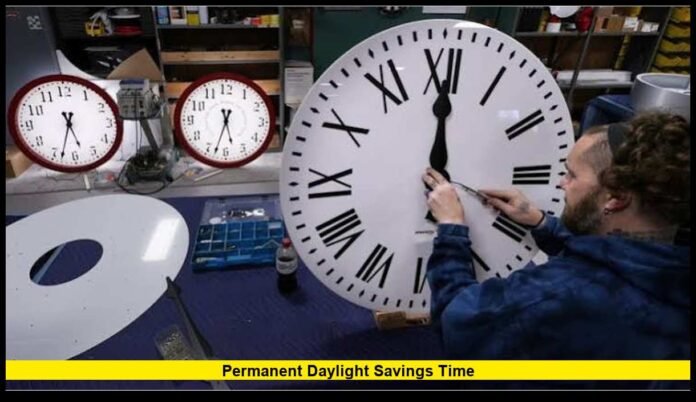

The Sunshine Protection Act of 2025 would make Daylight Saving Time permanent nationwide, ending the twice-yearly clock changes. In July 2026, the House passed the measure 308–117, sending it to the Senate for consideration. The bill would mean Americans would remain on Daylight Saving Time year-round rather than returning to standard time each winter. However, it has not become law, and Senate approval is still required. If enacted, states that currently observe standard time year-round, such as Arizona and Hawaii, would retain their existing exemptions.
Click Here For Updated News as of Oct 2026
As of the latest update, the Sunshine Protection Act of 2025 has passed the House but remains pending in the Senate. The House approved the measure 308–117 on July 14, 2026, and it was referred to the Senate Commerce, Science, and Transportation Committee the following day. Until Congress passes the legislation and it is signed into law, Americans should continue following the existing federal clock-change schedule. For 2026, Daylight Saving Time runs from March 8 through November 1. Permanent daylight saving time remains a proposal, not an active federal law.
House Takes Major Step Toward Year-Round Daylight Saving Time
The House of Representatives has taken a major step toward making daylight saving time permanent across most of the United States. On July 14, 2026, lawmakers passed the Sunshine Protection Act of 2025 (H.R. 139) by a bipartisan vote of 308-117.
- 193 Republicans voted in favor.
- 114 Democrats supported the bill.
- One independent also voted yes.
Sponsored by Rep. Vern Buchanan (R-Fla.), the legislation would make daylight saving time the permanent standard time for most of the country. This would eliminate the familiar twice-yearly clock changes in spring and fall.
However, the House vote does not change the nation’s clocks yet. The bill was received by the Senate on July 15, 2026, and referred to the Senate Committee on Commerce, Science, and Transportation. The latest legislative record shows no Senate passage yet.
Therefore, Americans should continue following the existing daylight saving time schedule unless Congress completes the remaining legislative steps and the bill becomes law.
Senate Action Remains Necessary
The Senate remains the critical next step for making daylight saving time permanent in the United States. After passing the House, H.R. 139, the Sunshine Protection Act of 2025, was sent to the Senate and referred to the Senate Committee on Commerce, Science, and Transportation. As of the latest update, the Senate has not approved the legislation, meaning year-round daylight saving time has not become federal law. The current system of switching between daylight saving time and standard time therefore remains in effect.
This distinction is important because the House vote does not automatically change the nation’s clock rules. Americans should continue following the existing federal schedule for seasonal clock changes.
Before permanent daylight saving time could take effect, Congress would need to complete the remaining legislative process, including Senate approval, followed by the president’s action. For now, the twice-yearly clock changes remain in place.
What the Proposed Change Would Actually Do
The Sunshine Protection Act would change how most Americans label time by making daylight saving time permanent in areas that currently observe seasonal clock changes. Under the existing system, clocks move forward by one hour in March and return to standard time in November.
If enacted, the proposal would eliminate both annual clock adjustments. Clocks would remain on daylight saving time throughout the year, meaning winter afternoons and evenings would have more daylight according to the clock, while winter mornings would have later sunrises.
Importantly, the legislation would not create more daylight or change the length of the day. The amount of sunlight available would remain determined by Earth’s rotation, location and the seasons.
The practical change would simply be how that daylight is aligned with the clock. For example, an evening sunset that currently occurs around 5 p.m. under standard time could occur around 6 p.m. under permanent daylight saving time.
The latest development is that the House has approved H.R. 139, but the proposal has not yet become law. Until Congress completes the process, the current seasonal system remains in effect.
The 2026 Schedule Has Not Changed
Americans should still prepare for the next scheduled clock change under current federal law. Daylight saving time began on March 8, 2026, for areas that observe the seasonal time change. The next transition is scheduled for November 1, 2026, when clocks in observing areas are expected to move back one hour.
The House passage of the Sunshine Protection Act does not automatically cancel this November change. Unless Congress completes the legislative process and a new law takes effect before then, the existing federal schedule remains in place.
For now, households, businesses, schools and other organizations should continue following the current 2026 daylight saving time calendar. Any change to the November transition would require further federal action.
Why Supporters Want the Change
Supporters of permanent daylight saving time argue that the United States should stop changing its clocks twice a year and keep daylight saving time in effect throughout the year. The debate gained renewed attention in 2026 after the U.S. House passed the Sunshine Protection Act by a 308-117 vote in July, sending the legislation to the Senate.
One of the strongest arguments is convenience. Supporters say eliminating the spring and fall clock changes would make schedules more consistent for families, workers, schools and businesses. Although smartphones and computers usually adjust automatically, some clocks, appliances and other devices still require manual changes.
Supporters also emphasize more evening daylight. Under permanent daylight saving time, winter clocks would remain one hour ahead of standard time, meaning sunset would occur later by the clock. This could give families more daylight after work and school for outdoor activities, sports, recreation and errands.
Businesses and community organizations also see potential benefits. Supporters argue that restaurants, retailers, recreation businesses and other companies could have more usable daylight during the hours when customers are available. They also contend that longer evening daylight could encourage outdoor activity and increase opportunities for families to spend time together.
Supporters further argue that ending the twice-yearly clock change could reduce disruptions associated with the transitions themselves, including temporary sleep disturbances and scheduling problems.
However, the proposal remains controversial because opponents argue that permanent daylight saving time would create much darker winter mornings and could pose health and safety concerns. As of the latest update, the House-passed legislation has been referred to the Senate for consideration.
Why Opponents Remain Concerned
The strongest criticism of permanent daylight saving time centers on darker winter mornings. If the United States kept daylight saving time year-round, sunrise would occur one hour later by the clock during winter than it would under standard time. The effect would be particularly noticeable in northern states, where winter days already have fewer hours of sunlight.
Opponents argue that later winter sunrises could create challenges for children traveling to school, workers commuting during early hours and people who begin their jobs before sunrise. In some locations, morning darkness could continue well into the traditional morning commute.
Another major concern involves sleep and circadian rhythms. Medical and sleep experts who favor permanent standard time argue that morning light plays an important role in regulating the body’s internal clock. They contend that standard time better aligns official clock time with natural sunlight, particularly during winter.
The debate therefore is not simply about whether Americans should continue changing their clocks. There is broad criticism of the twice-yearly time change, but disagreement remains over which system should replace it.
Supporters of permanent daylight saving time emphasize later sunsets, evening activities and convenience, while opponents focus on morning darkness, sleep patterns and alignment with natural daylight.
As of the latest update, the federal debate continues over whether the country should adopt year-round daylight saving time or pursue permanent standard time instead. The choice could affect daily schedules, school transportation, commuting and daylight patterns across the United States.
Permanent Daylight Saving Time Versus Permanent Standard Time
Permanent daylight saving time and permanent standard time are often confused, but they would produce different daily daylight patterns across the United States.
Permanent daylight saving time would keep clocks one hour ahead of standard time throughout the entire year. During winter, this would mean later sunrises and later sunsets by the clock. Supporters generally favor this approach because they want more daylight available during the late afternoon and evening, particularly after the traditional work and school day.
Permanent standard time, by contrast, would keep the standard-time setting used during the winter today. Under this system, sunrise would occur earlier and sunset would occur earlier compared with permanent daylight saving time. Supporters of permanent standard time argue that earlier morning light is more consistent with natural sleep and circadian rhythms.
The difference becomes especially important during winter, when daylight hours are already limited. In northern states, permanent daylight saving time could push sunrise significantly later, potentially leaving children, commuters and early-shift workers traveling in darkness. Permanent standard time would provide more morning light but reduce daylight during the late afternoon and evening.
This distinction remains at the center of the national debate. Supporters of permanent daylight saving time emphasize later evening light and convenience, while those favoring permanent standard time place greater importance on morning daylight and sleep-related considerations.
Ultimately, the disagreement is not simply over whether seasonal clock changes should end. It is about which time system should remain in place year-round.
States already preparing for a possible federal change
The federal debate has also affected state governments.
A number of states have already passed laws supporting year-round daylight saving time if federal law permits them to make the switch.
States with such legislation include:
- Alabama
- Colorado
- Delaware
- Florida
- Georgia
- Idaho
- Louisiana
- Maine
- Minnesota
- Mississippi
- Montana
- Oklahoma
- Oregon
- South Carolina
- Tennessee
- Texas
- Utah
- Washington
- Wyoming
These state measures do not independently override federal time law.
That is a crucial point.
Under the current federal system, states can choose not to observe daylight saving time. However, states cannot simply create their own permanent daylight saving time schedule while federal law continues to govern the system.
A federal change would therefore be necessary for states seeking year-round daylight saving time to move forward under their existing laws.
Arizona and Hawaii Remain Different
Not every U.S. state currently observes daylight saving time. Hawaii does not observe daylight saving time, so the state remains on standard time throughout the year.
Most of Arizona also stays on standard time year-round and does not move its clocks forward in the spring or back in the fall. However, there is an important exception: the Navajo Nation, which extends across parts of Arizona, New Mexico and Utah, does observe daylight saving time. This creates a unique situation in which most of Arizona follows one timekeeping system while the Navajo Nation follows another.
These existing arrangements are important to the national debate because they demonstrate that the United States already has different approaches to seasonal clock changes.
The latest federal proposals concerning permanent daylight saving time also recognize that states and certain jurisdictions may have different preferences. Under the House-passed approach, states could choose to remain on permanent standard time rather than adopting year-round daylight saving time.
As a result, ending the nationwide clock changes would not necessarily mean every U.S. location would follow exactly the same time policy. States that choose permanent standard time could continue using that system, while other states could potentially remain on daylight saving time year-round if federal law ultimately permits it.
The issue therefore involves not only whether seasonal clock changes should end, but also how much flexibility states should have in choosing their year-round time system.
Why the Issue Has Returned to Congress
The debate over changing the nation’s clock system has continued for decades, but it has gained renewed attention as lawmakers reconsider whether the United States should continue switching between standard time and daylight saving time twice each year.
Supporters of reform argue that the clock changes create unnecessary disruption for families, schools, businesses, transportation systems and workplaces. Although smartphones, computers and many connected devices automatically adjust their clocks, the federal rules governing time zones and daylight saving time still determine when those changes occur.
The issue can also affect broadcasting, travel schedules, financial markets, technology systems and everyday routines. Even when devices update automatically, organizations must ensure that software, schedules and operating systems follow the legally established time changes.
Congress therefore has a central role in determining whether the current system continues or whether federal law changes to establish a permanent time policy. States cannot simply create their own independent time zones outside the framework established by federal law, although federal law provides certain options for states that choose not to observe daylight saving time.
The 2026 House vote has brought new momentum to the discussion, putting additional attention on the Senate. The Senate’s consideration will be important in determining whether the proposal moves forward, is amended, or ultimately stalls.
The latest debate reflects a broader question: Should the United States continue changing its clocks seasonally, or should lawmakers establish a permanent system?
The 1970s Offer an Important Precedent
The United States has already experienced a period of year-round daylight saving time, making the 1970s an important historical reference in today’s debate.
During the energy crisis of 1973–74, Congress approved a temporary nationwide shift to year-round daylight saving time. The policy began in January 1974 as an effort to reduce energy consumption and make greater use of available daylight.
However, the experiment quickly encountered public resistance. Dark winter mornings became a major concern, particularly for children traveling to school and people commuting to work before sunrise. Congress subsequently moved to end the year-round arrangement, and the United States returned to seasonal daylight saving time.
The 1970s experience continues to shape arguments on both sides of the current debate. Supporters of permanent daylight saving time argue that modern society is different, with changing work patterns, widespread automatic timekeeping and continued public frustration over switching clocks twice a year.
Opponents, meanwhile, point to the 1970s as evidence that later winter sunsets can come at the cost of significantly darker mornings. They argue that permanent standard time would better align daily schedules with natural daylight, particularly during winter.
The historical precedent does not determine what Congress will decide in 2026, but it provides lawmakers with an example of both the potential advantages and challenges of keeping daylight saving time throughout the year.
What Americans Should Expect This Fall
Unless federal law changes before then, most Americans who observe daylight saving time should still expect the traditional fall clock change on November 1, 2026. At 2:00 a.m. local daylight time, clocks are scheduled to move back one hour to standard time.
That means the proposed move toward permanent daylight saving time has not eliminated the 2026 fall transition. Americans in states that observe daylight saving time should continue preparing for the normal “fall back” schedule.
Most smartphones, computers, tablets and connected devices will automatically adjust when the transition occurs. However, people should still check manual clocks, household appliances, vehicle systems and other devices that may not update automatically.
The November change will also mean earlier sunsets and more morning daylight, following the standard seasonal pattern.
The schedule could change only if Congress completes the necessary legislative process and establishes a new federal rule before the transition. As of the latest update, November 1, 2026 remains the scheduled end of daylight saving time for most participating U.S. locations.
What Happens If the Senate Approves the Bill?
Senate approval would be an important step, but it would not automatically make permanent daylight saving time the law. For legislation to reach the president, the House and Senate must approve the same version of the bill.
If the Senate passes the House-approved version without changes, the legislation could be enrolled and sent to the president for consideration. The president could sign it into law, veto it, or, under certain circumstances, allow it to become law without a signature.
If the Senate approves a different version, the two chambers would need to resolve their differences before a final version could be sent to the president. This can involve further House and Senate action or a conference process to reconcile the competing versions.
The effective date would depend on the final legislation enacted by Congress. A law could specify when the new timekeeping rules would take effect, meaning Senate passage alone would not immediately eliminate the existing seasonal clock changes.
Until a new federal law is enacted and takes effect, the current federal timekeeping rules remain in force. Therefore, Americans should continue following the existing daylight saving time schedule unless and until Congress completes the legislative process and a new rule becomes effective.
Why the Current Status Matters
The difference between a House-passed bill and an enacted federal law is significant. A vote in the House does not by itself change the legal rules governing daylight saving time.
Americans should therefore be careful when headlines describe congressional action as though permanent daylight saving time has already been adopted. Legislation must complete the required congressional process and become law before it can change the federal rules. Congress has previously considered legislation to make daylight saving time permanent, illustrating that congressional approval at one stage does not necessarily result in an immediate change.
Until a new law takes effect, the existing federal timekeeping framework remains in place. That means Americans who currently observe daylight saving time should continue following the established seasonal schedule rather than changing calendars, work schedules or household clocks based solely on congressional proposals.
The latest status should therefore be checked carefully before making plans around a potential nationwide change. A House vote can advance legislation, but it does not by itself eliminate the existing clock-change system.
The key facts for Americans
The latest situation can be summarized simply:
| Issue | Current status |
|---|---|
| Sunshine Protection Act | Passed by the House |
| House vote | 308-117 |
| Senate status | Referred to committee |
| Permanent daylight saving time | Not yet federal law |
| 2026 fall clock change | Still scheduled |
| November 2026 transition | November 1 under current law |
| Hawaii | Does not observe daylight saving time |
| Most of Arizona | Does not observe daylight saving time |
| State permanent-DST laws | Several states have enacted them pending federal authorization |
The most important point is that the United States has not yet locked its clocks permanently.
The House has taken a significant step, but the Senate remains responsible for the next stage of the federal process.
Bottom Line
The permanent daylight saving time debate has gained renewed attention in 2026, but the proposed change is not yet law. The House has approved the Sunshine Protection Act, while the Senate must still consider the legislation before it can advance. Until Congress completes the legislative process and a new law takes effect, the existing seasonal system remains in place. For most Americans, that means daylight saving time will continue through the fall, with the next scheduled clock change on November 1, 2026. The debate remains focused on later evening daylight versus darker winter mornings and permanent standard time.
FAQs
1. Is permanent daylight saving time becoming law in the United States?
Not yet. The House of Representatives passed the Sunshine Protection Act of 2025 on July 14, 2026, by a 308–117 vote. The bill was then sent to the Senate, where it was referred to the Senate Commerce, Science, and Transportation Committee. It still needs Senate approval and the president’s signature before it can become law.
2. What would permanent daylight saving time mean?
Permanent daylight saving time would keep clocks one hour ahead of standard time year-round. Americans would no longer move their clocks backward in the fall or forward in the spring if the legislation becomes law.
3. When would permanent daylight saving time begin?
There is no confirmed nationwide start date yet because the legislation has not become law. Under current federal rules, daylight saving time remains in effect from the second Sunday in March through the first Sunday in November. In 2026, DST ends on November 1.
4. Would every state have to use permanent daylight saving time?
Not necessarily. The proposed legislation would allow states to choose whether to observe daylight saving time or remain on standard time. Under current law, however, states can opt out of daylight saving time only by observing standard time year-round; states cannot currently establish permanent daylight saving time on their own.
5. Why do supporters and opponents disagree about permanent daylight saving time?
Supporters say it would eliminate the twice-yearly clock changes and provide more daylight during the evening, potentially benefiting families, businesses and tourism. Opponents are concerned that permanent DST would produce later winter sunrises, leaving children and early-morning workers traveling in darkness. The Senate’s path forward remains uncertain.
The House has moved the nation closer to a permanent clock, but the final decision now depends on what the Senate does next.