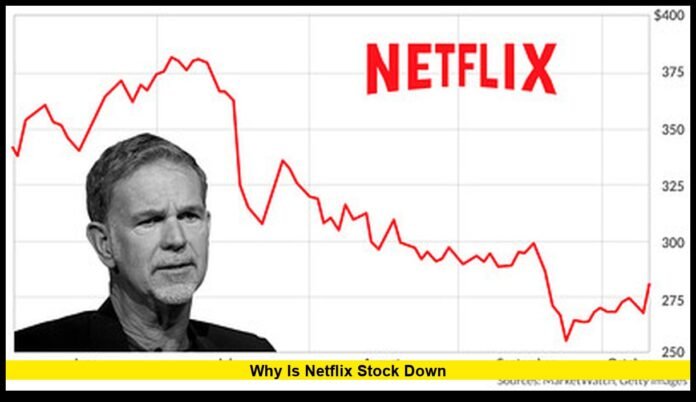

Netflix has long been one of Wall Street’s favorite growth stories, but recent fluctuations in its share price have left many investors wondering: why is Netflix stock down?
Although the streaming giant continues to attract millions of viewers worldwide and remains a dominant force in digital entertainment, several factors have contributed to periods of weakness in the company’s stock. Investor sentiment, competition, advertising performance, economic conditions, and future growth expectations are all playing a role in how the market values Netflix today.
Key Points Summary
╔════════════════════════════════════════════════════════════════════╗
║ – Netflix stock has faced pressure from investor concerns about future growth. ║
║ – Competition in the streaming sector continues to increase. ║
║ – Advertising revenue remains a closely watched area of expansion. ║
║ – Market volatility and economic uncertainty have affected tech stocks. ║
║ – Subscriber growth trends continue to influence investor confidence. ║
║ – Long-term opportunities remain despite short-term share price swings. ║
╚════════════════════════════════════════════════════════════════════╝
Why Investors Are Concerned About Netflix
Netflix is no longer viewed as a fast-growing startup. Instead, it is a mature global entertainment company expected to deliver consistent growth and strong profits.
This creates a challenge. Investors often expect exceptional results every quarter. When revenue growth slows or future guidance appears less optimistic, the stock can react negatively even if the company remains profitable.
The market’s focus has shifted from simply gaining subscribers to proving that Netflix can continue growing earnings while defending its leadership position.
Subscriber Growth Is Still a Major Driver
One of the biggest factors affecting Netflix stock is subscriber growth.
For years, investors measured Netflix’s success by the number of new customers joining the platform. While the company has expanded into new revenue streams, membership growth remains a critical indicator of future performance.
Any signs that customer additions are slowing can lead investors to question how much room Netflix has left to expand. This concern becomes especially important in regions where streaming adoption is already high.
As a result, quarterly subscriber figures often have a direct impact on the stock price.
Competition Is More Intense Than Ever
The streaming landscape has changed dramatically.
Netflix once operated with limited competition, but today’s market includes numerous platforms competing for viewers’ attention and subscription dollars. Consumers can choose from a wide range of entertainment services, making customer retention more challenging.
To stay ahead, Netflix must continue producing popular original content while also acquiring programming that keeps audiences engaged. These efforts require significant investment, which can affect profit margins and investor expectations.
The growing battle for viewers remains one of the biggest challenges facing the company.
Advertising Growth Faces High Expectations
Netflix’s introduction of lower-cost advertising-supported plans opened a new chapter for the company.
Investors see advertising as a major opportunity because it can generate revenue beyond monthly subscription fees. However, expectations for this business segment are extremely high.
The market wants evidence that advertisers are embracing the platform and that advertising income can become a substantial contributor to future growth.
If advertising expansion occurs more slowly than anticipated, some investors may become cautious about Netflix’s long-term revenue outlook.
Content Spending Continues to Rise
Producing premium entertainment is expensive.
Netflix invests heavily in original films, television series, documentaries, reality programming, and international productions. These investments help attract viewers and strengthen the company’s competitive position.
However, large content budgets also raise concerns among investors who want to see continued profitability.
The challenge for Netflix is finding the right balance between investing in new content and maintaining healthy financial performance. Market concerns often arise when spending appears to outpace growth.
Economic Conditions Are Affecting Investor Behavior
Broader market trends can significantly influence Netflix stock.
Technology and media companies often experience volatility during periods of economic uncertainty. Concerns about inflation, consumer spending, interest rates, and overall economic growth can cause investors to become more cautious.
When market participants move away from growth-oriented investments, companies like Netflix can see their stock prices decline even when business operations remain stable.
This means that not every drop in Netflix shares is directly tied to company performance.
Profit-Taking Can Create Temporary Weakness
After periods of strong gains, many investors choose to lock in profits.
This process, known as profit-taking, can lead to short-term declines in a stock even if there is no major negative news. Large institutional investors frequently rebalance portfolios, and these moves can contribute to volatility.
In some cases, Netflix shares may decline simply because investors are securing gains after a previous rally.
International Markets Offer Future Growth Potential
Despite concerns about short-term performance, Netflix continues to see opportunities around the world.
The company has expanded aggressively into international markets and increased investment in local-language content. Many of Netflix’s most successful programs have come from outside the United States, demonstrating the power of its global strategy.
As internet access improves and streaming adoption increases across developing markets, international audiences could become an increasingly important source of growth.
This long-term opportunity remains one of the strongest arguments made by bullish investors.
What Could Help Netflix Stock Rebound?
Several developments could improve investor confidence and support a recovery in Netflix shares.
Stronger Subscriber Growth
A return to faster membership growth would likely be viewed positively by investors.
Advertising Success
Rapid expansion of advertising revenue could create a new growth engine for the company.
Higher Profit Margins
Improved profitability would demonstrate that Netflix can grow while managing costs effectively.
Hit Content Releases
Popular series and blockbuster films can drive subscriber engagement and attract new viewers.
Positive Market Conditions
A stronger overall stock market environment could help technology and media companies regain momentum.
Long-Term Outlook for Netflix
While short-term volatility remains a reality, Netflix continues to possess several strengths.
The company benefits from a globally recognized brand, an extensive content library, a massive audience base, and increasing diversification through advertising initiatives.
Many investors still view Netflix as one of the most influential companies in the entertainment industry. However, future success will depend on its ability to maintain growth while navigating an increasingly competitive environment.
FAQs
Q: Why is Netflix stock down recently?
A: Netflix stock has faced pressure due to concerns about subscriber growth, competition, advertising performance, and broader market conditions.
Q: Is Netflix still growing?
A: Netflix continues to grow, but investors closely monitor whether growth rates can remain strong enough to justify the company’s valuation.
Q: Does competition affect Netflix stock?
A: Yes. Increased competition can make it harder to attract and retain subscribers, which can influence investor sentiment.
Q: How important is advertising to Netflix?
A: Advertising is becoming an increasingly important revenue source and is viewed as a major future growth opportunity.
Q: Can Netflix stock recover?
A: Future performance will depend on subscriber growth, revenue expansion, profitability, content success, and overall market conditions.
Conclusion
The answer to why is Netflix stock down is not tied to a single event. Instead, it reflects a combination of investor concerns about growth, competition, advertising performance, spending levels, and economic uncertainty.
Despite these challenges, Netflix remains a dominant force in global entertainment with significant opportunities ahead. As the company continues to evolve its business model and expand internationally, investors will be watching closely to see whether it can translate those opportunities into sustained financial growth.
What’s your outlook for Netflix stock over the next year? Join the conversation in the comments and stay updated with the latest market insights.