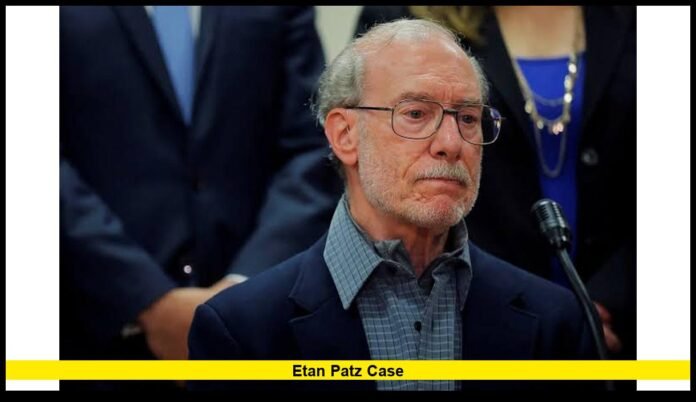

The etan patz case is once again drawing national attention after a major decision by the U.S. Supreme Court restored the conviction of Pedro Hernandez, the man found guilty in connection with one of the most famous child disappearance cases in American history. The ruling marks the latest chapter in a case that has remained in the public eye for nearly five decades and continues to influence discussions about child safety, criminal investigations, and the justice system across the United States.
For many Americans, the disappearance of six-year-old Etan Patz remains one of the most heartbreaking mysteries ever investigated. His case changed the way law enforcement agencies respond to missing children and transformed public awareness about child abductions. Even though decades have passed since his disappearance, developments in the legal battle continue to generate headlines nationwide.
A Morning That Changed American History
On May 25, 1979, six-year-old Etan Patz left his family’s home in New York City’s SoHo neighborhood to walk to his school bus stop.
The trip was short and familiar. His parents believed he was ready to make the brief walk on his own. It was a decision many parents made at the time without concern.
Etan never reached the bus.
When school officials informed his family that he had not arrived, concern quickly turned into panic. His parents contacted authorities, and an extensive search effort began almost immediately.
Police officers, volunteers, neighbors, and investigators searched throughout the city. Flyers appeared across New York. Television stations carried updates. Communities rallied around the family in hopes that the young boy would be found alive.
Despite one of the largest search efforts of its era, no trace of Etan was discovered.
His disappearance shocked New York and soon became a national story.
How the Case Changed America
Before Etan disappeared, missing-child cases often received limited national attention.
That changed dramatically after 1979.
The widespread publicity surrounding the investigation brought unprecedented awareness to the issue of child abductions. Millions of Americans followed the case closely and watched as authorities searched for answers.
Etan became one of the first missing children whose image appeared on milk cartons distributed throughout the country. His photograph reached homes nationwide and helped create a new model for public awareness campaigns.
The impact extended far beyond New York.
The case helped inspire broader efforts to improve communication between law enforcement agencies and the public. It also increased awareness among parents about child safety and encouraged new conversations about protecting children in public spaces.
Many experts consider the disappearance of Etan Patz a turning point in how America responds when a child goes missing.
Years of Questions and Few Answers
As the years passed, investigators continued searching for clues.
Numerous leads emerged, but none resulted in a definitive resolution. Detectives interviewed witnesses, reviewed evidence, and revisited the case multiple times.
The investigation remained active for decades.
For Etan’s family, the uncertainty was particularly painful. They spent years hoping for answers while continuing to advocate for missing children across the country.
The case became one of the most recognized unsolved disappearances in American history.
Public interest never completely faded.
Every new lead generated fresh attention, and many Americans remained familiar with Etan’s story long after the initial search ended.
Pedro Hernandez Emerges as a Suspect
A major breakthrough appeared to arrive in 2012.
Authorities identified Pedro Hernandez as a suspect in the case. Hernandez had worked at a convenience store near the route Etan walked on the day he disappeared.
Investigators focused on statements Hernandez made during questioning.
According to prosecutors, Hernandez admitted involvement in Etan’s disappearance and death. Authorities argued that his admissions provided critical details about what happened nearly three decades earlier.
The arrest generated nationwide media coverage.
For many observers, the development represented the first significant break in a mystery that had remained unresolved for more than thirty years.
Yet the case remained complicated.
There was no body, no DNA evidence, and no physical evidence directly linking Hernandez to the crime scene.
As a result, the legal proceedings would largely center on the reliability of his statements to investigators.
The Challenge of Prosecuting a Decades-Old Case
Criminal cases become increasingly difficult to prosecute as time passes.
Witness memories fade. Physical evidence can disappear. Important records may become harder to obtain.
The challenges facing prosecutors in the Etan Patz investigation were extraordinary.
More than three decades separated the alleged crime from Hernandez’s arrest.
Attorneys on both sides faced the difficult task of reconstructing events from 1979.
Jurors would eventually need to evaluate evidence connected to a case that began before many of them were even born.
The unusual circumstances made the proceedings one of the most closely watched criminal trials in the country.
The First Trial Ends Without a Verdict
Hernandez’s first trial began in 2015.
The proceedings attracted intense public attention. News organizations from around the country covered the courtroom developments as prosecutors and defense attorneys presented their arguments.
Prosecutors argued that Hernandez’s admissions demonstrated his guilt.
Defense lawyers challenged the reliability of those admissions and questioned whether investigators had obtained trustworthy information.
After lengthy deliberations, jurors informed the court that they could not reach a unanimous decision.
The result was a mistrial.
The deadlocked jury highlighted how difficult the case remained despite years of investigation.
Because no verdict was reached, prosecutors prepared for another trial.
A Second Trial Produces a Conviction
The retrial began in 2016 and concluded in early 2017.
This time, jurors reached a different outcome.
Pedro Hernandez was convicted of kidnapping and felony murder in connection with Etan Patz’s disappearance.
The verdict represented a major moment for prosecutors who had spent years pursuing the case.
It also marked a significant development for the Patz family, who had waited decades for a courtroom resolution.
Following the conviction, Hernandez received a sentence of 25 years to life in prison.
Many people believed the legal chapter of the case had finally reached its conclusion.
However, the appeals process would continue for years.
The Ongoing Legal Debate
After his conviction, Hernandez pursued multiple appeals.
His attorneys argued that significant legal errors occurred during the trial.
One of the primary issues involved jury instructions and how jurors should evaluate Hernandez’s statements to investigators.
Defense attorneys maintained that the instructions given to jurors created concerns about whether the confession evidence had been properly considered.
The legal arguments moved through state and federal courts over several years.
Each ruling attracted renewed attention because of the historic nature of the case.
The appeals process demonstrated how complicated criminal litigation can become, particularly in a case involving a confession, decades-old evidence, and intense public interest.
Federal Appeals Court Overturns Conviction
In 2025, a federal appeals court issued a major ruling.
The court overturned Hernandez’s conviction and ordered that he receive a new trial unless prosecutors acted within a specific timeframe.
The decision immediately changed the legal landscape.
Supporters of the ruling viewed it as an important safeguard for defendants’ rights.
Others believed the conviction should remain intact because multiple courts had previously upheld the verdict.
The ruling reopened questions many believed had already been resolved.
Once again, the Etan Patz investigation returned to national headlines.
Legal experts analyzed the decision, while prosecutors prepared their next steps.
Manhattan Prosecutors Continue the Fight
Following the appeals court decision, Manhattan prosecutors made clear that they intended to continue defending the conviction.
Rather than abandoning the case, they sought review from the U.S. Supreme Court.
Prosecutors argued that the federal court had improperly substituted its judgment for decisions already made by state courts.
The request placed the case before the nation’s highest judicial authority.
Meanwhile, additional court proceedings continued in New York as officials prepared for the possibility of another trial.
The legal battle remained active throughout 2025 and into 2026.
Supreme Court Issues Landmark Ruling
On June 22, 2026, the U.S. Supreme Court delivered a decision that dramatically altered the trajectory of the case.
The Court ruled in favor of New York prosecutors and reinstated Hernandez’s conviction.
The decision reversed the federal appeals court ruling that had ordered a new trial.
As a result, the 2017 conviction once again became legally valid.
The ruling represented a major victory for prosecutors who had spent years defending the verdict through multiple levels of review.
It also brought another significant milestone to a case that has generated legal battles across several decades.
The Supreme Court’s decision effectively ended the immediate prospect of a third trial and restored the conviction that jurors reached during the second proceeding.
Why the Decision Matters
The Supreme Court ruling carries significance beyond the individual case.
The decision addresses questions about how federal courts review state criminal convictions and how appellate courts evaluate jury instructions.
Legal observers note that the ruling may influence future cases involving similar procedural issues.
For the public, however, the decision is largely viewed through the lens of the Etan Patz investigation itself.
The case has occupied a unique place in American history.
Every major development attracts attention because of the profound impact Etan’s disappearance had on the nation.
The latest ruling ensures that the legal story continues to be discussed nearly half a century after the original events.
The Lasting Legacy of Etan Patz
Although the courts continue to address legal questions connected to the case, Etan Patz’s broader legacy extends far beyond the courtroom.
His disappearance transformed public awareness regarding missing children.
Parents became more cautious about child safety.
Law enforcement agencies improved methods for handling missing-child reports.
National awareness campaigns expanded significantly in the years that followed.
The case helped shape conversations that continue today.
Many child-protection initiatives trace part of their history to the public response generated by Etan’s disappearance.
His name remains recognized across generations because the impact of the case reached far beyond New York City.
Why Americans Still Follow the Story
Several factors explain why public interest remains strong.
First, the case involves the disappearance of a young child whose fate became a national concern.
Second, investigators never recovered Etan’s remains.
Third, the legal proceedings have stretched across decades, producing multiple trials and appeals.
Finally, the story carries historical importance because it changed how America views missing-child cases.
Few investigations combine all of those elements.
As a result, every major court decision attracts widespread attention.
The recent Supreme Court ruling is the latest example of how the case continues to resonate with the American public.
Where the Etan Patz Case Stands Today
As of June 2026, Pedro Hernandez’s conviction has been restored following the Supreme Court’s decision.
The ruling reverses the federal appeals court judgment that had granted Hernandez a new trial and reestablishes the verdict reached in 2017.
Nearly forty-seven years after Etan disappeared while walking to his school bus stop, the case remains one of the most significant criminal investigations in U.S. history.
Its influence can still be seen in child-safety initiatives, public awareness campaigns, and ongoing discussions about the criminal justice system.
The story of Etan Patz continues to hold a unique place in American memory, serving as both a reminder of a tragic disappearance and a landmark chapter in the nation’s approach to protecting children.
The case remains one of the most closely followed criminal investigations in America, and many readers continue to watch for any future legal developments surrounding this historic story.