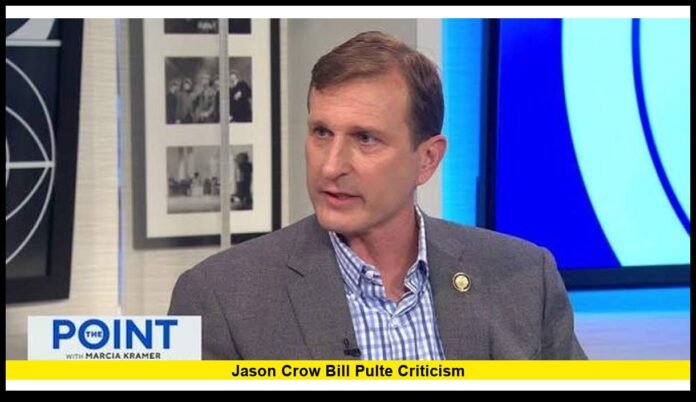

The topic of jason crow bill pulte criticism has become a major point of discussion in Washington as lawmakers, national security experts, and political observers react to the appointment of Bill Pulte as Acting Director of National Intelligence. Congressman Jason Crow has emerged as one of the most vocal critics of the decision, arguing that leadership of the U.S. intelligence community requires deep national security expertise and extensive experience overseeing complex intelligence operations.
The disagreement has quickly moved beyond a routine political dispute. It now touches on larger questions about qualifications for senior government positions, the role of intelligence agencies in protecting the country, and the balance between political loyalty and professional experience in federal leadership.
As the debate continues, both supporters and critics of the appointment are making their cases before the American public, turning what might have been a personnel decision into one of the most closely watched national security stories of 2026.
Why the Appointment Sparked Immediate Attention
The Director of National Intelligence oversees a network of intelligence agencies responsible for gathering, analyzing, and sharing information related to threats facing the United States.
The position carries enormous responsibility. Intelligence assessments help guide military operations, counterterrorism efforts, cybersecurity planning, and foreign policy decisions. Because of those responsibilities, appointments to the role often receive intense scrutiny.
When President Donald Trump selected Bill Pulte to serve as Acting Director of National Intelligence, reactions emerged almost immediately from both parties.
Supporters praised the choice and pointed to Pulte’s leadership experience. Critics questioned whether his background prepared him for one of the most sensitive national security positions in the federal government.
Among those critics, Jason Crow became one of the most prominent voices.
Who Is Jason Crow?
Jason Crow represents Colorado’s 6th Congressional District in the U.S. House of Representatives. His background differs from many members of Congress.
Before entering politics, Crow served in the U.S. Army and completed combat deployments overseas. His military service has played a major role in shaping his public profile and policy priorities.
In Congress, Crow serves on the House Permanent Select Committee on Intelligence, giving him direct involvement in oversight of intelligence agencies and national security matters.
That role has made his comments particularly noteworthy during the ongoing debate.
Throughout his time in Congress, Crow has focused on national security, defense issues, intelligence oversight, and support for military personnel and veterans. His experience allows him to evaluate intelligence matters from both a military and legislative perspective.
Who Is Bill Pulte?
Bill Pulte is best known as a businessman and philanthropist who gained national attention through social media engagement and charitable initiatives.
Unlike many previous intelligence leaders, Pulte’s public career has not been centered on intelligence operations, military leadership, diplomacy, or national security management.
That distinction lies at the center of the controversy.
Supporters describe him as a successful leader capable of bringing a fresh perspective to government. They argue that management skills, organizational leadership, and an outsider’s viewpoint can be valuable assets.
Opponents counter that intelligence leadership requires specialized knowledge developed through years of direct experience in national security fields.
The disagreement over those competing viewpoints continues to shape public discussion.
Jason Crow’s Main Criticisms
Crow’s objections have focused on several specific concerns.
Experience and Qualifications
One of Crow’s most consistent arguments involves qualifications.
He has repeatedly stated that the nation’s intelligence apparatus requires leadership with substantial expertise in intelligence collection, analysis, and national security decision-making.
According to Crow, managing intelligence agencies differs significantly from running a private business or leading a charitable organization.
The intelligence community faces unique challenges that include monitoring foreign adversaries, evaluating global threats, protecting classified information, and supporting policymakers with accurate assessments.
Crow argues that these responsibilities require a background directly connected to intelligence and national security work.
National Security Concerns
Another major component of Crow’s criticism involves concerns about national security readiness.
The United States faces a range of complex challenges, including cyber threats, geopolitical tensions, terrorism concerns, and international conflicts.
Crow has suggested that leadership transitions within intelligence agencies should prioritize expertise and continuity during periods of uncertainty.
His position reflects a belief that experienced leadership is essential when agencies are tasked with responding to rapidly evolving threats.
Protecting Intelligence Independence
Crow has also raised concerns about maintaining the independence of intelligence agencies.
Throughout the debate, he has emphasized the importance of ensuring that intelligence assessments remain objective and free from political pressure.
Intelligence agencies play a critical role in providing factual information to policymakers. Many lawmakers believe that preserving public trust requires clear separation between intelligence analysis and partisan politics.
Crow’s comments have consistently highlighted that principle.
The Television Interview That Intensified the Debate
The controversy gained significant momentum after Crow participated in a nationally televised interview in June 2026.
During the appearance, he delivered some of his strongest criticism of Pulte’s appointment.
Crow questioned whether Pulte possessed the necessary background to oversee the intelligence community and expressed concern about the potential impact on national security decision-making.
His remarks quickly spread across television networks, digital media platforms, and political discussion programs.
The interview elevated the story from a congressional dispute to a national political issue.
Within hours, commentators from across the political spectrum began debating the merits of Crow’s concerns and the administration’s decision.
Intelligence Leadership in Historical Context
The position of Director of National Intelligence was created following recommendations made after the September 11 terrorist attacks.
The goal was to improve coordination among intelligence agencies and strengthen information sharing across the federal government.
Since the office was established, many leaders have come from backgrounds that included military service, intelligence operations, diplomacy, law enforcement, or national security policymaking.
Because of that history, appointments to the role are often evaluated through the lens of professional experience.
The current debate reflects differing views on whether traditional qualifications should remain a primary consideration.
Supporters of established norms argue that intelligence leadership requires specialized expertise.
Others believe leadership ability can be transferable across industries and government institutions.
Why the Issue Matters Beyond Washington
Although the controversy involves political leaders in Washington, its implications extend far beyond Capitol Hill.
Intelligence agencies play a role in protecting Americans from a variety of threats.
Their responsibilities include:
- Monitoring foreign governments
- Detecting cyberattacks
- Tracking terrorist organizations
- Supporting military operations
- Providing strategic analysis
- Identifying emerging security risks
Leadership decisions can influence how effectively agencies carry out these responsibilities.
As a result, questions about qualifications often attract widespread public interest.
Many Americans may not follow intelligence policy on a daily basis, but they understand the importance of strong national security leadership.
Reactions From Lawmakers
Members of Congress have responded to the appointment in different ways.
Several Democrats have echoed concerns similar to those expressed by Crow. They argue that intelligence agencies require leaders with extensive experience handling classified information and national security matters.
Many Republicans have defended the administration’s choice.
They contend that presidents should have broad authority to select trusted advisers and senior officials. Supporters argue that leadership, management skills, and organizational reform efforts can be just as important as technical expertise.
These differing viewpoints reflect larger political debates about executive power and federal appointments.
The Broader Conversation About Government Leadership
The dispute has also reopened a long-running national conversation about government leadership.
Americans have often debated whether top government positions should be filled primarily by career experts or by individuals from outside traditional government institutions.
Supporters of experienced professionals argue:
- Specialized knowledge improves decision-making.
- Technical expertise helps avoid costly mistakes.
- Institutional experience strengthens effectiveness.
- Complex agencies require subject-matter expertise.
Supporters of outsider appointments argue:
- New perspectives encourage innovation.
- Leaders from other sectors can challenge bureaucracy.
- Management skills apply across organizations.
- Fresh approaches can improve performance.
The debate surrounding Pulte’s appointment highlights these competing philosophies.
Congressional Oversight Becomes Increasingly Important
As attention grows, congressional oversight is expected to remain a major factor.
The House and Senate Intelligence Committees oversee intelligence programs, budgets, and operations. Their work helps ensure accountability within agencies that often operate outside public view.
Crow has emphasized that oversight responsibilities become even more important during periods of leadership transition.
Lawmakers on both sides of the aisle generally agree that strong oversight helps maintain public confidence in intelligence institutions.
Future hearings and committee reviews may continue examining leadership decisions and operational priorities.
Public Interest Continues to Grow
The issue has attracted attention because it combines several topics that resonate with Americans:
- National security
- Government accountability
- Intelligence oversight
- Executive authority
- Leadership qualifications
Each of these subjects has become increasingly important in recent years.
As a result, the discussion surrounding Pulte’s appointment has expanded beyond political insiders and reached a broader audience.
Public interest is likely to remain strong as additional developments emerge.
Potential Impact on Future Appointments
The controversy may also influence future discussions about federal appointments.
Lawmakers often revisit qualification standards when high-profile appointments generate debate.
Questions raised during this controversy could shape future conversations about the balance between political trust and professional expertise.
Future administrations from either party may face increased scrutiny when selecting leaders for sensitive national security positions.
That possibility adds another layer of significance to the current debate.
The Political Stakes for Jason Crow
For Jason Crow, the issue reinforces his role as a leading voice on national security matters.
His military background and committee assignments have given him credibility on intelligence issues.
By taking a strong public position, Crow has placed himself at the center of one of Washington’s most significant national security debates.
His comments have attracted attention not only from constituents but also from policymakers, analysts, and political observers nationwide.
As the discussion continues, Crow’s perspective is likely to remain influential.
The Political Stakes for Bill Pulte
For Bill Pulte, the appointment represents a major test of leadership.
Supporters believe his management experience and leadership style can bring positive changes to the intelligence community.
Critics remain focused on whether he possesses the expertise necessary for the role.
Ultimately, much of the debate may be shaped by how his tenure unfolds.
Performance, decision-making, and agency operations will likely influence public perceptions moving forward.
Looking Ahead
The controversy surrounding intelligence leadership shows no signs of fading quickly.
Questions about qualifications, national security priorities, and government accountability continue to drive discussion in Washington and beyond.
Both supporters and critics remain firmly committed to their positions.
As Congress continues its oversight responsibilities and intelligence agencies carry out their missions, the debate is expected to remain a significant topic throughout 2026.
The outcome could influence not only perceptions of the current administration but also future conversations about leadership standards across the federal government.
Conclusion
The ongoing jason crow bill pulte criticism debate reflects a larger national discussion about experience, leadership, and accountability within America’s intelligence community. Jason Crow has consistently argued that the nation’s top intelligence position should be held by someone with extensive national security credentials, while supporters of Bill Pulte maintain that leadership ability and presidential confidence are equally important considerations.
As the discussion continues, Americans are watching closely because the issue extends beyond politics. It touches on the institutions responsible for protecting national security and ensuring that decision-makers receive accurate intelligence during critical moments.
The conversation surrounding intelligence leadership is far from over, and many Americans will continue following developments as policymakers debate the future direction of national security oversight.