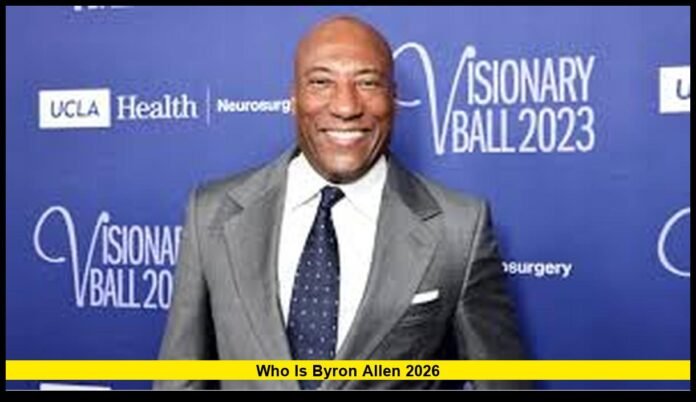

The question who is byron allen continues trending across entertainment and business news as the longtime television entrepreneur expands his influence across broadcasting, streaming, and media ownership. Known for transforming himself from a young stand-up comedian into one of the most successful media moguls in the United States, Byron Allen has spent decades building a business empire that now reaches millions of viewers nationwide.
Allen’s recent headlines have focused on major television station transactions, investments tied to premium entertainment companies, and strategic business restructuring inside Allen Media Group. His name has also resurfaced in discussions about diversity in media ownership, local broadcasting challenges, and the changing future of cable television.
What separates Allen from many entertainment executives is the path he took to success. Instead of relying only on fame or Hollywood acting opportunities, he focused on ownership, distribution, and long-term media control. That strategy helped him create a multibillion-dollar media company with holdings that stretch across television networks, local stations, weather broadcasting, film production, and digital content.
Readers following major entertainment business stories are paying close attention to Allen’s next moves as the media industry undergoes rapid transformation driven by streaming competition and shifting advertising trends.
The story of Byron Allen also reflects a larger conversation about entrepreneurship, representation, and ownership in American media. His rise remains one of the most significant success stories in modern television business history.
If you follow broadcasting deals, entertainment executives, or media industry shakeups, Allen’s latest developments continue shaping conversations across the country.
Byron Allen’s Early Life and Entry Into Entertainment
Byron Allen Folks was born in Detroit, Michigan, in April 1961 before later moving to Los Angeles with his mother. Growing up in Southern California exposed Allen to the entertainment world early in life. His mother worked in television publicity, allowing him to spend time around studios and production environments while still young.
Allen quickly became fascinated with comedy and performance. As a teenager, he began practicing stand-up routines and performing at local comedy clubs in Los Angeles. His confidence on stage helped him stand out despite competing in an industry filled with older and more experienced comedians.
At just 18 years old, Allen made history by becoming one of the youngest comedians ever to perform on “The Tonight Show Starring Johnny Carson.” That appearance became a turning point in his career and introduced him to a national television audience.
Following that breakthrough, Allen gained opportunities as a television host, comedian, and entertainer. He appeared on several programs throughout the 1980s and developed strong relationships within the television industry.
But Allen’s long-term ambitions extended far beyond performing.
Why Byron Allen Shifted From Comedy to Business
While many entertainers focused primarily on acting or comedy careers, Allen became deeply interested in television economics and media ownership.
He reportedly studied how syndication worked and realized that owning television programming could create long-term revenue and business control. Instead of simply appearing in shows created by others, Allen wanted to own production companies and distribution networks.
That decision would completely reshape his future.
Allen launched Entertainment Studios in the early 1990s, a company that later evolved into Allen Media Group. Rather than competing directly with major Hollywood studios on massive budgets, he focused on producing affordable syndicated content for television stations nationwide.
His company created programming that local stations could easily purchase and air during daytime or late-night schedules.
This business strategy allowed Allen to build consistent revenue while maintaining ownership of his content library.
Over time, that model became extremely profitable.
The Growth of Allen Media Group
Allen Media Group gradually expanded into one of the largest privately owned media companies in the country.
The company moved beyond syndicated programming and began acquiring television stations, cable channels, and digital assets. Allen focused heavily on local broadcasting because he believed television stations would continue holding long-term value despite industry changes.
That strategy attracted major attention across Wall Street and the entertainment world.
Allen Media Group eventually acquired dozens of local television stations in major and mid-sized markets throughout the United States. Those stations provided access to local news audiences, advertising markets, and retransmission revenue from cable providers.
Allen also expanded into entertainment networks covering topics like lifestyle programming, automotive shows, pets, and comedy content.
The company’s portfolio continued growing rapidly as Allen pursued acquisitions at an aggressive pace.
The Weather Channel Deal Became a Defining Moment
One of the biggest milestones in Allen’s business career came when his company acquired The Weather Channel.
The purchase dramatically increased Allen’s visibility within the national media landscape because The Weather Channel remains one of the most recognized cable television brands in America.
The network reaches millions of households and plays a major role during severe weather events, hurricanes, winter storms, and national emergencies.
The acquisition strengthened Allen Media Group’s influence in cable television and expanded its advertising reach significantly.
Industry analysts viewed the deal as proof that Allen had become a serious power player capable of competing with much larger entertainment corporations.
The Weather Channel also provided technological and operational resources that supported Allen’s broader broadcasting business.
In recent years, however, Allen Media Group faced criticism after making operational changes tied to local weather forecasting and station staffing decisions. Those moves generated public debate regarding local journalism, television cost-cutting, and centralized broadcasting operations.
Despite criticism, Allen continued restructuring parts of his media business as television companies faced increasing economic pressure.
Local TV Station Sales and Industry Changes
The television industry has experienced major financial shifts due to streaming growth, digital advertising competition, and declining cable subscriptions.
Allen Media Group responded by adjusting parts of its station portfolio.
Recent transactions involving the sale of several local television stations attracted national attention because they reflected broader challenges affecting broadcasters across the country.
Many media companies are reevaluating how local television fits into the future entertainment landscape.
Advertising dollars increasingly flow toward digital platforms and streaming services, forcing broadcasters to cut costs and improve efficiency.
Allen’s station sales demonstrated that even large media owners must adapt quickly to changing viewer habits and revenue trends.
Still, Allen remains highly active in broadcasting and continues operating television properties in multiple markets.
Industry observers say his long-term understanding of local television infrastructure remains one of his biggest competitive advantages.
Who Is Byron Allen in the Streaming Era?
The question of who is byron allen has become especially relevant as streaming services continue disrupting traditional television.
Unlike some executives who resisted industry changes, Allen expanded into digital platforms while maintaining strong broadcast operations.
Allen Media Group has explored streaming partnerships, digital distribution, and film licensing opportunities aimed at modern audiences.
The company’s entertainment assets now operate across both traditional cable television and digital media ecosystems.
Allen has repeatedly stated that content ownership and distribution remain critical regardless of how audiences consume programming.
That philosophy has guided many of his business decisions over the years.
Rather than abandoning traditional television completely, Allen has attempted to position his company across multiple forms of media consumption simultaneously.
The McDonald’s Legal Battle Drew National Attention
Allen became a major figure in national business headlines after filing a lawsuit against McDonald’s involving advertising practices and media spending.
The lawsuit alleged discrimination involving advertising contracts connected to Black-owned media companies.
The legal battle sparked extensive discussion within corporate America and the advertising industry. Media executives, civil rights advocates, and business leaders closely followed the case because it raised broader questions about diversity and inclusion in advertising budgets.
The dispute lasted several years before both sides reached a settlement agreement.
Although financial details were not publicly disclosed, the case significantly increased Allen’s visibility beyond entertainment circles.
It also strengthened his reputation as a vocal advocate for minority ownership and equal business opportunities in media.
Byron Allen’s Business Philosophy
Allen frequently emphasizes ownership over celebrity status.
In interviews throughout his career, he has discussed the importance of controlling assets rather than depending solely on entertainment contracts or temporary fame.
That ownership-focused mindset became central to his success.
Instead of building only a personal brand, Allen concentrated on acquiring businesses capable of generating recurring revenue over long periods.
His strategy included:
- Purchasing television infrastructure
- Acquiring valuable media brands
- Owning programming libraries
- Expanding distribution networks
- Building advertising relationships
- Investing in scalable media assets
This disciplined approach helped Allen transform from a comedian into a billionaire media entrepreneur.
Business analysts often point to his persistence and patience as major reasons behind his long-term success.
Allen’s Role in Media Diversity
Allen’s success carries major significance within conversations about diversity in media ownership.
The entertainment industry has historically had limited Black ownership at the highest corporate levels. Allen became one of the few Black entrepreneurs to build a national media company with extensive television holdings.
That achievement has made him an influential figure in discussions about representation, economic opportunity, and ownership access.
Allen has repeatedly argued that ownership creates lasting power within the media industry.
His rise has inspired many younger entrepreneurs interested in entertainment business careers.
Several industry leaders also credit Allen for opening conversations about how advertising dollars are distributed among media companies.
Real Estate and Personal Wealth
Allen’s business growth has also fueled enormous personal wealth.
His assets reportedly include luxury real estate holdings in several high-profile locations throughout the United States.
Allen and his family have purchased multimillion-dollar homes in California, Hawaii, New York, and Colorado over the years.
These properties often generate media attention because of their value and exclusivity.
Still, Allen generally maintains a relatively private personal life compared to many entertainment billionaires.
Most public attention surrounding him remains tied to business activity rather than celebrity culture.
Entertainment Projects and Television Production
Although Allen is best known today as a media executive, he has never completely left television entertainment behind.
His comedy and interview programs continue airing in syndication, including the long-running “Comics Unleashed.”
Allen Media Group also produces various lifestyle, legal, and entertainment programs distributed across local stations and cable networks.
Because the company owns production and distribution operations, it can efficiently place programming across numerous markets.
This vertically integrated structure remains one of Allen’s strongest business advantages.
His experience on both the creative and corporate sides of entertainment helped him understand how television audiences and station operators think.
Challenges Facing Allen Media Group
Like nearly every broadcasting company, Allen Media Group faces pressure from industry-wide disruption.
Streaming services continue competing aggressively for viewers and advertising revenue. Meanwhile, younger audiences increasingly consume entertainment through digital platforms rather than traditional cable subscriptions.
These trends have forced television companies to reduce expenses and reevaluate long-term strategies.
Allen Media Group has responded through restructuring efforts, operational changes, and selective asset sales.
Even so, Allen continues pursuing new opportunities within entertainment and broadcasting.
Many analysts believe his willingness to evolve could help his company remain competitive despite major market changes.
What Comes Next for Byron Allen?
Allen’s future plans remain closely watched throughout the media industry.
Recent investments tied to premium entertainment assets suggest he still sees long-term opportunity in television and streaming businesses.
Industry insiders continue speculating about whether Allen will pursue additional acquisitions, partnerships, or digital expansion strategies in the coming years.
Given his history of aggressive deal-making, few observers expect him to slow down anytime soon.
Allen has spent decades building a media empire during periods of enormous technological change, and his company continues adapting to new audience behaviors and industry economics.
For millions of Americans, Byron Allen represents far more than a former comedian turned businessman.
He has become one of the most influential media owners in the country, with a business empire that continues shaping television, broadcasting, and entertainment nationwide.