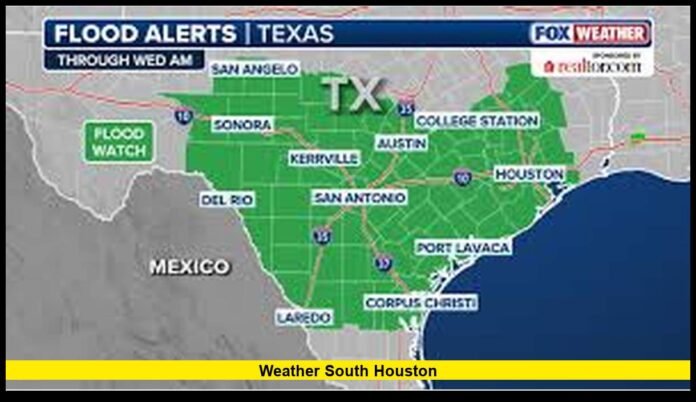

Weather South Houston remains one of the most closely watched topics across Southeast Texas as residents deal with an active stretch of storms, repeated rounds of rainfall, and an elevated flood risk. As of June 15, 2026, forecasters continue to monitor a weather pattern capable of producing significant rain totals across the Houston metropolitan area, including communities in and around South Houston. The combination of deep Gulf moisture, slow-moving storms, and already saturated ground has created conditions that could lead to localized flooding in some areas.
Many residents woke up to cloudy skies, humid conditions, and forecasts calling for additional showers and thunderstorms. Emergency officials have urged people to stay informed and remain cautious while traveling, especially in areas known for poor drainage.
South Houston Faces Another Wet Week
The weather pattern affecting South Houston is part of a broader system impacting much of Southeast Texas. Thunderstorms have developed repeatedly across the region, producing periods of intense rainfall.
Meteorologists expect unsettled conditions to continue through the middle of the week. While not every neighborhood will experience the same amount of rain, the possibility of multiple storms moving across the same location remains a concern.
Areas that have already received heavy rainfall are particularly vulnerable because the ground can absorb only a limited amount of additional water. Once the soil becomes saturated, rainfall begins running off more quickly into streets, ditches, and waterways.
This process can cause flooding to develop much faster than many residents expect.
Current Conditions Across the Region
South Houston entered the week under warm and humid conditions typical of June. Temperatures have remained below the extreme levels often seen during early summer because widespread cloud cover and rainfall have limited daytime heating.
Throughout the region, residents have reported periods of moderate to heavy rain, occasional lightning, and brief wind gusts associated with thunderstorms.
The overall weather pattern has remained remarkably consistent:
- High humidity levels
- Frequent cloud cover
- Scattered to numerous thunderstorms
- Heavy downpours in stronger storms
- Localized flooding concerns
Forecasters continue to emphasize that rainfall distribution may vary significantly from one community to another.
One neighborhood may receive less than an inch of rain, while another nearby location could receive several inches from repeated storms.
Why Flooding Is a Major Concern
Flooding remains one of the most serious weather threats in the Houston area.
Unlike severe storms that bring widespread wind damage, flooding often develops in localized areas. This can make it difficult for residents to anticipate where the worst conditions will occur.
Several factors contribute to the flood risk in South Houston:
Urban Development
Large sections of the Houston area consist of roads, parking lots, sidewalks, and buildings. These surfaces prevent rainwater from soaking into the ground.
As a result, water accumulates quickly during intense rainfall.
Flat Terrain
The region’s relatively flat landscape slows the movement of water.
When storms produce heavy rain over a short period, runoff can collect rapidly in low-lying locations.
High Rainfall Rates
Some thunderstorms have the ability to drop several inches of rain within just a few hours.
Even drainage systems designed for heavy rain can become overwhelmed under these conditions.
Repeated Storm Activity
A single thunderstorm may not cause major issues.
However, multiple storms moving across the same location can dramatically increase rainfall totals and flood potential.
How Gulf Moisture Fuels Storm Development
The Gulf of Mexico plays a crucial role in South Houston’s weather.
Warm waters provide a constant supply of moisture to the atmosphere. When weather disturbances move into the region, that moisture becomes fuel for thunderstorm development.
During summer, southerly winds often transport humid air inland.
This week, abundant Gulf moisture has combined with atmospheric instability to support widespread rain and thunderstorms.
The result has been a prolonged period of unsettled weather affecting millions of Texans.
What Residents Are Seeing on the Roads
Travel conditions can change rapidly during heavy rainfall events.
Drivers across South Houston have encountered:
- Ponding water on roads
- Reduced visibility
- Slow-moving traffic
- Temporary street flooding
- Longer commute times
Heavy rain can create dangerous conditions even when storms last only a short time.
Water often accumulates in underpasses, intersections, and low-lying stretches of roadway.
Officials continue to remind motorists that flooded roads present significant hazards.
Many flood-related rescues occur because drivers underestimate water depth.
Vehicles can lose traction, stall, or become stranded in surprisingly shallow water.
Read More – Houston Weather Today: Latest Updates and Forecast
The Importance of Monitoring Weather Alerts
Weather alerts provide critical information during active weather events.
These alerts help residents understand changing conditions and make informed decisions about travel and outdoor activities.
Common alerts issued during heavy rain events include:
Flood Watch
A flood watch means conditions are favorable for flooding.
Residents should stay alert and monitor updates.
Flood Warning
A flood warning means flooding is occurring or expected soon.
Immediate action may be necessary to protect life and property.
Flash Flood Warning
A flash flood warning indicates dangerous flooding is happening or imminent.
People should move to higher ground if necessary and avoid travel through affected areas.
Understanding the difference between these alerts can help residents respond appropriately.
Impact on Outdoor Activities
The current weather pattern has disrupted outdoor plans across the Houston region.
Parks, sports activities, festivals, and recreational events have faced interruptions due to rainfall and flooding concerns.
Families planning outdoor gatherings have had to adjust schedules as thunderstorms continue developing throughout the day.
Weather-related delays remain possible whenever storms move into the area.
Even when rainfall ends temporarily, wet ground conditions may limit activities.
How This Week Compares to Typical June Weather
June usually marks the transition into Houston’s hottest part of the year.
Average daytime temperatures often reach the low 90s while humidity remains high.
Thunderstorms are common during the month, especially during the afternoon and evening hours.
What makes the current pattern notable is the persistence of the rainfall threat.
Instead of isolated storms developing and moving away quickly, repeated rounds of rain have affected the region for several days.
This prolonged activity increases the risk of flooding and keeps temperatures somewhat lower than normal.
Rainfall Can Vary Dramatically
One of the most challenging aspects of forecasting Southeast Texas weather is predicting exactly where the heaviest rainfall will occur.
Thunderstorms often develop in clusters.
As these clusters move across the region, some communities receive much heavier rainfall than others.
Residents should avoid assuming conditions are safe simply because weather appears calm at their location.
Storms can strengthen quickly and produce intense rainfall with little warning.
This localized nature of heavy rain events is one reason meteorologists continue monitoring the situation closely.
Preparing Your Home for Heavy Rain
Residents can take several simple steps to reduce weather-related risks.
Clear Drainage Areas
Leaves, debris, and trash can block storm drains and gutters.
Keeping drainage pathways clear helps water flow more efficiently.
Secure Outdoor Items
Strong thunderstorms sometimes produce gusty winds.
Loose outdoor furniture and decorations should be secured.
Check Emergency Supplies
Flashlights, batteries, phone chargers, and bottled water can be useful during severe weather.
Stay Informed
Weather conditions can change rapidly.
Regularly checking forecasts helps residents prepare for new developments.
The Role of Bayous and Drainage Systems
Houston’s extensive network of bayous and drainage channels plays a vital role during heavy rain events.
These waterways help move excess water away from populated areas.
When rainfall remains moderate, the system generally performs well.
However, prolonged heavy rainfall can cause water levels to rise quickly.
Officials monitor these waterways closely whenever significant rain is expected.
Rapid rises in water levels can lead to localized flooding in nearby areas.
Looking Ahead to the Rest of the Week
Forecasters expect rain chances to remain elevated through midweek.
Additional thunderstorms may develop each day, bringing periods of heavy rainfall to portions of the Houston area.
As the weather system gradually weakens and moves away, rain coverage should decrease.
Temperatures may begin climbing later in the week as sunshine returns and atmospheric moisture becomes less concentrated.
Even after rainfall decreases, some locations could continue experiencing standing water due to saturated ground conditions.
Residents should remain cautious until waterways and drainage systems return to normal levels.
Summer Weather Season Is Just Beginning
Although the current focus remains on rainfall and flooding concerns, South Houston’s broader summer weather season is only beginning.
The months ahead typically bring:
- Hot temperatures
- High humidity
- Frequent thunderstorms
- Elevated heat index values
- Occasional tropical weather threats
This combination makes weather awareness particularly important throughout the summer.
Residents who stay informed are often better prepared for changing conditions.
Community Awareness Remains Essential
Weather affects nearly every aspect of daily life, from commuting and school activities to outdoor recreation and business operations.
The current pattern serves as a reminder of how quickly conditions can change along the Gulf Coast.
South Houston residents are accustomed to summer storms, but repeated rounds of heavy rainfall always deserve attention.
Monitoring forecasts, avoiding flooded roads, and staying aware of local conditions can help reduce risks during active weather periods.
As the week continues, meteorologists will closely watch rainfall totals, storm development, and flood potential across Southeast Texas. While conditions may improve later in the week, heavy rain and flooding concerns remain the primary weather story for South Houston heading into the coming days.
Residents should continue checking local conditions and sharing updates from their neighborhoods as weather conditions evolve across the region.