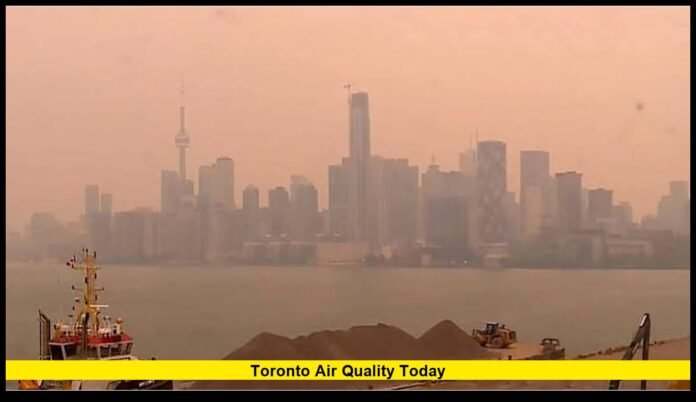

Air quality across Toronto has become a major concern as wildfire smoke continues to drift into southern Ontario, creating hazy skies and reducing visibility across the city. Conditions have fluctuated throughout the day as changing wind patterns carried varying amounts of smoke into the Greater Toronto Area. While some neighborhoods have experienced only light haze, others have seen noticeably poorer conditions, prompting health officials to encourage residents to pay close attention to changing forecasts.
Wildfire smoke has become an increasingly common summer issue across Canada, and Toronto is no exception. Even though the active fires are located far from the city, tiny airborne particles can travel hundreds of kilometers before settling over densely populated regions. As a result, residents are being advised to make informed decisions about outdoor activities and take practical steps to reduce exposure whenever smoke concentrations increase.
Current Conditions Across Toronto
The city is experiencing periods of reduced air quality due primarily to smoke transported from ongoing wildfires in northern Ontario. Weather conditions have allowed smoke to spread southward, creating hazy skies over much of the Greater Toronto Area.
Conditions have not remained constant throughout the day. Atmospheric changes, wind direction, and temperature have all contributed to noticeable differences from morning through evening. Some areas have seen temporary improvement before another wave of smoke arrived later in the day.
Many residents have reported:
- A visible layer of haze across the skyline
- Reduced long-distance visibility
- A faint smell of burning wood outdoors
- Orange or reddish sunrises and sunsets
- Mild irritation of the eyes or throat after extended time outside
These conditions may continue changing over the next several hours depending on regional weather patterns.
Why Smoke Is Affecting Toronto
The smoke affecting Toronto is not being generated within the city itself. Instead, it is arriving from large forest fires burning across northern portions of Ontario.
Wildfires produce enormous amounts of microscopic particles that are carried high into the atmosphere. Once these particles enter upper-level winds, they can travel vast distances before descending into populated regions.
Several weather factors have combined to increase smoke concentrations over southern Ontario, including:
- Persistent wildfire activity
- Light surface winds
- Stable atmospheric conditions
- Warm summer temperatures
- Regional weather systems directing smoke southward
These conditions allow smoke to linger longer instead of quickly dispersing.
Understanding Fine Smoke Particles
One of the biggest concerns during wildfire events is fine particulate matter, commonly referred to as PM2.5.
These particles are extremely small—much smaller than the width of a human hair—and can easily bypass the body’s normal filtering systems.
Once inhaled, they can travel deep into the lungs and even enter the bloodstream. Because of their size, they pose greater health concerns than larger dust particles.
Exposure levels depend on several factors, including:
- Smoke concentration
- Time spent outdoors
- Physical activity
- Individual health conditions
Even when smoke is not highly visible, elevated particle levels may still affect sensitive individuals.
How Poor Air Quality Can Affect Health
Not everyone reacts to wildfire smoke in the same way.
Some people notice almost no symptoms, while others experience irritation within minutes of going outdoors.
Common short-term symptoms include:
- Scratchy throat
- Dry cough
- Watery eyes
- Headaches
- Runny nose
- Mild chest discomfort
- Fatigue after outdoor activity
Most healthy adults recover quickly once exposure is reduced. However, people with underlying medical conditions may experience more significant symptoms if smoke levels remain elevated.
Who Should Take Extra Precautions
Certain groups are more vulnerable to the effects of wildfire smoke.
These include:
- Older adults
- Infants and young children
- Pregnant individuals
- People with asthma
- Individuals living with chronic lung disease
- People with heart conditions
- Outdoor workers
- Athletes training outdoors
These individuals may benefit from reducing time spent outside whenever smoke becomes more noticeable.
Read More – Current Temperature in Toronto: Today’s Weather, Summer Conditions, and What Residents Should Know
Changing Conditions Throughout the Day
Many people wonder why the sky appears clearer one hour and noticeably hazier a few hours later.
The answer lies in constantly changing weather conditions.
Smoke concentrations depend on:
- Wind direction
- Wind speed
- Atmospheric mixing
- Humidity
- Temperature
- Movement of wildfire smoke plumes
Because these factors change frequently, air quality can improve rapidly or deteriorate just as quickly.
Morning conditions are not always an indication of what residents will experience later in the afternoon or evening.
How Wildfire Smoke Changes the Appearance of the Sky
Smoke particles scatter sunlight differently than clean air.
This creates several visual effects that many Toronto residents have noticed:
- Duller blue skies
- Gray or white haze
- Orange sunsets
- Deep red sunrise colors
- Reduced visibility across the skyline
These colorful sunsets may appear attractive, but they often indicate increased smoke particles suspended in the atmosphere.
Outdoor Activities Require Extra Planning
People do not necessarily need to cancel every outdoor activity, but flexibility is important during smoke events.
When smoke becomes heavier, experts generally recommend:
- Reducing strenuous exercise outdoors
- Choosing indoor fitness activities
- Taking more frequent rest breaks
- Drinking additional water
- Limiting prolonged exposure
Individuals participating in recreational sports should pay attention to changing conditions before heading outside.
Keeping Indoor Air Cleaner
Indoor environments often provide meaningful protection during smoke events if managed properly.
Helpful strategies include:
- Keeping doors and windows closed during periods of heavier smoke
- Running central air conditioning if equipped with suitable filtration
- Using portable air purifiers with HEPA filters
- Avoiding indoor activities that create smoke or additional particles
- Replacing air filters according to manufacturer recommendations
A cleaner indoor environment can significantly reduce daily smoke exposure.
Can Rain Eliminate Smoke?
Rain sometimes improves air quality by washing particles from the atmosphere.
However, light showers do not always remove enough smoke to create immediate improvement.
In many cases, wind direction plays a much larger role than rainfall.
A significant change in weather patterns is often required before smoke completely clears from the region.
Travel and Daily Commutes
Smoke has also affected visibility in parts of the Greater Toronto Area.
Although major transportation systems continue operating normally, drivers should remain alert whenever visibility decreases.
Morning and evening sunlight may appear brighter or more orange than usual due to smoke filtering sunlight near the horizon.
Pedestrians and cyclists should also remain aware of changing conditions if spending extended periods outdoors.
Why Wildfire Smoke Is Becoming More Common
Over the past several summers, Canadians have become increasingly familiar with smoke events affecting communities located far from active fires.
Longer wildfire seasons, extended dry periods, and changing weather patterns have contributed to more frequent smoke episodes reaching large metropolitan areas.
Even cities located hundreds of kilometers away from burning forests can experience noticeable declines in air quality for several days.
This growing trend has encouraged more residents to monitor daily forecasts before planning outdoor activities.
Community Awareness Has Increased
Schools, employers, sports organizations, and healthcare providers now pay much closer attention to changing air quality conditions than they did a decade ago.
Many outdoor programs now adjust schedules when smoke levels become elevated.
Construction companies, municipal agencies, and event organizers also monitor conditions to help protect workers and participants during extended smoke events.
Public awareness has improved considerably, allowing people to make more informed decisions based on changing conditions rather than relying solely on visible smoke.
Looking Ahead
Weather forecasts suggest that smoke conditions will continue to fluctuate as atmospheric patterns evolve. Improvement is possible once wind direction changes and cleaner air moves into southern Ontario, but temporary periods of haze may continue until those changes become established.
Because wildfire behavior remains unpredictable, smoke forecasts can also change within a matter of hours. Residents should remain aware that conditions experienced early in the day may differ significantly from those later in the afternoon or evening.
Planning outdoor activities with flexibility, limiting unnecessary exposure during smoky periods, and paying attention to official weather updates remain the most practical ways to reduce health risks while smoke continues affecting the region.
Final Thoughts
Smoke drifting into Toronto serves as a reminder that wildfire activity occurring far from the city can still have a meaningful impact on everyday life. From outdoor recreation and commuting to public events and daily routines, changing atmospheric conditions influence how residents experience the summer season.
Remaining informed, making sensible adjustments when smoke levels increase, and protecting those most vulnerable can help reduce unnecessary exposure until cleaner air returns. As weather systems shift, conditions may improve, but staying aware of daily changes remains the best approach during wildfire season.
Have you noticed hazy skies or changing conditions where you live? Share your experience in the comments, and stay tuned for the latest updates as the situation continues to evolve.