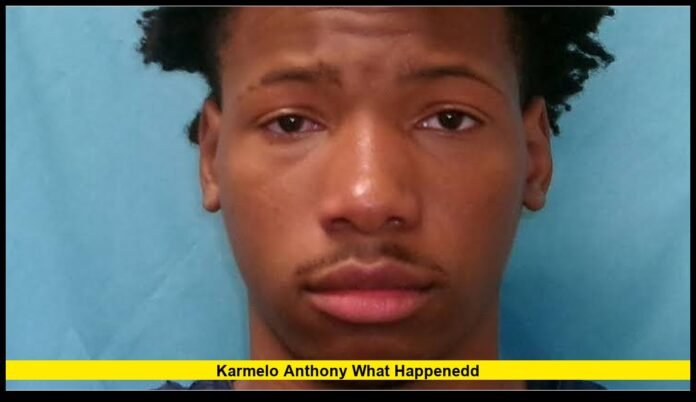

The question karmelo anthony what happened continues to generate widespread interest across the United States following the conclusion of one of Texas’ most closely watched criminal trials. More than a year after a deadly confrontation at a high school track meet shocked the Frisco community, a Collin County jury found Karmelo Anthony guilty of murder and sentenced him to 35 years in prison. The verdict brought a significant legal chapter to a close, though the case remains a subject of discussion because of its impact on two families, a community, and a national audience that closely followed every stage of the proceedings.
The case centered on the death of Austin Metcalf, a 17-year-old student-athlete whose life was cut short during a dispute at a school sporting event. What began as an ordinary spring track meet turned into a tragedy that would dominate headlines, spark public debate, and eventually lead to a courtroom battle over self-defense, accountability, and the events that unfolded in a matter of moments.
A Day That Changed Everything
On April 2, 2025, students from several schools gathered at Kuykendall Stadium in Frisco, Texas, for a district track and field competition. Athletes, coaches, parents, and spectators filled the venue as competitors prepared for events throughout the day.
Weather conditions played an unexpected role in the circumstances that led to the confrontation. Rain moved through the area, prompting many participants to seek shelter under tents located around the stadium. During this period, Karmelo Anthony, then a student at Centennial High School, entered a tent area being used by Memorial High School athletes.
According to testimony later presented during trial proceedings, Austin Metcalf approached Anthony while both were under the tent. Witness accounts indicated that an argument developed between the two teenagers. The disagreement escalated rapidly, and within moments, Anthony stabbed Metcalf.
Emergency personnel responded quickly, and efforts were made to save the injured student. Despite those efforts, Metcalf died from his injuries. The incident stunned everyone present and immediately transformed a routine school event into a major criminal investigation.
Community Shock and Immediate Response
News of the fatal stabbing spread rapidly throughout Frisco and surrounding communities. Parents, students, and school officials struggled to process how a disagreement at a school athletic event could end in the death of a teenager.
Schools in the area offered support services for students and staff coping with the emotional aftermath. Coaches and teammates remembered Metcalf as a dedicated athlete and respected classmate, while community members organized vigils and memorial events in his honor.
The tragedy resonated far beyond North Texas. Within days, the case was attracting attention across the country as details emerged about the confrontation and the individuals involved.
Law enforcement officials launched a thorough investigation, interviewing witnesses and collecting evidence from the scene. Anthony was taken into custody shortly after the incident and later charged with murder.
Legal Proceedings Move Forward
Because Anthony was 17 years old at the time of the incident, Texas law allowed authorities to pursue the matter through the adult justice system. That decision drew additional attention to the case and intensified public interest in its outcome.
Months after the stabbing, a grand jury returned a murder indictment, formally advancing the prosecution’s case. The indictment signaled that prosecutors believed sufficient evidence existed to proceed toward trial.
From that point forward, both sides began building arguments that would shape one of the state’s most scrutinized courtroom proceedings.
Public Interest Continues to Grow
As the trial date approached, the case became a focal point of discussion nationwide.
Many observers focused on questions involving self-defense laws and how those laws might apply to a confrontation between two teenagers. Others examined broader issues such as youth violence, conflict resolution, and safety at school-sponsored events.
The emotional nature of the case also contributed to public interest. The death of a young athlete and the prospect of another teenager facing decades behind bars created a complex story that generated strong reactions from people across the political and social spectrum.
Court officials repeatedly emphasized that jurors would be instructed to decide the case solely on evidence presented during trial rather than public opinion or outside commentary.
The Trial Begins
The murder trial finally began in June 2026.
Jury selection drew considerable attention as attorneys worked to identify individuals capable of evaluating the evidence fairly and objectively. Once opening statements commenced, prosecutors and defense lawyers presented sharply different interpretations of the events that occurred at the track meet.
The prosecution argued that Anthony’s actions constituted murder and that the use of deadly force was not justified under the circumstances.
The defense maintained that Anthony believed he faced a threat and acted because he feared for his safety.
Those competing narratives became the central issue jurors would have to resolve.
Witnesses Describe the Confrontation
Throughout the trial, jurors heard testimony from individuals who were present at the stadium when the incident occurred.
Witnesses described the moments leading up to the argument, the interactions between the teenagers, and the events that followed. Their testimony provided jurors with varying perspectives on what occurred beneath the tent before the stabbing.
Attorneys for both sides carefully questioned witnesses about timing, positioning, verbal exchanges, and physical actions.
Because the confrontation unfolded quickly, even small details became important as jurors attempted to reconstruct the sequence of events.
The testimony formed a major component of the evidence presented during the trial.
Medical and Investigative Evidence
In addition to eyewitness testimony, jurors reviewed extensive evidence from investigators and medical experts.
Medical testimony addressed the injuries suffered by Metcalf and the cause of death. Investigators described the evidence collected after the incident and explained how they pieced together the events that occurred at the track meet.
The prosecution used that evidence to support its argument that Anthony’s actions met the legal requirements for a murder conviction.
Defense attorneys challenged aspects of the state’s interpretation and argued that the circumstances should be viewed through the lens of Anthony’s perception during the confrontation.
Self-Defense at the Center of the Case
One of the most important legal issues during the trial involved self-defense.
Anthony’s legal team argued that he believed he was facing an immediate threat when the encounter escalated. According to the defense, Anthony reacted in a moment of fear and uncertainty.
The defense urged jurors to consider what Anthony perceived at the time rather than evaluating the incident solely through hindsight.
Prosecutors strongly disputed that argument. They contended that the evidence did not support a lawful self-defense claim and argued that deadly force was not justified during the confrontation.
The disagreement over self-defense became a defining element of the trial and ultimately played a major role in jury deliberations.
Closing Arguments
As the trial neared its conclusion, both sides delivered final arguments summarizing their positions.
Prosecutors argued that the evidence demonstrated criminal responsibility and urged jurors to return a guilty verdict. They emphasized the loss of Austin Metcalf’s life and maintained that the law supported a murder conviction.
Defense attorneys asked jurors to carefully examine the circumstances surrounding the confrontation and consider whether Anthony’s actions could be legally justified.
The final arguments highlighted the stark differences between the two sides and set the stage for deliberations.
Jury Reaches a Verdict
After reviewing the evidence and receiving legal instructions from the judge, jurors began deliberating.
The decision carried enormous significance for everyone involved. Family members, friends, and supporters from both sides awaited the outcome as jurors weighed testimony, evidence, and legal standards.
When deliberations concluded, the jury found Anthony guilty of murder.
The verdict marked a major turning point in the case and represented a rejection of the defense’s self-defense argument.
Emotional reactions followed inside and outside the courtroom as the decision became public.
Sentencing Proceedings
Following the guilty verdict, attention shifted to determining Anthony’s punishment.
The sentencing phase allowed jurors to hear additional information before deciding the appropriate sentence.
Family members addressed the court and spoke about the lasting effects of the tragedy. The emotional testimony highlighted the profound impact of the case on multiple lives and communities.
Jurors were tasked with balancing the seriousness of the offense with all relevant information presented during sentencing.
Their decision would determine Anthony’s future and shape public perception of the case for years to come.
Karmelo Anthony Receives 35-Year Sentence
For those still asking karmelo anthony what happened, the most significant recent development came when jurors sentenced him to 35 years in prison following the murder conviction.
The sentence reflected the jury’s assessment of the crime and concluded the trial phase of the case.
Because Anthony was prosecuted under adult criminal court procedures, the punishment followed guidelines applicable to adult defendants in Texas.
The sentencing decision immediately became one of the most discussed aspects of the case and generated extensive reaction nationwide.
For supporters of the prosecution, the outcome represented accountability for the death of Austin Metcalf.
For supporters of Anthony, the sentence underscored the life-changing consequences facing a young defendant convicted of a serious crime.
Impact on Families
The case has left lasting scars on both families.
The Metcalf family continues to cope with the loss of a son, brother, friend, and teammate whose future was abruptly taken away. Throughout the legal process, family members attended hearings and trial proceedings while seeking justice through the court system.
Anthony’s family has also faced extraordinary challenges as the case unfolded. The conviction and lengthy prison sentence carry consequences that will affect them for years to come.
The tragedy illustrates how a brief confrontation can permanently alter multiple lives.
What Happens Next?
Although the trial has concluded, the legal process is not entirely over.
Anthony’s attorneys have begun pursuing appellate options available under Texas law. Appeals allow higher courts to review specific legal questions and determine whether any errors occurred during the proceedings.
Such reviews are common in major criminal cases and can take considerable time to resolve.
For now, however, the jury’s verdict and sentence remain in place.
A Case That Will Be Remembered
The fatal encounter at a Frisco track meet has become one of the most widely discussed criminal cases involving teenagers in recent Texas history.
The case drew national attention because of the circumstances surrounding the confrontation, the legal questions raised during trial, and the emotional impact on those involved.
While the verdict has brought closure to one phase of the legal process, discussions about the case continue across communities, schools, and legal circles.
Its legacy will likely endure as people reflect on the devastating consequences of a conflict that lasted only moments but changed countless lives forever.