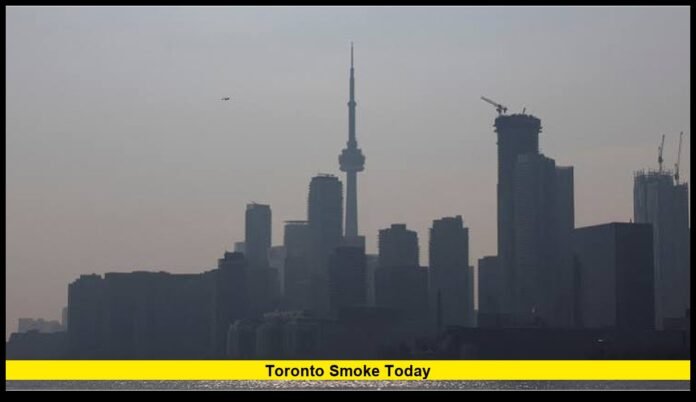

A thick layer of wildfire smoke has settled over Toronto, creating unhealthy breathing conditions and reducing visibility across the city. The smoky skies developed as winds carried pollution from large wildfires burning in northern Ontario into southern parts of the province. Health officials have warned residents to take precautions, particularly those with existing medical conditions, while environmental agencies continue to monitor changing conditions throughout the day.
The combination of lingering smoke, high temperatures, and humid weather has created one of the most difficult air quality events of the summer. Across the Greater Toronto Area, residents woke to hazy skies, the smell of smoke, and noticeably poorer visibility. Many familiar views of the downtown skyline and Lake Ontario have been obscured as fine particles remain suspended in the atmosphere.
Smoke Creates One of the City’s Most Challenging Air Quality Days
Air pollution levels climbed rapidly during the morning as wildfire smoke accumulated over the region. The smoky conditions spread across downtown Toronto and surrounding municipalities, affecting millions of residents.
Unlike pollution generated within the city itself, this event is linked to smoke traveling hundreds of miles from active forest fires farther north. Strong atmospheric currents transported the smoke southward, while weather conditions allowed much of it to remain close to the ground instead of dispersing into the upper atmosphere.
Throughout the day, residents reported significantly reduced visibility, a noticeable smoky odor outdoors, and irritation after spending even a short amount of time outside.
The haze has been visible from neighborhoods across the city, including North York, Scarborough, Etobicoke, East York, and downtown Toronto, while nearby communities have experienced similar conditions.
Wildfires Continue Fueling the Smoke Plume
Northern Ontario remains the source of the smoke affecting southern portions of the province. Multiple active wildfires continue burning across remote forested regions where dry vegetation and warm weather have supported ongoing fire activity.
As these fires produce enormous smoke plumes, shifting winds transport fine particles across vast distances. Smoke from Canadian wildfires frequently travels across provincial boundaries and even reaches parts of the United States before weather systems eventually disperse it.
The smoke visible over Toronto does not necessarily indicate nearby flames. Instead, it represents airborne particles carried over long distances before settling into the lower atmosphere.
Changing wind directions mean conditions can fluctuate several times during the day. Areas experiencing heavy smoke during the morning may see gradual improvement later, while other neighborhoods could notice thicker haze as the smoke plume shifts.
Air Quality Has Reached Levels That Affect Everyone
Poor air quality is often associated with individuals who already have asthma or heart disease, but wildfire smoke at elevated concentrations can affect healthy people as well.
Fine particles released by burning forests are small enough to travel deep into the lungs. During periods of prolonged exposure, these particles can irritate the respiratory system and make breathing more difficult.
People spending extended periods outdoors may experience symptoms such as:
- Scratchy throat
- Burning eyes
- Persistent coughing
- Headaches
- Runny nose
- Shortness of breath
- Fatigue during physical activity
Even moderate exercise can become noticeably more difficult when smoke concentrations remain high because the body requires additional oxygen during physical activity.
Certain Groups Face Greater Health Risks
Although everyone benefits from limiting smoke exposure, some groups require extra caution during significant wildfire smoke events.
Those at greater risk include:
- Older adults
- Infants and young children
- Pregnant women
- People with asthma
- Individuals living with chronic lung disease
- Those with heart conditions
- Outdoor workers
- People recovering from respiratory infections
Children deserve particular attention because their lungs are still developing, and they naturally breathe faster than adults. As a result, they inhale more polluted air relative to their body size during outdoor activities.
Older adults may also experience worsening symptoms if exposed to elevated smoke concentrations for extended periods.
Why Wildfire Smoke Is Different From Ordinary Air Pollution
Smoke from forest fires contains microscopic particles known as fine particulate matter, commonly referred to as PM2.5. These particles are considerably smaller than ordinary dust and can bypass many of the body’s natural defenses.
Once inhaled, they penetrate deep into the lungs and may even enter the bloodstream.
Scientists have linked repeated exposure to these tiny particles with increased respiratory irritation, asthma flare-ups, cardiovascular stress, and reduced lung function.
Although a brief trip outdoors may not produce noticeable symptoms for everyone, spending several hours outside while smoke remains dense significantly increases overall exposure.
Read More – Current Temperature in Toronto: Today’s Weather, Summer Conditions, and What Residents Should Know
Heat Makes Conditions Even More Difficult
The smoky weather has coincided with very warm summer temperatures across southern Ontario.
High humidity has made the air feel even hotter than the actual temperature, creating additional stress on the body.
Normally, warm summer days encourage residents to enjoy parks, cycling trails, waterfront paths, and outdoor festivals. During periods of poor air quality, however, vigorous outdoor activity becomes much less advisable.
The combination of heat and smoke can lead to quicker fatigue, dehydration, and breathing discomfort, especially during strenuous exercise.
Outdoor workers have faced particularly difficult conditions because many occupations require prolonged exposure despite the smoky environment.
Daily Life Has Been Noticeably Affected
Across the Greater Toronto Area, the haze has changed the appearance of the city.
Many residents reported that familiar skyline views disappeared behind a gray curtain of smoke. Buildings located several miles away became difficult to distinguish, while sunlight appeared muted through the haze.
Photographers captured unusually orange sunrises and sunsets as smoke scattered sunlight differently than under clear atmospheric conditions.
The smell of burning wood has also become one of the most recognizable signs of the ongoing event, even though the fires themselves remain far from the city.
Outdoor Activities Are Being Scaled Back
Many residents have postponed outdoor plans until cleaner air returns.
Activities commonly affected include:
- Running
- Cycling
- Soccer practice
- Baseball games
- Outdoor fitness classes
- Long walks
- Hiking
- Recreational sports
Parents have also reduced the amount of time children spend outdoors, particularly during the afternoon when temperatures remain high.
Pet owners are shortening walks for dogs, especially older animals or breeds that already experience breathing difficulties during hot weather.
Simple Steps Can Help Reduce Smoke Exposure
Residents can lower their exposure without making major lifestyle changes.
Helpful precautions include:
- Keep windows and doors closed whenever possible.
- Operate air conditioning using the recirculation setting.
- Use a portable HEPA air purifier if available.
- Delay strenuous outdoor exercise until conditions improve.
- Reduce the amount of time spent outside.
- Wear a properly fitted N95 respirator when extended outdoor exposure cannot be avoided.
- Drink plenty of water to stay hydrated during hot weather.
Ordinary cloth face coverings provide little protection against the microscopic particles found in wildfire smoke.
Visibility Has Declined Across Much of the Region
The smoky atmosphere has noticeably reduced visibility throughout Toronto and neighboring communities.
Normally clear views across Lake Ontario have largely disappeared beneath the haze. High-rise buildings that are typically visible from considerable distances have faded into the smoky background.
Motorists have generally continued traveling safely, although reduced visibility has required additional attention, particularly during early morning and evening hours when smoke appears denser.
Air travel has experienced only limited impacts because airport operations depend on several additional weather factors beyond surface visibility.
Neighboring Communities Are Seeing Similar Conditions
The smoky air has not remained confined to Toronto.
Communities across the Greater Toronto Area have experienced similar conditions, including:
- Mississauga
- Brampton
- Vaughan
- Richmond Hill
- Markham
- Oakville
- Burlington
- Pickering
- Ajax
- Oshawa
- Hamilton
- Milton
The intensity of the smoke has varied throughout the day as shifting winds redistributed the plume across southern Ontario.
Some neighborhoods briefly experienced improved visibility before another wave of smoke arrived later.
Weather Will Determine How Quickly Conditions Improve
Forecasts suggest that smoke concentrations will continue changing as atmospheric conditions evolve.
Wind direction remains the single biggest factor controlling local air quality during wildfire smoke events. A relatively small shift in airflow can dramatically improve or worsen conditions within just a few hours.
Rain showers may temporarily remove some airborne particles, but widespread improvement generally requires a larger weather system capable of moving the smoke away from the region altogether.
As long as major wildfires continue burning across northern Ontario, additional smoke episodes remain possible whenever weather patterns become favorable.
Wildfire Season Continues Across Canada
This year’s wildfire season remains active across several Canadian provinces.
Large forest fires continue burning in remote areas where firefighters face challenging terrain, dry vegetation, and changing weather conditions.
Although many fires are located far from heavily populated communities, their smoke continues affecting millions of people hundreds of miles away.
Wildfire smoke has become an increasingly familiar summer issue for cities across central and eastern Canada as well as parts of the northern United States.
Meteorologists continue tracking smoke movement daily because changing wind patterns can quickly alter air quality across large metropolitan areas.
Health Experts Encourage Staying Alert
Residents are encouraged to pay close attention to changing air conditions while smoke remains over the region.
Anyone experiencing persistent coughing, difficulty breathing, chest pain, or worsening respiratory symptoms should seek medical attention promptly.
Individuals who depend on asthma inhalers or other respiratory medications should ensure they have an adequate supply available, particularly during prolonged smoke events.
Employers with outdoor workforces are also encouraged to monitor conditions and provide opportunities for workers to reduce exposure whenever practical.
Looking Ahead
Although smoke levels are expected to fluctuate, improving conditions will ultimately depend on changes in regional weather patterns and the ongoing wildfire situation across northern Ontario. Until cleaner air returns, residents are encouraged to minimize unnecessary outdoor exposure, remain hydrated during the ongoing heat, and adjust daily routines to reduce the health impacts of prolonged smoke.
As conditions continue to evolve, stay informed about local air quality updates and share your experience with today’s smoky weather in the comments below.