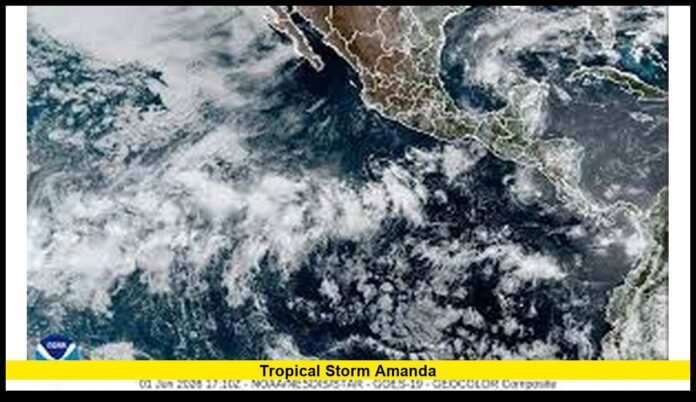

Tropical Storm Amanda has officially become the first named storm of the 2026 Eastern Pacific hurricane season, marking the beginning of another closely watched period for weather experts and coastal communities. The storm developed over open waters in the Eastern Pacific Ocean during the first week of June and remains far from populated areas. Current forecasts show no immediate threat to land, but Amanda’s formation serves as an important reminder that tropical weather activity is now underway across the Pacific basin.
The appearance of the season’s first named storm is always a notable milestone. While Amanda is not expected to impact coastal regions in the near future, meteorologists continue to track its movement and strength around the clock. The storm’s development reflects favorable ocean and atmospheric conditions that often emerge during the early weeks of the Pacific hurricane season.
Amanda Becomes the First Named Storm of 2026
The Eastern Pacific hurricane season officially began on May 15. During the opening weeks of the season, weather agencies monitored several areas of unsettled weather across the region. One of those disturbances gradually became more organized as thunderstorms clustered around a developing center of circulation.
As the system strengthened, forecasters upgraded it to a tropical depression. Continued organization and stronger sustained winds eventually allowed the system to reach tropical storm status. Once those winds exceeded the threshold required for classification, the storm received the name Amanda.
The naming of Amanda officially started the list of tropical cyclone names designated for the 2026 Eastern Pacific season. It also highlighted the arrival of the most active period of tropical weather monitoring in the Pacific Ocean.
Where Tropical Storm Amanda Formed
Amanda developed over open waters well away from major population centers. Its location has played a significant role in limiting concerns about immediate impacts on coastal communities.
Unlike storms that form closer to Mexico’s Pacific coastline or Central America, Amanda emerged in an area where it has room to move without creating urgent threats for residents. This offshore position has allowed forecasters to focus primarily on the storm’s development rather than emergency preparations for landfall.
Weather officials continue monitoring Amanda’s track to ensure that any future changes are identified quickly. At present, forecast models indicate that the storm will remain over water as it moves generally westward and northwestward.
Current Conditions Surrounding the Storm
Tropical cyclones require a combination of favorable environmental factors to form and strengthen. Amanda developed in an area where those ingredients came together effectively.
Several key conditions contributed to the storm’s formation:
- Warm ocean temperatures
- Moist air in the lower atmosphere
- Limited wind shear
- Persistent thunderstorm activity
- A developing low-pressure center
These conditions allowed thunderstorms to organize around a central circulation, helping the system evolve into a tropical storm.
Meteorologists continue evaluating surrounding environmental conditions to determine whether Amanda can maintain its current strength or experience additional changes in intensity during the coming days.
Why the Eastern Pacific Often Sees Early Storm Development
The Eastern Pacific basin frequently experiences tropical development before the Atlantic Ocean becomes active. This pattern occurs because ocean temperatures and atmospheric conditions often become favorable earlier in the season.
Warm water acts as fuel for tropical cyclones. When sea surface temperatures rise sufficiently, disturbances moving across the region have a greater chance of developing into organized systems.
The Pacific basin benefits from several geographic and atmospheric factors that support early-season storm formation. As a result, named storms often appear there before activity increases in the Atlantic hurricane basin.
Amanda’s formation follows a pattern that meteorologists have observed for many years. While every season is unique, early June development is not unusual for the Eastern Pacific.
How Tropical Storms Receive Their Names
Many people wonder how storms receive their names. Tropical cyclone naming follows a predetermined list maintained by international weather organizations.
A system receives a name only after reaching tropical storm strength. This occurs when sustained winds reach at least 39 miles per hour.
Before reaching that threshold, a system is classified as a tropical depression. Once stronger winds develop and the circulation becomes more organized, forecasters assign the next available name on the season’s list.
Amanda was the first name scheduled for the 2026 Eastern Pacific season. Because it became the first tropical storm of the year in that basin, it received that designation.
The naming process helps weather agencies communicate clearly with emergency managers, media organizations, and the public. A specific name eliminates confusion when multiple systems are active simultaneously.
Forecast Outlook for Amanda
Current forecast guidance suggests Amanda will continue moving over open waters. Weather experts expect the storm to remain away from significant population centers throughout the near-term forecast period.
Forecast models indicate that Amanda may encounter environmental conditions that become less favorable over time. Changes in ocean temperatures and atmospheric patterns could influence the storm’s future strength.
At present, forecasters are focused on several key factors:
| Forecast Element | Current Outlook |
|---|---|
| Position | Eastern Pacific Ocean |
| Classification | Tropical Storm |
| Movement | Generally West to Northwest |
| Immediate Land Threat | None |
| Watches or Warnings | None |
| Monitoring Status | Active |
Forecasts can evolve as new information becomes available. Meteorologists therefore continue issuing regular updates and advisories.
What Amanda Means for the 2026 Hurricane Season
The first named storm of any season often attracts significant attention. While Amanda alone cannot predict how active the remainder of the season will be, it does mark the beginning of a period when tropical weather becomes increasingly important.
Emergency managers, coastal residents, shipping interests, and tourism operators all pay close attention to the arrival of the first named storm.
Amanda serves as a seasonal reminder that hurricane preparedness should remain a priority. Communities located near tropical cyclone-prone coastlines often use the early part of the season to review emergency plans and disaster response procedures.
Preparedness efforts typically include:
- Updating emergency supply kits
- Reviewing evacuation routes
- Checking communication plans
- Monitoring official forecasts
- Understanding local emergency procedures
These steps can help families respond quickly if more significant storms develop later in the season.
Read More – Tropical Storm Melissa Hurricane Jamaica
The Science Behind Tropical Cyclone Formation
Tropical cyclones are among the most powerful weather systems on Earth. Their formation requires several atmospheric ingredients working together.
Warm ocean waters provide energy. Moist air fuels thunderstorm development. Low wind shear allows storms to organize vertically without being disrupted.
When these conditions persist long enough, a disturbance can begin rotating around a central area of low pressure. As thunderstorms continue forming around that center, the system may become increasingly organized.
Amanda developed through this classic process. Satellite imagery showed thunderstorms consolidating around a strengthening circulation before the system reached tropical storm intensity.
Weather agencies continue using advanced forecasting tools to monitor Amanda’s structure and behavior.
Satellite Technology Plays a Critical Role
Modern forecasting relies heavily on satellite observations. Weather satellites provide continuous views of tropical systems across vast stretches of ocean.
Because Amanda remains over open water, satellites serve as one of the primary tools for tracking the storm.
Forecasters use satellite imagery to evaluate:
- Thunderstorm organization
- Cloud-top temperatures
- Storm movement
- Wind estimates
- Structural changes
These observations help improve forecast accuracy and provide critical information for weather agencies around the world.
Advances in satellite technology have dramatically improved hurricane forecasting during recent decades. Today’s meteorologists can monitor developing systems more effectively than ever before.
Historical Perspective on the Name Amanda
The name Amanda has appeared multiple times in Eastern Pacific tropical cyclone records.
Previous storms carrying the name have varied significantly in strength and impact. Some remained over open water throughout their lifetimes, while others affected portions of Central America and nearby regions.
The 2026 version currently stands apart because it remains well offshore and has not generated significant impacts on land.
Each tropical cyclone follows its own unique path. The shared name does not indicate that storms will behave similarly. Atmospheric conditions, ocean temperatures, and steering currents all influence the evolution of individual systems.
Impact on Shipping and Marine Interests
Although Amanda poses no immediate threat to land, marine interests continue monitoring the storm closely.
Tropical storms can generate:
- Rough seas
- Large swells
- Strong winds
- Dangerous marine conditions
Commercial vessels operating within the region routinely adjust routes when tropical systems develop. Shipping companies and maritime authorities use forecast information to reduce risks associated with severe weather.
Fishing fleets and recreational boaters also benefit from regular storm updates.
Preparedness Remains Important Across Hurricane-Prone Regions
Amanda’s formation provides an opportunity to emphasize hurricane preparedness.
Residents along vulnerable coastlines often review their plans once the first named storm appears. Even when a particular storm remains offshore, the season itself is just beginning.
Preparedness experts encourage households to maintain supplies that can support family members during emergencies.
Common recommendations include:
- Drinking water
- Nonperishable food
- Flashlights
- Batteries
- First-aid supplies
- Important documents
- Portable phone chargers
Preparation before a storm develops is generally easier and less stressful than waiting until watches or warnings are issued.
Meteorologists Continue Around-the-Clock Monitoring
Weather agencies across North America and the Pacific region continue tracking Amanda continuously.
Forecast teams analyze new satellite images, atmospheric data, ocean conditions, and computer model guidance throughout the day. This information helps refine forecasts and identify any meaningful changes in the storm’s structure or movement.
The current outlook remains favorable because Amanda is expected to stay away from populated areas. Nevertheless, tropical cyclones are dynamic systems, and forecasters remain vigilant.
Every update contributes to a better understanding of how Amanda is evolving and what impacts, if any, may emerge during the remainder of its life cycle.
Looking Ahead
The development of Tropical Storm Amanda officially launches the 2026 Eastern Pacific hurricane season’s list of named storms. While the system currently poses no direct threat to land, its formation signals the beginning of a period when tropical weather activity becomes increasingly important across the Pacific basin.
Meteorologists will continue monitoring Amanda as it moves over open waters, evaluating any changes in intensity, structure, or track. For now, the storm serves as a reminder that hurricane season is underway and that preparedness remains a valuable step for communities throughout hurricane-prone regions.
As the season progresses, stay informed about tropical weather developments and share your thoughts on how communities can best prepare for future storms.