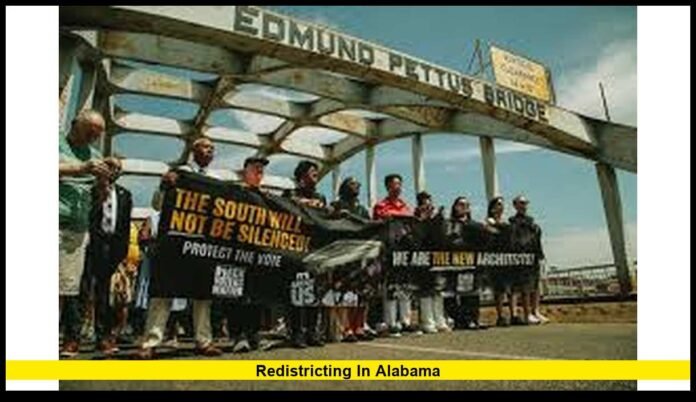

Redistricting in Alabama has become one of the most important political and legal battles in the United States as federal judges continue blocking efforts to reshape the state’s congressional districts ahead of the 2026 elections. The latest rulings intensified a conflict involving voting rights, racial representation, and the balance of political power in Congress.
The issue has placed Alabama at the center of a nationwide debate over how states draw congressional maps and how federal courts enforce protections for minority voters. The battle also carries major consequences for the U.S. House of Representatives because even a single congressional seat could influence control of Congress after the next election cycle.
In recent weeks, court decisions, legislative action, and legal filings have accelerated the fight over Alabama’s district boundaries. Republican lawmakers, civil-rights groups, and federal judges remain locked in a high-stakes dispute that could reshape election law far beyond Alabama.
Why Alabama’s Redistricting Battle Became So Important
Alabama has seven congressional districts. Republicans have dominated most of those districts for years, while Democrats have traditionally relied on heavily Black areas for support.
The state’s Black population accounts for roughly one-quarter of Alabama residents. Despite that demographic reality, earlier congressional maps included only one district where Black voters had a strong opportunity to elect their preferred candidate.
Voting-rights groups challenged those maps in federal court. They argued that Alabama lawmakers weakened Black voting strength by spreading Black communities across multiple districts.
The legal challenge eventually reached the U.S. Supreme Court in the major Allen v. Milligan case. That ruling became one of the most closely watched voting-rights decisions in recent American history.
In 2023, the Supreme Court sided with Black voters and ruled that Alabama likely violated Section 2 of the Voting Rights Act. The Court concluded that Alabama needed to create another district where Black voters could effectively influence elections.
That decision shocked many political observers because the Court preserved a key part of the Voting Rights Act at a time when federal voting protections faced growing legal pressure nationwide.
How the Court-Approved Map Changed Alabama Politics
After the Supreme Court ruling, Alabama lawmakers submitted a revised congressional map. Federal judges rejected it after determining that the Legislature still failed to provide fair opportunities for Black voters.
A federal court eventually approved a different congressional map for the state. That map created two districts with significant Black voting populations.
The new district boundaries quickly changed Alabama’s political landscape.
Democrats gained an additional congressional seat during the 2024 election cycle. The outcome reduced Republican dominance in Alabama’s congressional delegation and increased national attention on the state’s redistricting process.
Political strategists from both parties immediately recognized the importance of Alabama’s new map because control of the U.S. House remained highly competitive.
The revised map also strengthened the political influence of voters in Alabama’s historic Black Belt region, an area long associated with civil-rights activism and voting-rights litigation.
The Supreme Court’s New Ruling Changed the Legal Landscape
The Alabama battle took another dramatic turn in 2026 after the U.S. Supreme Court issued a major ruling in Louisiana v. Callais.
That decision altered the legal standards used in redistricting disputes involving race and voting rights. Legal analysts viewed the ruling as a victory for Republican-led states seeking greater flexibility when drawing congressional maps.
Following the decision, Alabama officials moved quickly to revisit the state’s congressional districts.
Attorney General Steve Marshall argued that the legal reasoning used in Allen v. Milligan had changed significantly after the Supreme Court’s latest decision. State officials requested permission to replace the court-approved map with a Republican-backed version that lawmakers originally passed in 2023.
Republican leaders insisted that race should not dominate the redistricting process. They argued that Alabama’s district lines reflected political geography rather than racial discrimination.
State lawmakers also said federal courts should not force Alabama to adopt congressional maps that dramatically alter the state’s political balance.
Federal Judges Reject Alabama’s New Attempt
A three-judge federal panel rejected Alabama’s request in late May 2026 and delivered strong criticism of the state’s actions.
The judges ruled that Alabama intentionally discriminated against Black voters when lawmakers attempted to restore a congressional map with only one majority-Black district.
The court found that the proposed map weakened Black voting power across several parts of the state, particularly in portions of the Black Belt and Gulf Coast regions.
Judges also argued that Alabama lawmakers ignored clear instructions from earlier court decisions when they attempted to revive district boundaries that courts had already found problematic.
The ruling prevented Alabama from using the Republican-backed map during the 2026 election cycle.
Federal judges stressed that changing district lines so close to upcoming elections could create confusion for voters, election workers, and candidates.
The decision represented another major setback for Republican officials seeking to regain political advantages lost under the court-approved map.
The Black Belt Remains Central to the Fight
The Black Belt region continues to play a major role in Alabama’s redistricting battle.
This historic region stretches across central and western Alabama and contains many counties with large Black populations. The area has deep historical significance because of its connection to the civil-rights movement and voting-rights activism.
Earlier congressional maps divided many Black Belt communities across several districts. Civil-rights organizations argued that those boundaries weakened the political influence of Black voters.
The court-approved map connected more Black Belt counties into districts where Black voters could more effectively influence election outcomes.
Critics of Alabama’s proposed replacement map said lawmakers once again split important Black communities in ways that reduced minority representation.
Federal judges agreed that the proposed changes would unfairly dilute Black voting strength.
Republicans Defend Their Position
Republican leaders continue defending Alabama’s proposed congressional map and broader redistricting strategy.
State officials argue that district boundaries should remain race-neutral and comply with traditional redistricting principles such as compactness and preserving communities of interest.
Republicans also maintain that Democratic voters naturally cluster in certain urban and Black-majority areas, making it difficult to create additional Democratic-friendly districts without significantly reshaping district lines.
Attorney General Steve Marshall praised recent Supreme Court rulings that narrowed parts of the Voting Rights Act and said states should not face pressure to prioritize race when drawing congressional maps.
Several Republican lawmakers argued that Alabama lawmakers acted legally and responsibly after the Supreme Court changed federal redistricting standards.
GOP officials also warned that repeated court intervention could undermine state authority over elections and congressional boundaries.
Read More – Kay Ivey Calls Alabama Redistricting Special Session
Civil-Rights Groups Continue Legal Pressure
Voting-rights organizations remain strongly opposed to Alabama’s efforts to redraw its districts again.
Civil-rights groups argued that Alabama repeatedly attempted to reduce Black political representation despite earlier federal court rulings.
Advocates also said the state ignored clear guidance from judges after previous maps failed to comply with the Voting Rights Act.
Plaintiffs involved in Allen v. Milligan insisted that recent Supreme Court decisions did not erase protections against intentional racial discrimination.
Civil-rights leaders described the latest federal ruling as a major victory for minority voters and fair representation.
Many organizations now view Alabama as one of the country’s most important testing grounds for future voting-rights battles.
Congressional Control Raises the Stakes
The political stakes surrounding Alabama’s redistricting battle extend far beyond the state itself.
The U.S. House of Representatives remains closely divided, and both major parties continue searching for ways to gain additional seats ahead of the 2026 elections.
Under the court-approved map, Democrats improved their chances in one Alabama congressional district. Republicans hoped that a revised map would help restore a stronger GOP advantage.
That possibility transformed Alabama into a national political battleground despite the state’s long-standing Republican lean.
Party leaders, campaign strategists, and political donors across the country are closely monitoring every legal development connected to Alabama’s congressional districts.
Even one seat could prove decisive if control of Congress remains close after the next election.
Election Timing Became Another Major Concern
Election scheduling issues added another layer of controversy to the Alabama dispute.
State lawmakers approved legislation allowing special congressional primaries if courts eventually permitted the revised map to take effect.
Critics argued that changing district boundaries after election preparations had already begun could create chaos for voters and election administrators.
Opponents also questioned whether lawmakers acted too close to important election deadlines.
State officials defended their actions and said emergency legal developments required a quick response from the Legislature.
Federal judges cited voter confusion as one reason for maintaining the current court-approved congressional map.
The ruling provided temporary stability for candidates and election officials preparing for the 2026 cycle.
Redistricting Battles Are Growing Across the South
Alabama’s legal fight reflects a broader national trend involving congressional maps and voting rights.
Several Southern states now face similar legal disputes over district boundaries, racial representation, and political power.
Louisiana, Texas, Florida, Tennessee, and South Carolina have all experienced major court battles tied to congressional maps in recent years.
Political analysts say redistricting has become an ongoing political strategy instead of a once-per-decade process connected only to the census.
Mid-decade redistricting efforts have become more common in states where one political party controls both the Legislature and governor’s office.
That trend has intensified concerns about gerrymandering and public confidence in elections.
Voting-rights advocates argue that aggressive map changes can weaken minority representation and reduce competitive elections.
Republicans counter that states should maintain authority over their own political boundaries without excessive federal court involvement.
The Supreme Court May Hear the Case Again
Legal experts widely expect Alabama’s redistricting fight to return to the U.S. Supreme Court.
Attorney General Steve Marshall already indicated that the state plans to continue challenging the lower court’s ruling.
Because the Supreme Court previously ruled on Alabama’s maps in Allen v. Milligan, many observers believe the justices could once again become deeply involved in the case.
The Court’s future decisions may determine how strongly federal law protects minority voting power in congressional redistricting disputes.
The outcome could also influence legal standards used in similar cases nationwide.
Election law experts say the Alabama case now stands among the country’s most significant legal battles involving voting rights and representation.
How Alabama Voters Could Be Affected
The ongoing legal conflict directly affects Alabama voters across the state.
District boundaries determine which communities vote together and which candidates represent them in Congress.
Changes to those boundaries can shift political influence, campaign priorities, and legislative representation.
For Black voters in Alabama, the dispute centers on whether congressional maps provide fair opportunities to elect candidates who reflect their interests and concerns.
For Republican voters, the issue often involves questions about state authority, election fairness, and judicial oversight.
Independent voters and election officials also face uncertainty as courts continue reviewing Alabama’s congressional maps.
The longer the legal battle continues, the greater the pressure on election administrators preparing for upcoming primaries and general elections.
National Attention Remains Focused on Alabama
The Alabama dispute has become one of the most closely watched political stories in the United States.
Voting-rights advocates view the case as a critical test of federal protections for minority voters after recent Supreme Court decisions narrowed parts of the Voting Rights Act.
Conservative legal groups see Alabama as an important example of states pushing back against race-based district requirements.
The fight also reflects broader political tensions over representation, election rules, and congressional power.
As appeals continue, Alabama remains at the center of a national legal and political struggle that could shape future elections across the country.
The outcome will likely influence how states draw congressional maps for years to come and how aggressively federal courts intervene in redistricting disputes.
For now, the court-approved map remains in place while Alabama officials continue their legal fight.
The next court decisions could arrive quickly as election deadlines approach and pressure builds on both state officials and federal judges.
The debate surrounding redistricting in Alabama is far from over, and new legal developments are expected to keep the state in the national spotlight throughout the 2026 election season.