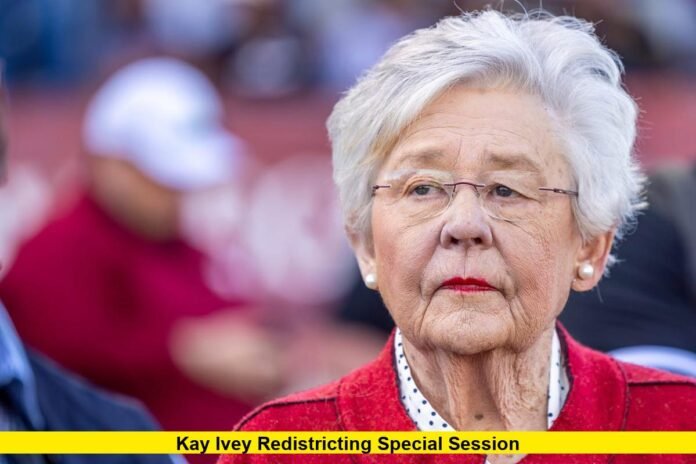

Alabama Governor Kay Ivey has called a special session of the state legislature, thrusting Alabama to the center of a nationwide redistricting scramble triggered by a landmark U.S. Supreme Court decision. Here is a full breakdown of what happened, why it matters, and what comes next.
The Supreme Court Ruling That Started It All
On April 29, the U.S. Supreme Court issued a 6-3 decision in Louisiana v. Callais, ruling that Louisiana’s congressional map — which had been redrawn to include a second majority-Black district — was an unconstitutional racial gerrymander. Justice Samuel Alito, writing for the majority, held that Section 2 of the Voting Rights Act of 1965 requires evidence of intentional discrimination and cannot be used as a tool to advance partisan ends under the guise of racial fairness.
The decision significantly raised the legal bar for future challenges to congressional maps drawn by state legislatures, effectively weakening the enforcement power of the Voting Rights Act that had protected minority voting rights for six decades. Civil rights advocates immediately warned the ruling could open the door to widespread voter dilution in Black communities across the South.
Ivey’s Reversal: From “No” to Special Session
Governor Ivey’s response was not immediate. In the hours following the Supreme Court’s Wednesday ruling, she indicated Alabama would not pursue redistricting, noting that the state remains under a separate court order prohibiting it from redrawing congressional maps until after the 2030 census.
However, pressure from fellow Republicans mounted quickly. Alabama Attorney General Steve Marshall filed emergency motions at the U.S. Supreme Court seeking to lift the injunctions blocking Alabama’s legislature-drawn maps from taking effect. That aggressive legal move gave Ivey the opening she needed.
By Friday, May 1, Ivey issued a formal proclamation calling the Alabama Legislature into a special session, reversing her earlier position entirely.
What the Special Session Will Address
During the special session, Ivey called on lawmakers to pass legislation establishing a special primary election for U.S. House and Alabama State Senate seats in districts whose boundary lines are changed by any subsequent court action. The session is slated to begin Monday and Ivey expects lawmakers to complete their work within five days.
If the existing court-ordered injunction is lifted by the U.S. Supreme Court, Alabama would revert to the congressional maps drawn by the legislature in 2023 and the state senate maps from 2021 — eliminating the second majority-Black congressional district that courts had previously mandated.
In her proclamation, Ivey stated plainly: “By calling the Legislature into a special session, I am ensuring Alabama is prepared should the courts act quickly enough to allow Alabama’s previously drawn congressional and state Senate maps to be used during this election cycle.”
Alabama’s Long Redistricting Battle
Alabama’s redistricting fight stretches back to the 2020 census. After the census, Ivey convened an earlier special session that produced a congressional map with only one majority-Black district. Federal courts rejected that map, and the U.S. Supreme Court upheld the lower court’s ruling. A specially appointed master was ultimately tasked with drawing a new map, resulting in a second majority-Black congressional district being created.
In 2024, for the first time in the state’s more than 200-year history, Alabama sent two Black members of Congress to Washington in the same election. Republicans now hope the Callais ruling will allow them to undo that court-mandated outcome and restore the maps their legislature originally drew.
Republican Praise, Democratic Pushback
Reaction broke sharply along party lines.
Alabama Republicans enthusiastically praised Ivey’s decision to call the special session. Alabama GOP officials argued that redistricting should be guided by constitutional principles rather than racial quotas, and expressed confidence that the legislature-drawn maps would ultimately be restored by the courts.
Attorney General Steve Marshall called Louisiana v. Callais a watershed moment, declaring that the Supreme Court had “shut the door” on vote-dilution claims that use racial data to mask what are really partisan disputes.
Democrats and civil rights groups pushed back hard. They argued that Alabama was attempting to undo years of hard-fought legal victories for Black voters and that the state had already been found by multiple courts to have intentionally discriminated against Black voters when drawing its post-2020 maps. Critics called the special session a transparent attempt to dilute Black political representation regardless of the new legal landscape created by Callais.
The Nationwide Redistricting Scramble
Alabama is not acting alone. The Callais ruling has triggered a coast-to-coast redistricting scramble, primarily among Republican-led Southern states.
Louisiana moved first, with Governor Jeff Landry halting his state’s ongoing congressional primary so lawmakers could draw a new map. Mississippi Governor Tate Reeves announced a special redistricting session of his own. Florida’s legislature moved even faster, approving a new congressional map the same day the Callais decision was handed down — a map that analysts say could shift several congressional seats toward Republicans.
Tennessee also signaled movement toward redistricting, with President Donald Trump publicly confirming discussions with Governor Bill Lee.
Georgia took a different approach. Governor Brian Kemp ruled out redistricting ahead of the May 19 primary, since early voting had already begun, though he acknowledged that the ruling requires Georgia to adopt new electoral maps before the 2028 election cycle.
What Happens Next for Alabama
Everything now hinges on the U.S. Supreme Court. If the Court lifts the existing injunction that blocks Alabama from using its legislature-drawn maps, the special session’s legislation would activate — triggering a special primary and redrawing the political landscape before November’s general election.
If the Court declines to act quickly or denies the emergency motions filed by Attorney General Marshall, Alabama’s special session may amount to preparation without immediate consequence, and the state could remain under the court-ordered map through the current election cycle.
For Alabama voters — especially Black voters in the congressional districts at stake — the outcome will directly determine who represents them in Washington. The special session in Montgomery, combined with the pending decisions in Washington, will shape Alabama’s political future for years to come.