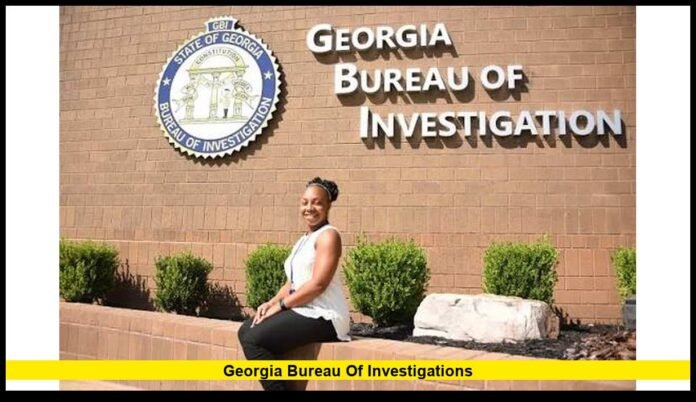

The Georgia Bureau of Investigation plays a critical role in protecting communities across the state by supporting local law enforcement agencies, conducting complex criminal investigations, and operating one of the most advanced forensic science systems in the region. From homicide cases and public corruption investigations to cybercrime and DNA analysis, the agency has built a reputation for professionalism and independence. As of 2026, the bureau continues to handle many of Georgia’s most significant criminal investigations while adapting to new challenges posed by technology, organized crime, and evolving public safety concerns.
Understanding the Bureau’s Mission
Every state has agencies that provide specialized investigative support beyond what local police departments can typically offer. In Georgia, that responsibility belongs to the Georgia Bureau of Investigation, commonly known as the GBI.
Rather than serving as a traditional police department, the bureau functions as a statewide investigative partner. Local police departments, sheriff’s offices, district attorneys, prosecutors, and various state agencies often request assistance when cases require specialized expertise, advanced forensic testing, or independent investigative oversight.
This collaborative model allows communities throughout Georgia to benefit from highly trained investigators and forensic experts regardless of the size of their local law enforcement agency.
A History of Service
The bureau traces its origins back to 1937, when state leaders recognized the need for a centralized investigative organization capable of assisting agencies throughout Georgia.
Over the decades, the organization has grown from a relatively small investigative office into one of the state’s largest law enforcement institutions. Its responsibilities have expanded alongside changing crime trends, advances in forensic science, and increasing demands for specialized investigations.
Today, the bureau maintains regional offices throughout Georgia, enabling investigators to respond quickly to incidents anywhere in the state.
Leadership in 2026
The agency continues to operate under the leadership of Director Chris Hosey, who assumed the position after decades of experience within the organization.
His career has included investigative assignments, supervisory leadership, and executive management responsibilities, giving him extensive knowledge of the bureau’s operations. Under his leadership, continued emphasis has been placed on professional investigations, modernization of forensic capabilities, technological advancement, and cooperation with local law enforcement partners.
Leadership also focuses on recruiting experienced investigators, supporting employee training, and ensuring that the bureau remains prepared for emerging criminal threats.
How the Bureau Becomes Involved in Cases
Requests commonly come from:
- Municipal police departments
- County sheriff’s offices
- District attorneys
- State agencies
- State officials
- Prosecutors
- Medical examiners
- Special investigative task forces
Once requested, bureau agents work alongside local investigators rather than replacing them. Their goal is to provide additional expertise, manpower, forensic resources, and specialized investigative techniques.
This partnership allows local agencies to maintain jurisdiction while benefiting from statewide investigative resources.
Major Criminal Investigations
The bureau investigates a wide variety of serious criminal offenses that often require extensive resources.
These include:
- Homicides
- Child abuse
- Missing persons
- Public corruption
- Human trafficking
- Organized crime
- Financial fraud
- Officer-involved shootings
- Sexual assault
- Elder abuse
- Election-related investigations
- Cybercrime
- Cold cases
Some investigations involve only one county, while others stretch across multiple jurisdictions, requiring coordination among numerous agencies.
Because criminal organizations increasingly operate across county and state lines, statewide investigative capabilities remain more important than ever.
Independent Officer-Involved Shooting Reviews
One of the bureau’s most visible responsibilities involves reviewing incidents in which law enforcement officers use deadly force.
These investigations are frequently requested by local agencies seeking an independent review.
Investigators document crime scenes, collect evidence, interview witnesses, review body camera footage, analyze forensic findings, and prepare comprehensive reports for prosecutors.
The bureau does not determine guilt or innocence. Instead, investigators gather facts that prosecutors later evaluate when deciding whether criminal charges are appropriate.
This independent process helps promote transparency and public confidence during highly sensitive investigations.
Public Corruption Cases
Another important responsibility involves investigating allegations of misconduct involving public officials.
These investigations may include:
- Theft of public funds
- Bribery
- Official misconduct
- Procurement fraud
- Abuse of office
- Financial crimes
- Ethics violations
Public corruption investigations often require extensive document reviews, financial analysis, electronic evidence collection, and interviews involving numerous witnesses.
Such cases can take months or even years before investigators complete their work.
Fighting Cybercrime
Technology has dramatically changed criminal investigations.
Today’s investigators must routinely examine smartphones, cloud accounts, encrypted messaging applications, computers, surveillance systems, and digital financial records.
Specialized cyber investigators now work on cases involving:
- Identity theft
- Online scams
- Computer intrusions
- Digital fraud
- Cryptocurrency-related crimes
- Child exploitation
- Internet-based financial crimes
- Electronic evidence recovery
Digital evidence frequently becomes one of the most important components of modern criminal prosecutions.
As technology continues evolving, cyber investigators receive ongoing training to remain prepared for increasingly sophisticated criminal methods.
Statewide Crime Laboratories
One of the bureau’s greatest strengths lies in its forensic science division.
Its laboratories process evidence submitted by law enforcement agencies throughout Georgia.
Experts perform examinations involving:
- DNA
- Firearms
- Controlled substances
- Toxicology
- Latent fingerprints
- Trace evidence
- Biology
- Blood analysis
- Digital forensics
- Crime scene evidence
Laboratory scientists use advanced technology to identify suspects, eliminate innocent individuals, establish timelines, and strengthen criminal investigations.
Forensic science often provides objective evidence that becomes essential during criminal trials.
DNA Technology Continues to Advance
DNA analysis has transformed criminal investigations over the past several decades.
Today, forensic scientists can examine extremely small biological samples that would have been unusable years ago.
Modern DNA testing assists investigators by:
- Identifying suspects
- Confirming victim identities
- Linking crimes together
- Solving decades-old cold cases
- Excluding innocent individuals
As laboratory technology improves, investigators are solving cases that once appeared impossible to resolve.
Digital Forensics
Nearly every major criminal investigation now involves electronic devices.
Specialized forensic examiners recover information from:
- Mobile phones
- Tablets
- Computers
- External hard drives
- GPS devices
- Security cameras
- Smart home devices
- Vehicle computer systems
Even deleted information can sometimes be recovered using advanced forensic techniques.
Digital evidence frequently establishes timelines, identifies communication between suspects, and reveals financial transactions that traditional investigative methods might never uncover.
Intelligence and Criminal Analysis
Beyond investigating individual crimes, analysts examine broader criminal patterns affecting communities across Georgia.
Their work helps identify:
- Organized criminal organizations
- Drug trafficking routes
- Human trafficking operations
- Repeat violent offenders
- Gang activity
- Financial crime networks
Intelligence sharing between agencies strengthens investigations and allows law enforcement to respond more effectively to emerging criminal threats.
Assistance During Major Incidents
The bureau regularly assists local authorities during emergencies requiring additional investigative resources.
Examples include:
- Multiple-victim homicides
- School incidents
- Natural disaster investigations
- Public corruption allegations
- Missing child investigations
- Complex fraud schemes
- Large evidence collection operations
Because investigators possess specialized experience in handling complex crime scenes, they often become valuable partners during critical incidents.
Cold Case Investigations
Many families continue seeking answers years after crimes occur.
The bureau maintains the ability to reopen unsolved investigations when new evidence becomes available.
Advances in DNA technology, digital evidence recovery, witness interviews, and forensic analysis have helped solve numerous cold cases that remained unsolved for decades.
Renewed investigative efforts demonstrate that time does not necessarily prevent justice from being pursued.
Working With Other Agencies
Successful investigations increasingly depend on cooperation.
The bureau routinely works alongside:
- Municipal police departments
- Sheriff’s offices
- State patrol agencies
- Federal investigators
- Prosecutors
- Medical examiners
- Emergency management officials
- Regulatory agencies
This cooperation ensures that investigators have access to specialized expertise while avoiding duplication of effort.
Joint task forces also improve communication when investigations involve multiple jurisdictions.
Training and Professional Development
Maintaining investigative excellence requires continuous education.
Agents, forensic scientists, analysts, and technical specialists regularly receive training covering:
- Crime scene processing
- Digital investigations
- Interview techniques
- Evidence handling
- Emerging technologies
- Cybersecurity
- Leadership development
- Legal updates
Continuous training helps investigators remain prepared for increasingly sophisticated criminal activity.
Adapting to Modern Crime
Crime continues evolving alongside technology.
Investigators now encounter challenges involving artificial intelligence, encrypted communications, online financial fraud, synthetic identities, and international cybercrime.
These developments require agencies to invest heavily in technology, training, laboratory equipment, and digital investigative capabilities.
Future investigations will likely rely even more on advanced forensic science, artificial intelligence-assisted analysis, and cross-agency information sharing.
Community Confidence
Public trust remains an essential component of effective law enforcement.
Independent investigations, transparent communication, scientific evidence, and professional standards all contribute to maintaining confidence in the criminal justice process.
Although many investigations occur outside public view, the bureau continues providing timely public information whenever legally appropriate while protecting the integrity of ongoing cases.
Balancing transparency with investigative confidentiality remains one of the agency’s most important responsibilities.
Looking Ahead
As Georgia continues to grow, the demands placed on statewide investigators are expected to increase. Population growth, technological advancement, financial crime, cyber threats, and increasingly complex criminal organizations will require continued innovation in investigative methods.
Investment in forensic laboratories, digital evidence capabilities, intelligence analysis, and investigator training will remain central to meeting future challenges. The Georgia Bureau of Investigation is expected to continue serving as one of the state’s most important law enforcement institutions, providing independent investigations, scientific expertise, and statewide support that strengthens public safety for communities across Georgia.