
Curious about the percentage of marriages that end in divorce? Today’s figures show evolving trends that offer both reassurance and caution as marriage dynamics shift across the U.S.
⭐ Key Points Summary (Quick View)
- First marriages have around a 41% chance of ending in divorce
- Second marriages divorce at a higher rate—about 60%
- Overall, approximately 32–33% of marriages end in divorce
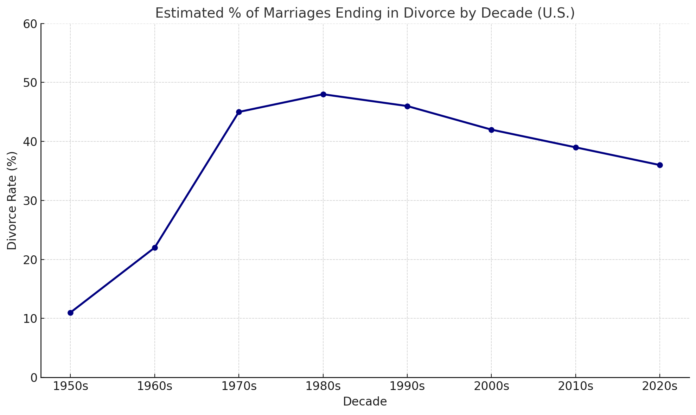
- Divorce trends are slowly declining over time, signaling more stability in recent years
First Marriages: A 41% Divorce Rate
The percentage of marriages that end in divorce for first-time couples currently stands at about 41%, reflecting a clear shift from the long-standing but outdated belief that roughly half of all marriages fail. Contemporary estimates through 2025–2026 generally place the risk for first marriages in the 40–45% range, showing that the once-popular “50%” figure was based on projections from decades ago when divorce rates were significantly higher than they are today. While divorce remains a meaningful reality for many couples, the updated numbers indicate that a majority of first marriages continue to last. This trend aligns with broader social changes — including people marrying later, higher educational attainment, improved financial stability before marriage, and greater relationship selectivity — all of which are associated with lower divorce risk. As a result, the current picture of marriage is more balanced: divorce is still common, but first marriages today are statistically more stable than public perception has often suggested.
Higher Risk in Subsequent Marriages
Second marriages face a noticeably steeper challenge, with divorce rates commonly estimated at around 60%, highlighting how repeat unions tend to carry greater instability than first marriages. Several factors contribute to this increased risk, including blended family dynamics, financial complexities, unresolved issues from previous relationships, and differing expectations shaped by past marital experiences. Although third marriages are generally considered even more vulnerable — with estimates often rising further — the contrast between first and second marriages alone already illustrates how relationship durability can decline in later unions. Overall, these patterns reflect the growing complexity of remarriage, where emotional history, parenting responsibilities, and practical pressures can place additional strain on long-term stability.
Overall Divorces: Around One in Three Marriages
When examining all marriages collectively — including first, second, and subsequent unions — the overall divorce rate is commonly estimated at roughly 32–33% in recent years. This broader figure provides clearer context to the question, What percentage of marriages end in divorce?, suggesting that about one-third of marriages ultimately dissolve over time rather than the frequently repeated “half of all marriages” narrative. The lower overall estimate reflects long-term demographic shifts such as declining divorce rates since their historical peak, fewer people marrying at very young ages, and greater emphasis on compatibility, financial readiness, and relationship education before marriage. Taken together, these changes indicate that while divorce remains a meaningful social reality, modern marriage trends point toward improved stability and more intentional partnership decisions.
Why Divorce Rates Are Easing
Marriage today often benefits from a combination of social, economic, and cultural shifts that collectively help reduce divorce risk. One of the most significant changes is that couples increasingly marry later in life, a trend strongly associated with greater emotional maturity, clearer relationship expectations, and improved financial stability — all factors linked to stronger long-term outcomes. Delayed marriage also allows individuals more time to establish careers, develop communication skills, and choose partners more intentionally rather than under social pressure.
Access to relationship counseling and premarital education has also expanded, giving couples practical tools to navigate conflict, manage finances, and align values before and during marriage. Reflective preparation — including conversations about roles, parenting, and long-term goals — helps reduce misunderstandings that historically contributed to marital breakdown. In addition, therapy and mental-health awareness have become more normalized, making it easier for couples to seek support early instead of waiting until problems escalate.
At the same time, evolving societal attitudes toward relationships emphasize compatibility, shared expectations, and emotional partnership over traditional timelines or external pressure to marry. People are more likely to leave unsuitable relationships before marriage, which can result in fewer but more intentional unions. This growing awareness of compatibility — alongside improved communication norms and shifting gender roles — likely strengthens commitment durability and contributes to the gradual easing of divorce rates observed in recent years.
Timeline of a Marriage That Ends in Divorce
Many marriages that end do so after roughly eight years, a timeframe often referred to as the “seven-year itch.” This implies that the percentage of marriages that end in divorce frequently becomes clear near this tipping point.
| Marriage Type | Divorce Risk | Typical Duration Before Divorce |
|---|---|---|
| First Marriage | ~41% | ~8 years |
| Second Marriage | ~60% | Similar or earlier |
| Overall Average | ~32–33% | Varies by individual cases |
What This Means for Couples Today
- First-time couples: While challenges exist, the odds favor a lasting union, especially with early efforts and communication.
- Remarriages: They often carry higher risk, highlighting the importance of reflecting on past experiences before starting a new union.
- Society-wide: The overall decline suggests positive improvements in marriage quality and endurance.
Final Thoughts
The percentage of marriages that end in divorce continues its downward trend, signaling progress in relationship commitment and preparedness. Although significant, divorce is no longer the default for first marriages—and with better awareness and tools, couples can aim not just to last, but to thrive.
What are your thoughts—do these numbers give you hope or concern? Share your perspective below—we’d love to hear how you see the future of lasting marriages.
FAQs
Q1. What percentage of first marriages end in divorce?
About 41% of first marriages currently end in divorce.
Q2. How does divorce risk change in second marriages?
It increases significantly—around 60% of second marriages end in divorce.
Q3. Overall, what percentage of marriages end in divorce?
Roughly 32–33% of all marriages wind up ending in divorce over time.