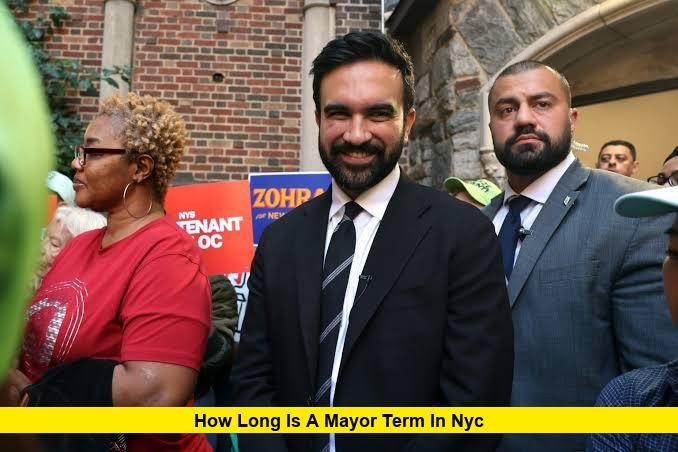

The mayor of New York City serves a four-year term and may be elected to two consecutive terms, with the option to run again after sitting out at least one full term.
Latest development after July 26, 2026
There has been an important development after July 26, 2026, but it does not change the basic four-year length of an NYC mayoral term.
On August 18, 2026, New York City enacted Local Law 2026/134, which amended the City Charter’s mayoral section. The change primarily concerns compensation and the timing of future compensation reviews, not the length of the mayor’s term. The amended Charter continues to state that the mayor is elected every four years and serves a four-year term beginning January 1 after the election.
The law increased the mayor’s annual salary to $305,800 and changed the timing of the quadrennial advisory commission that reviews elected officials’ compensation. The new law takes effect October 2, 2026, although certain provisions are retroactive to January 1, 2026.
What has NOT changed
The current NYC Charter still provides:
- Mayor’s term: 4 years
- Election cycle: Every 4 years
- Term begins: January 1 following the election
- Term limits: Generally no more than two consecutive full terms
- A mayor who resigns or is removed before completing a full term is generally treated as having served a full term for term-limit purposes.
There is also a broader 2026 Charter Review Commission process that has proposed changes to how some city elections could be timed. However, that proposal is about election timing and would require additional legal/constitutional steps; it does not currently change the basic four-year mayoral term.
Introduction
New York City’s mayoral office operates on a clearly defined four-year election cycle, with each mayoral term beginning January 1 after the election. The NYC Charter continues to provide for a four-year term, and current term-limit rules generally restrict a mayor to two consecutive full terms.
Although recent changes to the City Charter in 2026 addressed other aspects of the mayor’s office, the basic four-year mayoral term has not changed. Understanding how this cycle works helps explain when New Yorkers elect their mayor, how long an administration can remain in office, and how term limits affect the city’s political leadership.
The Four-Year Term Explained
The mayor of New York City serves a fixed four-year term, with elections held every four years in odd-numbered years. Once elected, the mayor officially takes office on January 1 following the election and immediately assumes responsibility for overseeing the nation’s largest city government. The current mayor, Zohran Mamdani, was sworn into office on January 1, 2026, beginning a term that runs through December 31, 2029.
Although the length of the term has remained unchanged for decades, governing within that four-year window has become increasingly demanding. From the first day in office, a mayor must balance long-term planning with immediate challenges involving housing affordability, public safety, transportation, education, sanitation, and the city’s multi-billion-dollar budget.
As of today, the current administration is several months into its first year and has already introduced initiatives focused on expanding housing, supporting small businesses, improving public transit, strengthening early childhood education, and addressing quality-of-life concerns. These early policy decisions illustrate how quickly a new administration is expected to move after taking office.
The four-year cycle also creates a predictable political timetable. The first year is typically devoted to building an administration, appointing agency leaders, and launching major policy proposals. The middle years focus on implementing programs and demonstrating measurable progress, while attention gradually shifts toward the next election as political campaigns, fundraising, and public debate begin to intensify.
Another important aspect of New York City’s election calendar is that mayoral elections occur in odd-numbered years, separate from U.S. presidential elections. This allows city issues such as public transportation, policing, housing, schools, and local taxes to receive greater attention, although national economic conditions and federal policies often continue to influence City Hall’s priorities.
The fixed four-year term provides stability for long-term planning while ensuring regular accountability to voters. Every administration has a defined period to implement its agenda before New Yorkers decide whether to grant another term or elect new leadership. The city’s two-consecutive-term limit further ensures that leadership changes occur regularly while still allowing successful mayors enough time to pursue longer-term initiatives.
Limits on Consecutive Terms
New York City’s mayor is limited to two consecutive four-year terms, meaning a mayor can serve up to eight years in a row before stepping down. After sitting out at least one full term, a former mayor is eligible to run again, making the restriction a limit on consecutive service, not a lifetime ban.
The current rule reflects voters’ preference for regular leadership changes while still allowing administrations enough time to pursue long-term initiatives. It also ensures that every mayor eventually faces a transition of power, helping maintain accountability and encouraging new candidates to compete for the city’s highest office.
The city’s term-limit rules have not always remained the same. In 2008, the New York City Council voted to temporarily extend the limit from two consecutive terms to three, allowing then-Mayor Michael Bloomberg to seek and win a third term. The move sparked significant public debate, and in 2010, New York City voters approved a referendum restoring the current two-consecutive-term limit, which remains in effect today.
As of today, Mayor Zohran Mamdani is serving the first of the two consecutive terms permitted under the city’s term-limit law. If reelected, he could serve through the end of 2033, after which he would have to leave office before becoming eligible to run again in a future election.
The consecutive-term limit influences City Hall in several important ways:
- It prevents any one mayor from holding uninterrupted power for more than eight years.
- It encourages administrations to pursue meaningful policy goals within a defined timeframe.
- It creates predictable election cycles, giving prospective candidates opportunities to prepare for open races.
- It promotes leadership turnover while preserving the option for former mayors to seek office again after a break.
By combining four-year terms with a two-consecutive-term limit, New York City’s system aims to balance continuity in government with regular democratic renewal, ensuring voters have frequent opportunities to decide the city’s leadership.
Why the Term Length and Limits Matter Today
New York City’s four-year mayoral term and two-consecutive-term limit do more than determine how long a mayor can stay in office—they shape the pace of governing, policy planning, and political accountability.
With a fixed amount of time to implement an agenda, every administration must balance immediate priorities with longer-term goals. From the first year in office, mayors are expected to appoint agency leaders, prepare budgets, introduce major initiatives, and respond to emerging issues affecting the city’s more than eight million residents.
The structure also influences how policy is developed. Large-scale efforts involving housing, transportation, public safety, education, climate resilience, and economic development often require years to deliver measurable results. Because a mayor has only four years before facing voters again—and no more than two consecutive terms—administrations typically break ambitious plans into achievable phases that can demonstrate progress during a single term.
For voters, the four-year cycle creates a clear measure of accountability. Campaign promises can be evaluated against real-world outcomes before the next election, giving New Yorkers regular opportunities to decide whether an administration deserves another term or whether a new direction is needed.
The two-consecutive-term limit also guarantees periodic leadership change. By ensuring that no mayor can remain in office indefinitely, the system encourages fresh ideas and competitive elections while still providing enough time for successful administrations to pursue meaningful reforms.
The predictable election timetable benefits more than just politicians. City agencies, businesses, nonprofit organizations, labor groups, and community leaders often plan projects and partnerships around the city’s political calendar, knowing that priorities can evolve with each new administration.
At the same time, many of New York City’s biggest challenges—including affordable housing, public transportation, infrastructure modernization, economic growth, and climate preparedness—extend well beyond a single mayoral term. As a result, administrations must often balance delivering visible short-term improvements with laying the groundwork for initiatives that future leaders may ultimately complete.
Taken together, the four-year term and two-consecutive-term limit create a system that combines stability with regular democratic renewal. They give each administration a meaningful opportunity to implement its agenda while ensuring that New Yorkers have frequent opportunities to evaluate their leaders and shape the city’s future through the ballot box.
State of Play: Current Election Context
As of today, New York City’s most recent mayoral election has concluded, and Mayor Zohran Mamdani is serving the first year of his four-year term after taking office on January 1, 2026. With the next mayoral election scheduled for 2029, City Hall is focused on implementing campaign promises rather than preparing for an imminent reelection contest.
The new administration has spent its early months appointing agency leaders, setting budget priorities, and introducing policies on issues such as housing affordability, public transportation, public safety, education, and economic development. As with any new mayor, the first year is widely viewed as the period for establishing priorities and building the foundation for longer-term initiatives.
Although the next election is still several years away, political observers, advocacy groups, and community organizations are already closely monitoring how effectively the administration delivers on its agenda. Major policy decisions are being evaluated for both their immediate impact and their potential to shape the city’s long-term direction.
The city’s fixed four-year term also provides a predictable political timeline. During the early years of an administration, attention is generally centered on governance and policy implementation. As the term progresses, public discussions increasingly shift toward measurable outcomes, including progress on housing construction, public safety, transportation improvements, fiscal management, and quality-of-life issues.
The two-consecutive-term limit also remains an important factor. Because Mayor Mamdani is serving his first term, he would be eligible to seek reelection in 2029 if he chooses. Whether he ultimately runs for a second term will depend on his administration’s performance, public approval, and the broader political environment as the next election approaches.
For New Yorkers, the current stage of the mayoral cycle is primarily about evaluating how effectively the new administration translates campaign commitments into action. While formal campaigning for the next election has not yet begun, the decisions made throughout this first term are expected to shape both public opinion and the political landscape leading up to the 2029 mayoral race.
Comparing NYC’s Mayoral Term with Other Major U.S. Cities
New York City’s mayoral system is similar to that of several other large U.S. cities in terms of term length, but it differs when it comes to term limits. While many cities elect mayors to four-year terms, not all impose the same restrictions on consecutive service.
| City | Term Length | Consecutive Terms Allowed | Maximum Consecutive Years |
|---|---|---|---|
| New York City | 4 years | 2 | 8 years |
| Los Angeles | 4 years | 2 | 8 years |
| Houston | 4 years | 2 | 8 years |
| Chicago | 4 years | No formal limit | No fixed maximum |
New York City shares its four-year term and two-consecutive-term limit with cities such as Los Angeles and Houston, providing mayors with enough time to implement long-term policies while ensuring regular opportunities for new leadership. By contrast, Chicago also elects its mayor every four years but does not impose term limits, allowing mayors to seek reelection an unlimited number of times as long as they continue winning elections.
The differences highlight how cities balance continuity and accountability in different ways. New York City’s model is designed to provide administrative stability while preventing any one individual from holding uninterrupted power for an extended period. This combination of a fixed four-year term and an eight-year consecutive service limit has become a defining feature of the city’s governance, ensuring that leadership changes occur regularly while giving each administration sufficient time to pursue meaningful policy goals.
What the Four-Year Term Means for Governance
A fixed four-year term gives every New York City mayor a defined period to turn campaign promises into measurable results. While four years is long enough to launch major initiatives and oversee their implementation, it also creates pressure to show progress before voters return to the polls.
Balancing Immediate Needs with Long-Term Goals
From the moment a mayor takes office, the administration must respond to day-to-day challenges while planning for projects that may take years to complete. Issues such as affordable housing, public safety, transportation, education, sanitation, public health, and economic development all require sustained attention throughout the term.
Many large-scale initiatives—including infrastructure improvements and housing construction—extend beyond a single year. As a result, administrations often divide ambitious plans into phases, allowing residents to see incremental progress while longer-term projects continue moving forward.
A Predictable Political Timeline
The four-year cycle creates a clear roadmap for governing. During the first year, new administrations typically appoint agency leaders, establish priorities, prepare budgets, and begin implementing campaign promises. The middle years are generally devoted to expanding programs, monitoring results, and refining policies based on public feedback and changing conditions.
As the next election approaches, greater attention naturally shifts toward evaluating the administration’s record. Progress on key issues—including housing, transportation, fiscal management, economic growth, education, and public safety—often becomes central to public debate.
Planning Beyond a Single Term
Because New York City allows mayors to serve up to two consecutive terms, administrations can design policies with an eight-year horizon while still working within four-year election cycles. Long-term initiatives are often structured so that meaningful milestones can be achieved during the first term, while broader objectives may continue if voters grant a second term.
This approach encourages continuity for major projects without removing the public’s ability to regularly evaluate city leadership.
Keeping City Government on Schedule
The fixed mayoral term also provides predictability for city agencies. Multi-year budgets, capital improvement plans, infrastructure investments, and agency priorities are developed around the four-year election cycle. This allows departments to coordinate long-term projects while remaining accountable to elected leadership and public oversight.
Although political priorities may evolve over time, the regular election schedule provides stability for planning and financial management across city government.
Leadership Changes Do Not Reset the Clock
If a mayor leaves office before completing a term because of resignation, removal, or another reason, New York City’s succession rules determine who serves as acting mayor or completes the remainder of the term. Importantly, the four-year election cycle does not restart. The next mayoral election still takes place on its scheduled date, ensuring continuity in governance and preserving a predictable political calendar.
Current Priorities During the 2026–2029 Term
As the current administration moves through its first year, several policy areas are expected to remain at the forefront of City Hall’s agenda:
- Housing affordability: Expanding the housing supply, encouraging new development, and addressing rising housing costs.
- Public transportation: Working with regional transit agencies to improve reliability, accessibility, and infrastructure.
- Economic development: Supporting businesses, creating jobs, and strengthening the city’s long-term competitiveness.
- Public safety: Addressing crime while investing in community-based programs and improving quality of life.
- Education and workforce development: Strengthening schools, expanding career pathways, and preparing residents for evolving labor market needs.
- Climate resilience: Investing in flood protection, sustainability, and infrastructure designed to withstand future environmental challenges.
How the Four-Year Cycle Progresses
The mayoral term generally follows a predictable pattern:
- Year 1: Building the administration, appointing leadership, setting priorities, and launching major initiatives.
- Year 2: Expanding programs and demonstrating early progress.
- Year 3: Refining policies while highlighting measurable achievements.
- Year 4: Completing key initiatives and presenting the administration’s overall record before the next election.
Ultimately, the four-year term gives New York City mayors enough time to pursue meaningful reforms while ensuring that voters have regular opportunities to evaluate their performance. It is a system designed to balance continuity in government with democratic accountability, allowing each administration to leave its mark while keeping leadership responsive to the people it serves.
Mid-Term Disruptions and Term Length
As of today, New York City’s 2026–2029 mayoral term remains on its fixed four-year schedule. Even if a mayor were to leave office before the end of the term, the city’s election calendar would not change because the term belongs to the office, not the individual serving in it.
Under the New York City Charter, if the mayor’s office becomes vacant due to resignation, death, removal, or another reason, the New York City Public Advocate immediately assumes the role of acting mayor. Depending on when the vacancy occurs, a special election may be held to select a mayor to complete the remainder of the unexpired term. However, this process does not create a new four-year term or alter the timing of the next regularly scheduled mayoral election.
If such a situation were to occur today, the following principles would apply:
- The current 2026–2029 mayoral term would continue on its original schedule.
- Any successor would serve only the remainder of the existing term rather than beginning a new four-year term.
- The next regular mayoral election would still take place in 2029, followed by the inauguration of the next mayor on January 1, 2030.
This framework provides continuity for city government by allowing long-term budget planning, infrastructure projects, agency operations, and policy implementation to continue without disrupting the established electoral calendar.
The system is particularly important because many of New York City’s largest initiatives—including housing construction, public transit improvements, climate resilience projects, economic development efforts, and public safety programs—extend across multiple years. Keeping the four-year cycle intact helps ensure these initiatives can continue even if leadership changes unexpectedly.
For New Yorkers, this approach balances stability with democratic accountability. It allows City Hall to continue functioning during periods of political transition while preserving the predictable election schedule that gives voters regular opportunities to choose their next mayor.
2026–2029 Term: What to Expect
Now that the 2026–2029 mayoral term is underway, New York City’s leadership is focused on addressing several long-term challenges while responding to immediate needs across the five boroughs. The administration faces pressure to deliver measurable progress within a four-year window, making policy implementation as important as policy proposals.
Several issues are expected to define this term:
- Housing affordability and zoning reform: Expanding the city’s housing supply, streamlining permitting, encouraging office-to-residential conversions where appropriate, and balancing neighborhood concerns with the growing demand for affordable housing.
- Public transit modernization and climate resilience: Working with the Metropolitan Transportation Authority (MTA) on accessibility upgrades, signal modernization, and infrastructure improvements while investing in flood protection, sustainable development, and climate resilience projects.
- Economic growth and workforce development: Supporting small businesses, creating jobs, attracting investment in emerging industries such as clean energy, technology, and life sciences, and ensuring economic opportunities are available across all five boroughs.
- Public safety and community well-being: Continuing efforts to reduce crime, improve emergency response, strengthen community-based programs, and evaluate public safety strategies using measurable outcomes.
- Education and workforce readiness: Improving school facilities, expanding early childhood education, strengthening career and technical education, and preparing students for the city’s evolving workforce needs.
How the Current Term Is Expected to Progress
The fixed four-year cycle naturally divides the administration’s work into several phases:
- Year 1 (2026): Establishing leadership, setting policy priorities, adopting budgets, and launching major initiatives.
- Years 2–3 (2027–2028): Expanding programs, monitoring performance, refining policies, and demonstrating measurable progress.
- Year 4 (2029): Highlighting achievements, completing major initiatives where possible, and presenting the administration’s overall record as voters prepare to choose the city’s next mayor.
Throughout the current term, New Yorkers are expected to closely monitor progress on housing, transportation, public safety, economic development, education, and climate resilience. Because the mayor serves a fixed four-year term, every administration must balance immediate action with long-term planning, delivering visible results while laying the groundwork for projects that may continue beyond a single term.
Why Every New Yorker Should Care
Understanding how long the mayor term in NYC lasts is more than knowing an election rule—it helps residents understand how city government works and how leadership decisions affect everyday life.
A four-year term gives each mayor a limited period to deliver on campaign promises, manage the city’s budget, respond to emerging challenges, and implement long-term policies. Because voters regularly have the opportunity to evaluate an administration’s performance, the term length creates a clear cycle of planning, action, and accountability.
The mayoral term also influences how quickly major initiatives move forward. Whether the issue is affordable housing, public transportation, public safety, education, economic development, or climate resilience, city leaders must balance immediate needs with projects that may take several years to complete.
For residents, understanding the election cycle provides valuable context. It helps explain when major policy changes are most likely to be introduced, how city priorities evolve during an administration, and when New Yorkers will next have the opportunity to choose their mayor.
Ultimately, knowing how the four-year mayoral term works allows New Yorkers to better follow local government, evaluate leadership based on results, and participate more effectively in the democratic process.
Understanding how long a mayor term in NYC is gives insight into both election strategy and governance realities. With a four-year term and potential for two consecutive terms, New York’s leadership remains both accountable and ambitious.
What do you think: is four years enough time for a mayor to truly make an impact, or should the city rethink its leadership cycle?