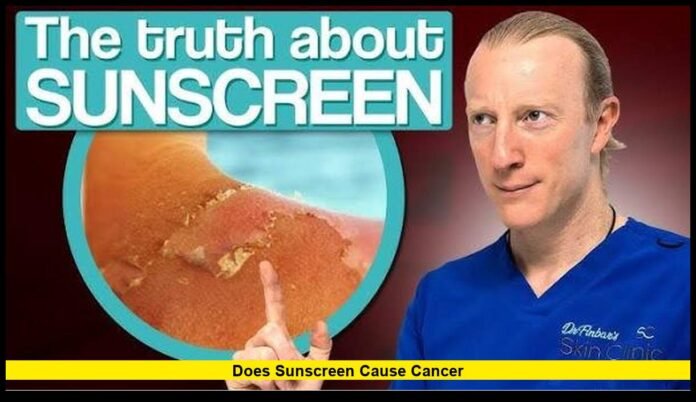

Sun protection has become an essential part of daily skincare, but one question continues to circulate online: does sunscreen cause cancer? Social media posts, misleading headlines, and misinformation have led many people to question whether sunscreen ingredients are safe.
Current scientific evidence and recommendations from major health organizations indicate that there is no reliable evidence showing that approved sunscreen products cause cancer when used as directed. In fact, dermatologists continue to recommend sunscreen as one of the most effective tools for reducing the risk of skin cancer caused by ultraviolet (UV) radiation.
This article explores the latest research, common myths, ingredient safety, and how to choose the right sunscreen.
Key Points Summary
╔════════════════════════════════════════════════════════════════════╗
║ – There is no conclusive scientific evidence that approved sunscreen causes cancer. ║
║ – UV radiation from the sun is a proven cause of skin cancer. ║
║ – Regular sunscreen use helps reduce the risk of melanoma and other skin cancers. ║
║ – Some sunscreen ingredients have been detected in the bloodstream, but this alone does not prove harm. ║
║ – Mineral sunscreens remain a popular alternative for people concerned about chemical filters. ║
╚════════════════════════════════════════════════════════════════════╝
Does Sunscreen Cause Cancer?
The short answer is no.
Despite claims circulating online, current medical research has not established that approved sunscreen products cause cancer. Instead, the opposite is supported by decades of evidence—using sunscreen correctly helps protect skin from harmful ultraviolet radiation, one of the leading environmental causes of skin cancer.
Health authorities worldwide continue to recommend sunscreen as part of a comprehensive sun protection strategy.
Why the Myth Exists
Several factors have contributed to the misconception.
These include:
- Studies showing certain sunscreen ingredients can be absorbed into the bloodstream
- Concerns about chemical UV filters
- Product recalls involving contamination with benzene
- Misleading social media posts lacking scientific evidence
Many people confuse these issues with proof that sunscreen itself causes cancer, but they represent very different situations.
The Benzene Recall Explained
One of the biggest sources of confusion came after some aerosol sunscreen products were recalled because they contained benzene, a known carcinogen.
However, it is important to understand that:
- Benzene is not an approved sunscreen ingredient.
- The recalls involved contamination during manufacturing.
- Contaminated products were removed from the market.
- The issue did not mean sunscreen ingredients themselves were causing cancer.
Consumers should purchase sunscreen from reputable manufacturers and avoid using products that have expired or have been officially recalled.
Can Sunscreen Ingredients Enter the Bloodstream?
Research has shown that several chemical UV filters—including avobenzone, oxybenzone, octocrylene, homosalate, and octisalate—can be detected in small amounts in the bloodstream after repeated application.
However, this finding does not prove these ingredients are harmful.
Scientists continue studying:
- Long-term exposure
- Hormonal effects
- Metabolism
- Safety margins
Regulatory agencies emphasize that absorption alone does not indicate a health risk.
Chemical vs. Mineral Sunscreen
There are two primary categories of sunscreen.
Chemical Sunscreen
Chemical sunscreens absorb UV radiation before it damages the skin.
Common ingredients include:
- Avobenzone
- Octocrylene
- Homosalate
- Octisalate
- Octinoxate
These formulas are lightweight and generally easier to apply without leaving a white residue.
Mineral Sunscreen
Mineral sunscreens use naturally occurring minerals.
Common active ingredients include:
- Zinc oxide
- Titanium dioxide
They primarily work by reflecting and scattering UV rays while also absorbing some UV energy. Many dermatologists recommend mineral sunscreen for:
- Sensitive skin
- Children
- People concerned about chemical ingredients
Does Sunscreen Prevent Skin Cancer?
Research strongly suggests that consistent sunscreen use helps lower the risk of several types of skin cancer.
These include:
- Melanoma
- Squamous cell carcinoma
- Actinic keratoses
- Premature skin damage associated with UV exposure
Sunscreen is especially effective when combined with additional sun protection measures.
What Actually Causes Skin Cancer?
The biggest risk factor is excessive exposure to ultraviolet radiation.
Sources include:
- Natural sunlight
- Indoor tanning beds
- Artificial UV lamps
Risk factors also include:
- Fair skin
- Family history
- Frequent sunburns
- Older age
- Weakened immune system
- Large numbers of moles
How to Choose a Safe Sunscreen
Experts generally recommend selecting products with:
- Broad-spectrum UVA and UVB protection
- SPF 30 or higher
- Water resistance if swimming or exercising
- Current expiration date
- Clear labeling from established manufacturers
For individuals who prefer to avoid chemical filters, mineral sunscreens containing zinc oxide or titanium dioxide are widely available.
Tips for Effective Sun Protection
Sunscreen works best when used correctly.
Remember to:
- Apply about 15–30 minutes before sun exposure.
- Reapply every two hours.
- Reapply after swimming or heavy sweating.
- Wear hats and UV-protective clothing.
- Seek shade during peak sunlight hours.
- Wear sunglasses with UV protection.
No sunscreen blocks 100% of UV rays, making multiple protective measures important.
Common Myths About Sunscreen
Myth: Sunscreen causes cancer
Current evidence does not support this claim.
Fact
Approved sunscreen products are considered safe when used according to label directions.
Myth: Dark skin doesn’t need sunscreen
Everyone can experience UV damage, regardless of skin tone.
Fact
Although darker skin has more natural melanin, it can still develop sun damage and skin cancer.
Myth: SPF 100 means all-day protection
Higher SPF offers slightly greater UVB protection but still requires regular reapplication.
Myth: Sunscreen is only necessary in summer
UV rays are present throughout the year, including on cloudy days and during winter.
Latest Understanding in 2026
Research into sunscreen safety continues worldwide.
Current scientific consensus remains that:
- UV radiation poses a well-established cancer risk.
- Approved sunscreen ingredients continue to undergo safety evaluation.
- There is no verified evidence proving approved sunscreen products cause cancer.
- Proper sunscreen use remains one of the most effective strategies for reducing UV-related skin damage.
Health professionals continue encouraging daily sun protection while ongoing research helps improve future sunscreen formulations.
Frequently Asked Questions
Does sunscreen increase cancer risk?
Current scientific evidence does not show that approved sunscreen increases cancer risk.
Should I stop using sunscreen because of online claims?
No. Experts continue recommending sunscreen because the dangers of UV exposure are well established.
Are mineral sunscreens safer?
Mineral sunscreens are a good option for people with sensitive skin or those who prefer mineral-based ingredients. Both approved mineral and chemical sunscreens are considered safe when used as directed.
Can sunscreen expire?
Yes. Expired sunscreen may not provide the labeled level of UV protection and should be replaced.
Is sunscreen enough to prevent skin cancer?
No. Sunscreen should be combined with protective clothing, shade, hats, and avoiding excessive sun exposure.
Conclusion
The question “does sunscreen cause cancer” has been extensively discussed, but current scientific evidence does not support the claim that approved sunscreen products cause cancer. Instead, decades of research show that protecting your skin from harmful UV radiation is one of the best ways to lower the risk of skin cancer and premature skin aging. Choosing a quality sunscreen, applying it correctly, and combining it with other sun safety habits remain the most effective approach.
Have questions about sunscreen safety or skin protection? Share your thoughts in the comments and stay updated for more evidence-based health articles.