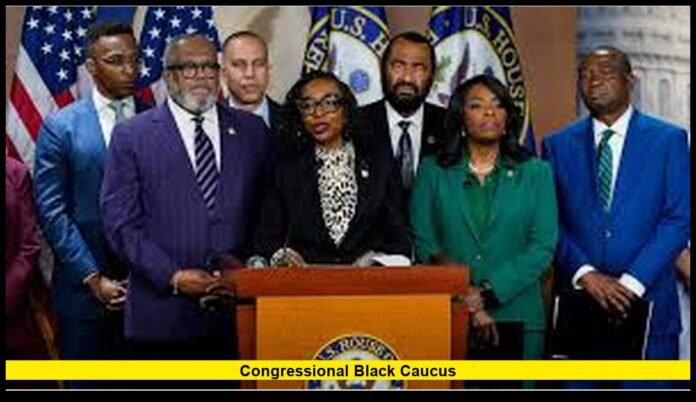

The Congressional Black Caucus is emerging as one of the most powerful political forces in Washington as debates over voting rights, congressional redistricting, education policy, and representation continue to dominate headlines across the United States in 2026.
In recent months, members of the caucus have increased pressure on state governments, major corporations, universities, and federal agencies over policies they believe could weaken Black political influence. The organization has also become a leading voice in legal and legislative fights tied to congressional district maps, civil-rights protections, and voter access ahead of the 2026 midterm elections.
Founded more than five decades ago, the Congressional Black Caucus remains one of the most influential groups in Congress. Its members continue shaping major national conversations involving democracy, racial equality, economic opportunity, healthcare, and education.
As new court rulings reshape voting-rights law and states revisit congressional maps, the caucus is moving aggressively to defend what its leaders describe as fair political representation for Black Americans.
What Is the Congressional Black Caucus?
The Congressional Black Caucus, commonly called the CBC, is an organization made up of Black members of the United States Congress. The caucus was established in 1971 and has played a central role in many major civil-rights and policy debates over the past half-century.
The group was originally formed to give Black lawmakers a stronger collective voice inside Congress. Since then, it has grown into a major political coalition with national influence.
Members of the caucus work on issues that affect millions of Americans, including:
- Voting rights
- Criminal justice reform
- Healthcare access
- Education funding
- Economic inequality
- Housing policy
- Workforce development
- Civil-rights protections
The caucus often works alongside advocacy organizations, legal experts, community leaders, and local activists to promote policy priorities both inside and outside Congress.
In 2026, voting rights and redistricting have become the caucus’s top political concerns.
Why the Congressional Black Caucus Is Dominating Headlines in 2026
The caucus entered a new political battle after major court decisions changed how voting-rights protections are enforced in the United States.
A recent Supreme Court ruling involving Louisiana congressional maps created widespread concern among civil-rights advocates and Democratic lawmakers. The decision weakened parts of the legal framework used to challenge racial discrimination in congressional redistricting cases.
Following that ruling, several states began reviewing or revising district boundaries ahead of future elections.
CBC leaders quickly warned that new congressional maps in Southern states could reduce the number of majority-Black districts and weaken Black voting power in Congress.
That warning triggered a coordinated response from the caucus.
Lawmakers began organizing public campaigns, legal support efforts, voter-mobilization programs, and corporate outreach initiatives designed to pressure political leaders and businesses to oppose district maps viewed as harmful to minority representation.
The caucus has repeatedly argued that voting access and fair representation remain under threat despite decades of civil-rights progress.
Redistricting Battles Are Driving National Political Tension
Redistricting has become one of the most important political fights in America heading into the 2026 election cycle.
Every state redraws congressional district lines after the census. However, lawsuits and court decisions can force states to revisit those maps years later.
The Congressional Black Caucus says current redistricting efforts in states such as Alabama, Georgia, Texas, Florida, and Louisiana could significantly affect Black political representation in Congress.
Members argue that many Black voters remain concentrated in districts that can easily be reshaped through map changes. They believe certain proposals could dilute minority voting strength by splitting Black communities across multiple districts.
The caucus has stated that these changes could influence congressional control for years.
Several CBC lawmakers have accused Republican-led legislatures of attempting to reduce Democratic-leaning voting blocs through aggressive district restructuring.
Republican officials, meanwhile, argue that their maps follow constitutional requirements and population standards.
The legal and political fights surrounding these maps are expected to continue throughout 2026.
Congressional Black Caucus Pressures Corporate America
One of the caucus’s biggest recent moves involved direct pressure on major American corporations.
In May 2026, CBC members sent letters to hundreds of companies asking them to publicly oppose congressional maps that could reduce Black political representation.
The caucus argued that many corporations strongly supported racial justice causes during the nationwide protests of 2020 and 2021. Lawmakers said those companies should continue speaking out during today’s voting-rights disputes.
The letters asked businesses to:
- Publicly condemn discriminatory district maps
- Increase transparency surrounding political donations
- Support voting-rights legislation
- Meet with caucus representatives directly
- Review relationships with lawmakers tied to disputed maps
CBC leaders framed the effort as a test of corporate accountability.
Some businesses have remained cautious about publicly entering politically charged debates. Others continue supporting voting-access programs quietly through nonprofit partnerships and civic initiatives.
The caucus, however, maintains that corporations cannot stay silent during major democratic disputes.
Hakeem Jeffries and Other Leaders Take Aggressive Public Stands
House Democratic leader Hakeem Jeffries has become one of the most visible national figures connected to the caucus’s 2026 messaging strategy.
Jeffries and several CBC members recently backed calls encouraging Black student-athletes to reconsider attending universities in states involved in controversial redistricting efforts.
The proposal generated immediate national attention.
Supporters compared the strategy to earlier moments in American history when athletes used their influence during civil-rights movements. Critics argued that mixing college athletics with political activism could deepen divisions.
Even so, caucus leaders defended the campaign.
They argued that college sports generate enormous revenue for universities and states, giving athletes substantial economic and political influence.
The conversation quickly spread across television networks, sports media, political organizations, and social platforms.
The controversy also highlighted how the Congressional Black Caucus continues expanding its influence beyond traditional legislative debates.
The CBC’s Role in Voting Rights Advocacy
Voting rights remain the caucus’s defining issue in 2026.
Members have repeatedly warned that new election laws, district map changes, and court rulings could reduce minority political participation in some areas.
The caucus continues pushing for stronger federal protections tied to:
- Early voting access
- Mail-in voting protections
- Election oversight
- Fair district maps
- Voter registration access
- Anti-discrimination safeguards
CBC lawmakers have also supported renewed efforts to pass updated voting-rights legislation in Congress.
Although those bills face difficult political obstacles, caucus members continue using hearings, public events, and legal advocacy to keep the issue in the national spotlight.
The organization believes federal oversight remains critical in states with long histories of voting-rights disputes.
Congressional Black Caucus Foundation Expands National Programs
The Congressional Black Caucus Foundation continues playing a major role in public-policy education and leadership development.
The foundation works closely with lawmakers but operates as a separate nonprofit organization focused on civic engagement and policy research.
In 2026, the foundation remains active in several major areas:
- Leadership fellowships
- Scholarship programs
- Public-policy conferences
- Economic research
- Youth engagement programs
- Civic education initiatives
Its Annual Legislative Conference continues attracting lawmakers, students, activists, educators, and business leaders from across the country.
The event has become one of the largest political and policy gatherings focused on issues affecting Black communities in America.
This year’s conference is expected to focus heavily on voting rights, economic equity, technology policy, healthcare disparities, and artificial intelligence.
Legal Challenges Surround CBC-Connected Programs
The Congressional Black Caucus Foundation has also become involved in broader national legal debates surrounding diversity programs and educational opportunities.
A recent lawsuit challenged one of the foundation’s scholarship initiatives over race-based eligibility rules.
The case reflects a larger national shift following recent Supreme Court decisions involving affirmative action and diversity programs in education.
Supporters of the foundation argue that its scholarships help address long-standing educational inequalities affecting historically underrepresented students.
Critics claim race-specific eligibility programs should face stricter legal scrutiny.
The lawsuit is being closely watched because it could affect scholarship programs and nonprofit initiatives nationwide.
Legal experts believe future court rulings could reshape how organizations structure diversity and inclusion efforts in the coming years.
Technology and Artificial Intelligence Are Becoming CBC Priorities
The caucus is also paying closer attention to artificial intelligence and digital equity.
Several CBC members have raised concerns about racial bias in AI systems, hiring technology, facial-recognition software, and financial algorithms.
Lawmakers say rapidly expanding technology industries must include stronger protections against discrimination.
The caucus has called for:
- Greater transparency in AI systems
- Fair hiring technology standards
- Consumer protection safeguards
- Expanded digital access in underserved communities
- Increased diversity in technology leadership
These concerns have become increasingly important as AI tools grow more influential in education, employment, healthcare, and law enforcement.
The caucus believes technology policy could become one of the most important civil-rights issues of the next decade.
Economic Issues Remain Central to the Caucus Agenda
Beyond voting rights, the Congressional Black Caucus continues focusing heavily on economic inequality.
Members regularly push for policies tied to:
- Affordable housing
- Small-business development
- Higher wages
- Workforce training
- Banking access
- Healthcare affordability
CBC lawmakers argue that many Black families continue facing economic barriers despite improvements in employment and business ownership rates over recent years.
The caucus also supports expanding federal investment in historically underserved communities.
Economic mobility remains one of the organization’s most consistent policy priorities.
Education Policy Continues Drawing Attention
Education remains another major area of focus for the caucus in 2026.
CBC members continue advocating for:
- Increased public-school funding
- Student-loan relief programs
- Expanded college access
- Support for historically Black colleges and universities
- Teacher recruitment initiatives
- Technology access in classrooms
Lawmakers have also criticized efforts to restrict certain diversity and inclusion programs in education systems.
Several caucus members argue that recent policy changes in some states could negatively affect educational opportunities for minority students.
Debates surrounding curriculum standards, DEI programs, and school funding are expected to remain politically sensitive throughout the year.
The Congressional Black Caucus and the 2026 Elections
Political analysts expect the caucus to play a major role in the 2026 midterm elections.
The organization has already increased voter-engagement efforts nationwide.
Key election priorities include:
- Black voter registration drives
- Youth turnout campaigns
- Legal monitoring of election rules
- Grassroots organizing
- Congressional map litigation
- Civic education efforts
Democratic leaders view Black voter turnout as critical in several competitive House and Senate races.
The caucus also continues influencing Democratic Party messaging on healthcare, economic justice, voting access, and civil rights.
As election season intensifies, CBC members are expected to remain highly active across television appearances, campaign events, policy conferences, and public forums.
Why the Congressional Black Caucus Still Holds Major Influence
More than 50 years after its creation, the Congressional Black Caucus remains one of the most powerful caucuses in Congress.
Its influence comes from several key factors:
- Strong ties to civil-rights organizations
- National media visibility
- Deep voter-mobilization networks
- Longstanding political relationships
- Policy expertise across major issues
- Connections with grassroots activists
The caucus has also adapted to changing political conditions over time.
While earlier generations focused heavily on civil-rights legislation and anti-discrimination laws, today’s CBC addresses a broader range of issues including technology, healthcare, workforce policy, and artificial intelligence.
That flexibility has helped the organization remain politically relevant across multiple decades.
Read More – Congressional Black Caucus
Public Opinion Remains Divided
The caucus’s growing activism has sparked strong reactions across the political spectrum.
Supporters argue that the organization is defending democratic representation and protecting hard-fought civil-rights gains.
Critics claim some strategies backed by the caucus risk increasing political polarization.
Despite those disagreements, the Congressional Black Caucus appears determined to continue expanding its national role.
Members consistently describe the current political climate as one of the most important moments for voting rights and representation in modern American politics.
That message is expected to remain central throughout the 2026 election cycle.
What Comes Next for the Congressional Black Caucus?
The next several months could become a defining period for the caucus and its long-term political influence.
Several major developments are expected to shape the organization’s agenda moving forward:
- Additional court rulings tied to redistricting
- New congressional map proposals
- Corporate responses to CBC pressure campaigns
- Ongoing voting-rights litigation
- Expanded voter-turnout operations
- National election debates
- Future policy fights over diversity programs
The caucus is expected to remain heavily involved in national conversations surrounding democracy, representation, civil rights, and political access.
Its leaders continue arguing that aggressive advocacy is necessary during a period of rapid political and legal change.
As court battles continue and election campaigns accelerate, the Congressional Black Caucus appears prepared to remain one of the most influential voices in American politics.
What are your thoughts on the Congressional Black Caucus and its growing role in voting-rights debates across the United States? Share your opinion and follow for more political updates throughout 2026.