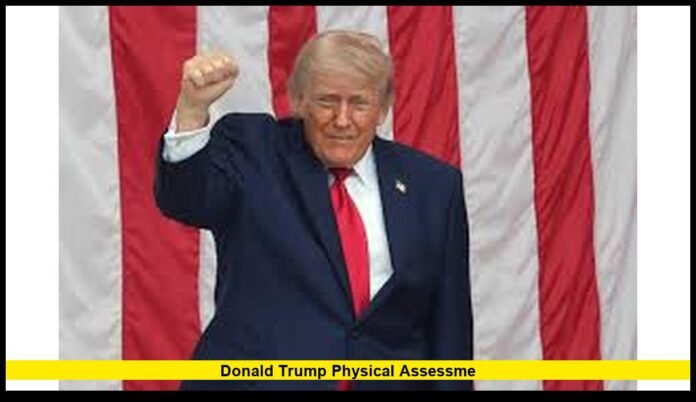

donald trump physical assessme is once again dominating political discussion in the United States after President Donald Trump completed another medical evaluation at Walter Reed National Military Medical Center in May 2026. The White House described the visit as a routine annual physical and dental assessment, while Trump later told reporters that the results showed he remained in strong condition ahead of his 80th birthday.
The latest medical visit drew immediate attention across the country because Trump is now the oldest sitting president in American history. His health, stamina, energy level, and public appearance have become major talking points during his second term in office.
In recent months, photographs showing bruising on Trump’s hands, swelling near his ankles, and visible fatigue during several public appearances fueled fresh debate about presidential health transparency. The administration pushed back against concerns and insisted that the president remains physically and mentally capable of handling the demands of the White House.
The newest examination now adds another chapter to the ongoing national conversation surrounding Trump’s fitness, medical disclosures, and future political role heading deeper into 2026.
Trump Returns to Walter Reed for Another Evaluation
President Trump visited Walter Reed National Military Medical Center on May 26, 2026, for what officials described as preventive care and a regular physical assessment.
The president arrived at the military hospital in the morning and spent several hours undergoing medical testing. White House aides later confirmed that the examination included both physical and dental evaluations.
After leaving the facility, Trump briefly addressed reporters and said the appointment went very well.
He stated that doctors found no serious concerns and added that he “felt great.” The White House did not immediately release a full medical report following the visit, but officials indicated that additional details could become public in the coming days.
The latest assessment comes at a time when public attention surrounding Trump’s health has intensified dramatically.
Why Americans Are Closely Watching Trump’s Health
Presidential health has always attracted public interest, but the discussion around Trump has become especially intense because of his age and demanding schedule.
Trump returned to office in January 2025 at 78 years old. By the summer of 2026, he is approaching his 80th birthday while continuing to maintain one of the busiest public schedules in American politics.
His calendar regularly includes:
- Campaign-style rallies
- Cabinet meetings
- International travel
- Press conferences
- Golf outings
- Political fundraising events
- Television interviews
Supporters often point to Trump’s nonstop schedule as evidence that he still has strong energy and endurance.
Critics, however, argue that recent public appearances raised legitimate questions about his condition.
Several televised events earlier this year showed Trump moving slowly while boarding aircraft or standing during long ceremonies. Social media users also focused heavily on visible marks and swelling on the president’s hands and legs.
Those images quickly spread online and turned Trump’s health into one of the biggest political stories of the year.
White House Continues Defending Trump’s Condition
The White House has repeatedly rejected claims that Trump is dealing with serious medical problems.
Officials close to the president insist that most public speculation has been exaggerated for political reasons.
White House physician Capt. Sean Barbabella has consistently described Trump as being in excellent physical and cognitive health. Previous medical memorandums released during Trump’s second term stated that the president successfully completed neurological testing and cardiovascular screenings.
The administration also emphasized Trump’s active lifestyle.
Unlike many presidents nearing 80 years old, Trump frequently travels, appears at large public gatherings, and maintains a packed schedule with little visible downtime.
Administration officials say that demanding pace reflects the president’s stamina rather than weakness.
The Hand Bruising That Sparked National Attention
One of the biggest health discussions surrounding Trump in 2026 involves the visible bruising that repeatedly appeared on his hands during public appearances.
Photographs captured during White House meetings and diplomatic events showed dark discoloration on parts of Trump’s right hand. The images quickly spread online, leading to speculation about possible medical treatments or circulation problems.
White House officials later explained that the bruising resulted from frequent handshaking combined with aspirin use.
Aspirin is commonly used by older adults to reduce cardiovascular risks, and it can increase bruising in some individuals.
Even after the explanation, debate continued online as critics questioned whether the administration was fully transparent about the president’s condition.
Supporters argued the marks were minor and medically insignificant.
The issue highlighted how every visible detail related to Trump’s appearance now becomes a major national story.
Leg Swelling and Circulation Concerns
Another topic that drew widespread attention involved swelling around Trump’s ankles and lower legs.
The White House previously disclosed that Trump had chronic venous insufficiency, a common condition affecting blood circulation in the legs.
The condition occurs when veins struggle to return blood efficiently from the lower body back toward the heart.
Medical professionals say the condition becomes increasingly common with age and often affects millions of older adults across the United States.
Possible symptoms include:
- Swelling in the legs
- Heaviness or discomfort
- Skin discoloration
- Visible veins
- Mild pain after standing for long periods
Doctors indicated Trump’s condition appeared manageable and mild.
Officials also stated that no signs suggested a more serious cardiovascular disorder.
Still, the diagnosis attracted major media coverage because presidential health issues often receive extraordinary scrutiny.
Trump’s Weight and Physical Fitness
Another closely watched area involves Trump’s weight and overall fitness levels.
Recent White House medical summaries reported that Trump weighed approximately 224 pounds during a previous annual physical. That figure represented noticeable weight loss compared to earlier presidential examinations.
During his first term, Trump’s weight had been recorded significantly higher.
Physicians reportedly credited the improvement to increased activity and a more demanding daily routine.
Trump is known for spending weekends golfing and traveling frequently between Washington, Florida, and other locations.
Supporters say those activities demonstrate mobility and physical endurance uncommon for someone approaching 80 years old.
His critics often respond by arguing that golf outings alone do not fully measure overall health.
Even so, the White House continues presenting Trump’s weight loss as a positive indicator.
Questions About Trump’s Energy Level
Trump’s energy level became another major discussion point throughout early 2026.
Some political observers pointed to moments during public meetings where Trump appeared tired or less animated than usual.
At several events, cameras captured him briefly closing his eyes while seated during long presentations.
Opponents argued those moments raised concerns about fatigue and stamina.
Trump strongly rejected those claims.
He told reporters that many photographs were taken during long meetings and insisted he remained fully alert and engaged.
The president has long claimed that he functions effectively on fewer hours of sleep than most people.
Supporters frequently describe Trump as energetic and highly active despite his age.
Cognitive Testing Remains Part of the Conversation
Cognitive health has become one of the most politically sensitive topics in modern American politics.
Trump regularly brings up his previous cognitive test results during speeches and interviews. He often says he performed exceptionally well on those exams.
The White House physician has repeatedly stated that Trump’s neurological and cognitive evaluations showed normal findings.
Those statements became politically important after years of national debate involving the age and mental sharpness of American political leaders.
Trump often compares his performance favorably to former President Joe Biden, whose age and verbal stumbles became a major issue during the 2024 election cycle.
Now that Trump himself is approaching 80, similar questions are increasingly directed toward him.
How Presidential Physicals Are Handled
Presidents are not legally required to release complete medical records to the public.
Instead, administrations usually decide how much information to share after annual physical examinations.
Most White Houses provide summary letters prepared by presidential physicians. Those summaries typically include:
| Medical Area | Typical Information Released |
|---|---|
| Blood Pressure | Current reading |
| Cholesterol | Overall cardiovascular indicators |
| Weight | Current body weight |
| Medications | Prescribed medications |
| Heart Testing | Cardiovascular evaluation |
| Neurological Exam | Cognitive or neurological findings |
Detailed hospital records generally remain private.
Trump’s administrations have historically released selective information rather than full documentation.
That approach has generated criticism from some medical experts and political opponents who argue the public deserves greater transparency.
Medical Transparency Debate Intensifies
The debate surrounding presidential medical transparency has grown stronger during Trump’s second term.
Some physicians believe presidents should release more detailed information because the office involves enormous physical and mental responsibilities.
Others argue presidents deserve the same privacy protections as ordinary citizens.
Trump’s repeated visits to Walter Reed and discussions surrounding his circulation condition intensified that national debate.
Critics say the White House should provide more comprehensive details about imaging scans, medications, and treatment plans.
Administration officials disagree and argue that enough information has already been released to confirm Trump’s fitness.
The disagreement reflects a broader political divide that now surrounds nearly every issue connected to the president.
Trump’s Schedule Continues at Full Speed
Despite growing health discussions, Trump has continued maintaining an aggressive political and public schedule throughout 2026.
The president remains heavily involved in:
- Republican fundraising events
- Border security meetings
- Economic policy speeches
- International diplomacy
- Campaign-related rallies
- Media interviews
His allies argue that someone struggling with serious health issues could not maintain such a pace.
Trump also continues appearing at golf clubs in Florida and Virginia during weekends, often spending hours on the course.
Photos and videos from those outings frequently circulate online as supporters highlight his mobility and activity level.
Public Reaction Remains Deeply Divided
Americans remain sharply divided over what Trump’s latest medical evaluation means.
Supporters see the president’s active lifestyle and public schedule as proof that concerns about his health are exaggerated.
Many Republicans argue the media focuses excessively on Trump’s appearance while ignoring policy issues.
Critics continue pushing for additional transparency and more detailed medical disclosures.
Online discussions about Trump’s latest assessment quickly exploded across social media platforms after news of the Walter Reed visit became public.
Television commentators, political strategists, and medical analysts all weighed in on the topic within hours.
The level of attention showed how presidential health has become one of the most heavily scrutinized areas of American politics.
Trump’s Doctors Continue Offering Positive Assessments
Throughout his second term, Trump’s doctors have consistently provided positive public evaluations.
Previous reports described his cardiac health as excellent and stated that his pulmonary function remained strong.
Doctors also emphasized that Trump completed neurological testing successfully.
White House officials repeatedly stress that the president remains capable of carrying out all duties required by the office.
No public statement from Trump’s medical team has suggested any severe illness or disabling condition.
That message has remained consistent despite months of intense public speculation.
The Political Impact of Trump’s Health Discussions
Trump’s health could play an important role in the political environment leading into the 2026 midterm elections.
Presidential fitness is now a major issue for many voters across both parties.
Americans increasingly pay attention to age, stamina, cognitive sharpness, and physical appearance when evaluating national leaders.
Republican allies continue defending Trump’s condition and leadership abilities.
Democratic critics argue that older presidents face growing physical demands that deserve closer examination.
Every future public appearance, physician statement, or medical visit involving Trump is likely to attract immediate national attention.
Will the White House Release More Medical Details?
It remains unclear whether the administration will release a more detailed written summary from Trump’s latest physical assessment.
Past presidential examinations often resulted in physician memorandums outlining major findings from the exam.
Those reports sometimes included:
- Cholesterol levels
- Blood pressure readings
- Weight updates
- Heart evaluations
- Medication information
- Screening results
For now, the White House maintains that Trump remains healthy, active, and fully able to continue serving as president.
The administration has not announced a specific timeline for releasing additional information.
Presidential Health Will Remain a Major Story
Health concerns involving American presidents have shaped political conversations for generations.
Modern presidents face nonstop pressure, demanding travel schedules, global crises, and constant public attention.
As leaders grow older, public interest surrounding their physical condition naturally increases.
Trump’s latest medical assessment became national news because Americans remain intensely focused on every aspect of his presidency.
Supporters view him as energetic and resilient despite approaching 80 years old.
Critics continue questioning whether the White House has shared enough information about his medical condition.
That debate is unlikely to disappear anytime soon.
Read More – Donald Trump Physical Assessme
What Trump’s Latest Physical Assessment Means Moving Forward
The newest medical evaluation involving President Donald Trump did not produce any publicly confirmed evidence of severe illness or cognitive decline.
Trump said the examination showed positive results, while White House officials continued describing him as physically and mentally fit for office.
At the same time, public scrutiny surrounding his age, appearance, and health remains extremely high.
Every future medical update involving Trump will likely dominate headlines as the country moves deeper into another intense political season.
The president’s supporters believe the attention proves opponents are searching for weaknesses ahead of future elections. Critics argue that transparency matters more than ever when dealing with an aging commander in chief.
For now, the White House continues presenting Trump as active, capable, and fully engaged in the responsibilities of the presidency.
What are your thoughts on presidential medical transparency and public health disclosures? Share your opinion and keep following for the latest political updates.