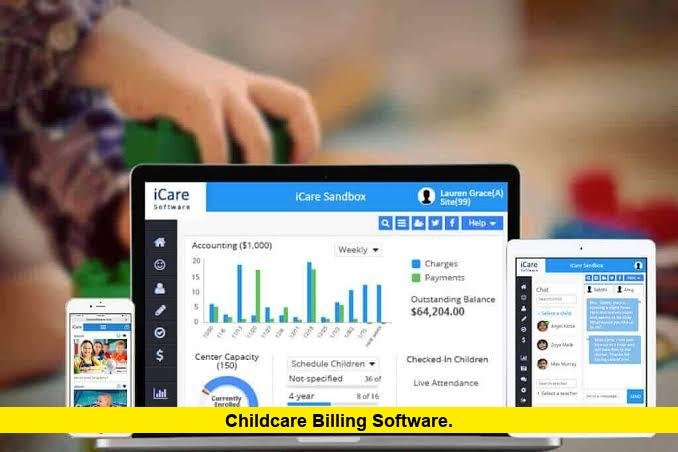

Childcare billing software is becoming more automated in 2026 as U.S. daycare centers and preschools adopt tools for recurring tuition, digital payments, subsidy tracking, invoices, and financial reporting. Current software listings show a growing field of specialized childcare platforms, with major providers adding features designed to reduce manual billing work and improve payment visibility.
The latest market updates show that billing is no longer treated as a separate administrative task. Many childcare management platforms now connect billing with enrollment, attendance, family accounts, subsidies, and accounting. That approach allows providers to manage financial information within the same system used for daily operations.
The Childcare Billing Software Market Is Expanding
Current software directories indicate strong demand for billing and payment capabilities within childcare management systems. G2’s billing-and-payments category was updated in July 2026 and identifies platforms such as Procare Solutions, Playground, and Kinderpedia among representative products in the category. G2 also notes that the category covers tools for automating invoices, managing payments, and handling financial reporting.
GetApp’s September 2026 listings show 95 software options under daycare billing and invoicing and 96 options under payment processing. Procare Solutions, TUIO, and Famly are among the products appearing in the current billing and invoicing results.
The numbers highlight an important change for childcare operators. Providers are no longer limited to a small number of traditional systems. They can now choose among platforms with different approaches to tuition collection, payment processing, subsidy administration, reporting, and accounting integration.
Automated Invoicing Is Now a Core Feature
Recurring invoicing remains one of the most important functions in modern childcare billing systems.
Instead of creating every family invoice manually, providers can establish recurring tuition plans and automate invoice generation. Current platforms support different billing schedules, including weekly, biweekly, and monthly cycles.
Brightwheel, for example, allows administrators to create recurring billing plans, schedule one-time charges, apply discounts, divide charges among multiple payers, and send payment notifications. Its system also supports attendance-based invoicing.
Other current platforms are taking a similar approach. My Childcare App offers recurring invoices for weekly, biweekly, or monthly tuition and keeps invoices, payments, and balances together in one record.
This matters because childcare charges often change. A family may add a sibling, change a schedule, receive a discount, incur a late fee, or have a different tuition rate after a child moves classrooms. Purpose-built systems are designed to handle those changes without forcing administrators to rebuild every invoice manually.
Digital Payments Are Becoming Standard
Another major development is the continued expansion of online payment options.
Current childcare platforms commonly support ACH bank transfers, credit cards, debit cards, and electronic payment records. Some also allow providers to record cash or check payments so that offline transactions remain part of the same family ledger.
Brightwheel currently supports ACH transfers, debit cards, credit cards, and checks. Its platform also allows administrators to track payments and balances through a centralized billing dashboard.
Procare similarly offers electronic payment options, including ACH and recurring or online debit and credit card payments. Its payment system connects with the broader Procare management platform, allowing payments to post automatically to family accounts.
The move toward digital payments can also reduce the administrative work involved in recording individual transactions. Instead of entering every payment into a separate spreadsheet or ledger, an integrated system can associate the payment with the correct family account.
Autopay Is Central to Modern Childcare Billing
Autopay has become another major feature across childcare payment platforms.
For providers, automated payments can reduce the need to send repeated reminders and manually process recurring tuition. For families, autopay creates a predictable payment process that does not require them to submit tuition manually every billing cycle.
Brightwheel currently offers autopay alongside automated invoicing and payment notifications. The company says its billing system can generate recurring invoices and automatically notify families about payments.
Other platforms have also built autopay directly into their billing systems. ChildPilot currently lists recurring tuition, autopay, ACH and credit card payments, automated invoices, late fees, and payment reminders among its childcare billing capabilities.
These tools show how the industry is shifting from simple electronic invoicing toward automated financial workflows.
Subsidy Billing Is Receiving More Attention
Childcare subsidies create additional billing complexity because a provider may receive payments from both a family and an agency.
Modern systems are increasingly designed to handle that split rather than treating subsidy payments as a completely separate accounting process.
Playground currently offers automated subsidy invoicing, payment tracking, and reconciliation. Its system is designed to compare expected subsidy payments with received amounts and identify discrepancies.
Kangarootime also promotes automated billing and subsidy-management tools. Its current platform includes subsidy payment management, reconciliation tools, and contract alerts alongside automated invoicing and payment collection.
MyKidReports provides another example of the trend. Its current subsidy billing system allows providers to assign children to agencies and automatically split invoices between an agency’s share and the family’s copay.
For centers that serve subsidized families, this functionality can be particularly important because the provider must maintain accurate records for multiple payers.
Check Payments Are Also Being Integrated
Despite the growth of ACH and card payments, checks remain part of childcare billing.
Software companies are therefore adding ways to record, deposit, and track checks without forcing administrators to maintain separate records.
Brightwheel currently promotes a check-deposit feature that allows providers to capture and track checks from families and subsidy agencies. The company says check funds can appear in accounts within one to two business days, subject to financial-institution processing.
This development is significant because a childcare center may receive different forms of payment from different families. A billing platform that combines digital payments and checks can give administrators one place to monitor outstanding balances and completed transactions.
Financial Reporting Is Becoming More Detailed
Childcare billing platforms are also expanding their reporting capabilities.
Today’s systems commonly provide information about balances, deposits, transactions, revenue, payment history, and other financial activity. This gives directors a clearer view of the center’s financial position without requiring them to assemble information from several unrelated systems.
Brightwheel provides billing dashboards, statements, payment reports, credit reports, and financial tracking. Its current system also supports QuickBooks Online compatibility for transferring billing information.
Procare likewise integrates payment processing with its childcare management system and automatically posts payments to family accounts.
ChildPilot lists financial reporting and QuickBooks synchronization among its current billing capabilities.
The broader trend is clear: childcare billing software is increasingly functioning as a financial information system rather than simply an invoice generator.
Newer Platforms Are Competing on Simplicity and Pricing
The 2026 market also includes newer childcare billing platforms competing with established providers.
NestliCare, for example, updated its daycare billing offering on September 3, 2026. Its current product includes recurring tuition plans, automatic invoices, online payments, autopay, discounts, credits, and records for cash, checks, and subsidy payments.
MyKidReports currently advertises a free plan for up to five children and a published price of $0.99 per enrolled child per month beyond that level. The company says its September 2026 review of 18 childcare platforms found that many vendors require providers to request a quote rather than publishing pricing online.
Bloomily currently advertises billing at $99 per month for most customers, with a free offering for home daycares. Its billing system includes automatic invoicing, autopay, ACH and card payments, subsidy splits, late fees, discounts, and QuickBooks synchronization.
These offerings demonstrate how pricing transparency and simpler subscription models are becoming part of competition in the childcare software market.
What Childcare Providers Should Look for in 2026
The growing number of products makes feature comparison increasingly important. A childcare center evaluating a billing platform should focus on the functions that directly affect its daily financial workflow.
Key capabilities include:
- Recurring tuition invoices
- ACH and card payment processing
- Autopay
- Automated payment reminders
- Family account balances
- Discounts and credits
- Late-fee management
- Subsidy and agency billing
- Split payments
- Check-payment tracking
- Attendance-based billing
- Financial reporting
- Tax statements
- Accounting integrations
- Role-based staff access
- Secure online payment processing
The best fit depends on the provider’s size, billing structure, number of locations, subsidy participation, and accounting requirements.
A small home daycare may prioritize simple recurring invoices and payment collection. A multi-location childcare organization may need centralized reporting, complex subsidy reconciliation, multiple payer support, and deeper accounting integrations.
The Biggest Shift Is Integration
The most important trend in 2026 is the integration of billing with the rest of childcare management.
Instead of maintaining separate systems for enrollment, attendance, family records, tuition, payments, and reporting, many platforms now connect those functions.
Kangarootime, for example, positions billing alongside enrollment, scheduling, classroom management, and staff operations in a unified system.
ChildPilot similarly connects schedules, tuition rates, invoices, payment tracking, and financial records.
That integration can reduce duplicate data entry. When attendance, enrollment, tuition plans, and payments share information, billing adjustments can be handled within the same operational workflow.
Where Childcare Billing Software Stands Now
As of September 9, 2026, childcare billing technology is moving toward automated invoicing, digital payments, integrated subsidy management, real-time financial visibility, and accounting connectivity.
The current market includes established platforms such as Procare, Brightwheel, Playground, and Kangarootime, along with newer and more specialized providers. Industry directories continue to show dozens of options, giving U.S. childcare providers more choices than in previous years.
The strongest systems are increasingly designed around the full billing cycle. That means creating charges, sending invoices, collecting payments, tracking subsidies, reconciling transactions, and producing financial reports within one connected workflow.
For childcare directors, the practical goal is straightforward: spend less time managing payment administration while maintaining accurate records and giving families convenient ways to pay.
As childcare billing technology continues to evolve, providers can expect automation, integrated payments, subsidy tracking, and financial reporting to remain central to the next generation of childcare management systems.