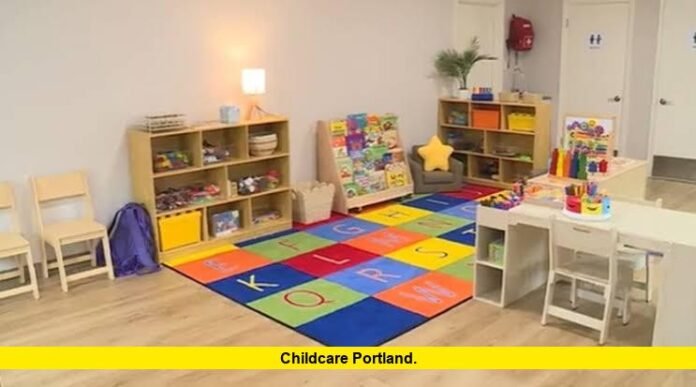

Childcare Portland options are changing significantly in 2026 as Multnomah County expands its Preschool for All program, adds thousands of tuition-free preschool seats, and moves closer to universal access for eligible 3- and 4-year-olds. The latest county information confirms that seats remain available for the 2026-27 school year, while new population projections indicate that the county could reach universal preschool coverage sooner than its original 2030 target.
The developments are important for families looking for affordable early learning in Portland and throughout Multnomah County. The expansion is also affecting childcare providers, educators, community organizations and institutions that are adding new classrooms or increasing their participation in publicly funded preschool.
Preschool for All Remains the Biggest Development
Multnomah County’s Preschool for All program is at the center of the latest childcare changes in the Portland area.
The program provides free, culturally responsive and inclusive preschool to eligible 3- and 4-year-olds. A child must be 3 or 4 years old on September 1 of the preschool year, and a parent or legal guardian must live in Multnomah County.
The program began after Multnomah County voters approved the Preschool for All ballot measure in November 2020. The initiative launched in fall 2022 and was designed to expand gradually toward universal access.
For the 2026-27 school year, the program reached its largest expansion to date. Multnomah County offered more than 7,000 seats, nearly doubling capacity from the previous school year.
That growth has created more opportunities for families who previously faced significant preschool costs or limited choices.
County officials also report that applications reached a record level before the 2026-27 expansion. More than 6,000 applications had been submitted by May, even as the number of available seats increased sharply.
Seats Are Still Available for the 2026-27 School Year
Families who did not secure a preschool placement during the initial application period still have an opportunity to find an opening.
Multnomah County’s current Preschool for All webpage says the 2026-27 application remains open and that seats are still available. The county maintains a frequently updated list of preschools with openings, including locations with low or no waitlists.
Eligibility remains straightforward:
- The child must be 3 or 4 years old on September 1, 2026.
- A parent or legal guardian must live in Multnomah County.
- Preschool for All does not base eligibility on household income.
- Families can review participating programs and available openings.
- Families can receive application assistance from Family Navigators.
The county also provides application support in multiple languages. Its online materials include resources in Arabic, Burmese, Chinese, Dari, Russian, Somali, Spanish, Ukrainian and Vietnamese.
This means families searching for childcare and preschool in Portland do not necessarily have to wait until another school year to explore publicly funded options.
New Population Data Could Accelerate Universal Preschool
One of the most important recent developments came in August 2026.
A new demographic study from Portland State University’s Population Research Center found that Multnomah County may need substantially fewer preschool seats than previously projected to reach universal coverage. The updated analysis estimates that approximately 8,000 seats could be enough to provide universal coverage.
Earlier projections had placed the requirement closer to 11,000 seats.
The difference is linked to changes in the county’s child population.
Portland State researchers identified a persistent decline in regional fertility and net out-migration among children. The study projects that the number of Multnomah County residents ages 3 and 4 will decline from just under 14,000 in 2026 to slightly above 13,000 by 2030 under the county’s medium-growth scenario.
The revised numbers do not mean the county is reducing its commitment to preschool. Instead, they change how officials estimate the number of seats necessary to meet demand.
The county still defines universal coverage as having enough free preschool capacity for every interested 3- and 4-year-old who is not already served through another qualifying program or otherwise outside the projected demand.
More Than 1,700 Children Transitioned to Kindergarten
The expansion is also beginning to show its scale through the number of children completing the program.
On August 27, Multnomah County reported that more than 1,700 Preschool for All children were entering kindergarten after graduating from participating preschool providers. That was the largest kindergarten transition group in the program’s history.
The milestone matters because Preschool for All is not simply increasing the number of available childcare locations.
It is creating a larger pipeline of children receiving structured early education before entering elementary school.
The program’s growth also creates continuing demand for qualified early childhood educators and participating providers.
Portland Childcare Providers Are Expanding
The expansion is not limited to government-run locations.
Multnomah County reported in June that 35 of its 124 continuing Preschool for All providers were expanding into at least one additional location for the upcoming school year. Those providers represented more than one-quarter of the continuing provider group.
That growth includes childcare businesses, school-based programs, community organizations and other early learning providers.
The county’s provider network includes locations across Portland and nearby communities. Participating sites listed by Early Learning Multnomah include school-based programs, Montessori programs, childcare centers and other early learning organizations.
The expansion is significant because Portland families have different childcare needs.
Some parents need full-day care. Others are primarily seeking preschool education. Some need programs close to home, while others need a location near work or a school.
The county’s approach allows families to compare different types of participating programs rather than relying on one centralized preschool facility.
Portland Community College Adds More Early Learning Capacity
Portland Community College is also preparing to expand its early childhood offerings.
The college’s Child Development Center plans to add 20 Preschool for All seats for the 2026-27 school year. Sixteen of those seats are tied to a planned licensed outdoor nature-based preschool program.
The expansion is expected to bring the center’s total number of Preschool for All seats to 40.
PCC is also preparing a new infant classroom using Preschool for All infant and toddler support funding. The college said the partnership is expected to provide approximately $400,000 in ongoing support through per-child allocations, startup funding and infant/toddler stabilization resources.
The outdoor preschool component is particularly notable.
PCC says the program is expected to become the first certified outdoor preschool in the Portland metropolitan area. It will also give students in the college’s Early Childhood Education program practical experience in child development and nature-based learning.
Childcare Workforce Wages Are Also Changing
Expansion requires more than additional physical locations.
Preschool programs need teachers, aides and other early childhood workers. Multnomah County has established wage requirements for Preschool for All providers.
For the 2026-27 preschool year, the minimum hourly salary requirement for an assistant teacher or aide is $23.16.
Lead teacher minimums vary according to qualification level. The county lists minimum hourly salaries of $33.15 for Step 10/BA, $28.18 for Step 9/AA and $24.86 for Step 7. It also lists higher goal salaries for those qualification levels.
These requirements are effective beginning July 1, 2026.
The wage structure is part of the county’s effort to support a larger early childhood workforce as the Preschool for All system grows.
Funding Remains a Major Issue
The rapid expansion also comes with an important funding question.
On August 27, Multnomah County commissioners unanimously approved a one-year delay in a scheduled 0.8% increase to the Preschool for All marginal personal income tax. Instead of taking effect January 1, 2027, the increase is now scheduled for January 1, 2028.
The county had previously delayed the increase from 2026 to 2027.
Officials said updated population projections allowed the program to operate under a delay, although economic modeling showed that the program cannot operate without an eventual tax increase.
The decision gives the county additional time to analyze costs while the preschool system continues its rapid expansion.
For families, the immediate focus remains access to available seats. For providers and county officials, long-term financial sustainability remains an important part of the program’s development.
Portland Families Have Multiple Preschool Search Options
Families searching for childcare in Portland can encounter several different programs and funding sources.
Early Learning Multnomah operates a Preschool Marketplace designed to bring information about free and reduced-cost preschool options into one searchable system. The marketplace includes an interactive map and information such as program location, contact information, hours and transportation availability.
Participating partners include Preschool for All, Preschool Promise, Head Start programs, Portland Public Schools, 211Info and the Multnomah County SUN Service System.
This can make the search process easier for families comparing programs based on location and schedule.
Preschool Promise is another important option for eligible families. Early Learning Multnomah directs families to its online application system and allows applicants to review providers after establishing eligibility.
Families should check individual providers directly because enrollment availability, schedules and program arrangements can vary.
What the Latest Portland Childcare Data Means for Families
The current picture is considerably different from the situation several years ago.
Multnomah County is now offering more than 7,000 Preschool for All seats, the largest expansion since the program began. The county says available openings still exist for the 2026-27 school year.
At the same time, new population projections suggest the county could approach universal coverage sooner than initially expected.
The latest figures point to approximately 8,000 seats being needed for universal coverage, compared with the earlier estimate of approximately 11,000.
However, universal preschool does not mean every childcare need disappears.
Preschool for All primarily serves eligible 3- and 4-year-olds. Families with infants and toddlers still need other childcare arrangements. Families may also require care outside preschool hours, depending on their work schedules.
That distinction is important when evaluating the Portland childcare market.
The expansion significantly improves access to free preschool, but it does not replace the broader network of infant, toddler and full-day childcare providers.
The Outlook for Childcare in Portland
The latest developments show a Portland-area early learning system undergoing rapid expansion.
Multnomah County has increased preschool capacity, providers are opening or expanding locations, Portland Community College is adding new early learning seats, and more than 1,700 children are moving from Preschool for All into kindergarten this year.
The county is also reassessing future capacity because the local population of young children is changing.
For parents, the most immediate development is practical: Preschool for All currently has available seats for the 2026-27 school year. Families who meet the eligibility requirements can review current openings rather than assuming every participating location has a waitlist.
For providers, the coming years will bring continued expansion alongside new expectations for wages, enrollment and program quality.
For Portland families, the overall direction is clear. More publicly funded preschool capacity is becoming available, while officials work to determine how quickly the system can reach universal access and how it can remain financially sustainable.
As Portland’s childcare system continues to expand, families should keep checking current openings and program updates because availability can change throughout the school year.