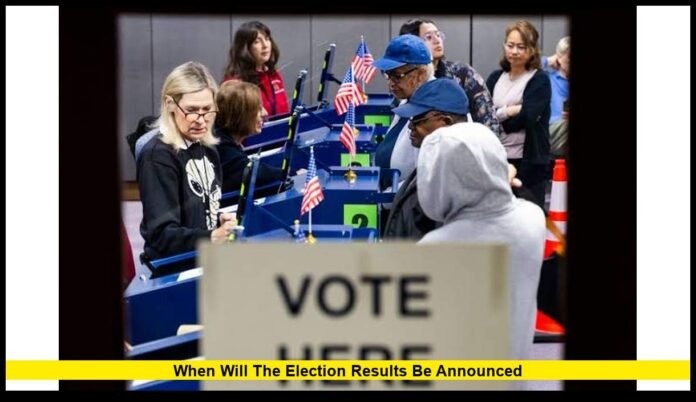

When will the election results be announced? This is one of the most common questions voters ask on Election Day, particularly when millions of Americans are waiting to learn the outcome of congressional, gubernatorial, state, and local races. Although voting takes place on a designated Election Day, the final results are not necessarily available immediately after polling locations close.
For the 2026 U.S. midterm elections, voters are following several important contests, including U.S. Senate races, House of Representatives elections, gubernatorial contests, and local ballot measures. Some preliminary results may become available on Election Night, while other races may take additional hours or days to produce a reliable outcome.
The timing depends on state election laws, polling-place closing times, the number of outstanding ballots, and how quickly election officials can process and count votes. Close races may take longer to resolve, even when most ballots have already been counted.
Understanding the election results announcement timeline can help voters distinguish between early vote totals, media projections, unofficial results, and certified election outcomes.
When Will the Election Results Be Announced in 2026?
The 2026 U.S. midterm election takes place on Tuesday, November 3, 2026. Election results are expected to begin appearing on Election Night as polling locations close and election officials release vote totals.
However, there is no single nationwide announcement time for election results. Each state administers its own elections and follows its own procedures for reporting votes.
In general, the announcement process follows this pattern:
- During Election Day: Election officials receive ballots and carry out legally permitted processing activities.
- After polling places close: Initial vote totals may begin appearing in states where reporting is permitted.
- Throughout Election Night: Additional results are released as officials count and report more ballots.
- Following Election Day: Remaining eligible ballots are processed and counted according to state law.
- After the counting process: Election officials complete canvassing and certification procedures.
Some contests may have a clear apparent winner on Election Night. Others may remain undecided until additional ballots are counted.
It is important to understand that the first results are not necessarily the final results. Early numbers can change as election offices report additional votes.
Why Election Results Are Not Announced at the Same Time
The United States does not operate a single centralized election-counting system. Instead, elections are administered through state and local authorities.
This means the time at which election results become available varies considerably across the country.
Several factors influence when voters can expect reliable results.
Different Poll Closing Times
Polling locations do not close simultaneously across the United States. States and jurisdictions follow different voting schedules, and time zones also affect when results become available.
For example, voters in Eastern states may begin seeing results while polling locations in parts of the western United States are still open.
Election officials generally cannot release results from in-person voting until the applicable polling-place closing requirements have been satisfied.
Different Ballot-Counting Procedures
States also have different rules for processing early voting and absentee ballots.
Some jurisdictions permit election workers to prepare certain ballots before Election Day. Others have restrictions that require particular processing activities to wait until Election Day or later.
These differences can influence how quickly results become available after polls close.
The Number of Outstanding Ballots
A race involving a large number of mail-in, absentee, provisional, or other outstanding ballots may take longer to resolve.
Election officials must follow the applicable rules for verifying, processing, and counting these ballots before including them in official totals.
Close Election Contests
A candidate may lead during the initial count but lose that advantage as additional ballots are reported.
When candidates are separated by a small number of votes, election officials and the public may need to wait for additional counting before the outcome becomes clear.
What Time Will Election Results Start Coming In Tonight?
For the 2026 midterm elections, the first major wave of election results is expected after polling places begin closing on the East Coast. Results will continue to arrive throughout the evening as additional states finish voting and report their totals.
The following schedule provides a general guide to major poll-closing periods in Eastern Time. It is not a guarantee that results or winners will be announced at any particular moment.
| Approximate poll-closing time (ET) | What voters can expect |
|---|---|
| 6 p.m. | Polls close in parts of Indiana and Kentucky. |
| 7 p.m. | Polls close in states including Georgia and South Carolina. |
| 7:30 p.m. | Polls close in North Carolina, Ohio, and West Virginia. |
| 8 p.m. | Polls close in several states, including Pennsylvania and many Florida locations. |
| 9 p.m. | Additional polling locations close, including in Arizona and parts of the Central and Mountain time zones. |
| 10 p.m. | Later-closing Western states begin reporting after their polls close, including Nevada. |
| 11 p.m. | Polls close in California, Washington, and Oregon. |
| Midnight to 1 a.m. | Polls close in Hawaii and Alaska at different times, with the last Alaska polling locations closing at approximately 1 a.m. ET. |
These times describe when voting ends in the relevant locations, not when all election results will be known. Some states have multiple time zones, so statewide results may not be released until the last applicable polling locations have closed.
For example, an early lead in an East Coast race may become visible during the evening, while a competitive contest in a Western state may not produce meaningful results until much later.
The exact timing of election-night reporting varies by state and county. Local election authorities determine when they release their official preliminary totals, while news organizations independently assess whether the available information supports projecting a winner.
When Will the Results of Senate and House Elections Be Known?
The 2026 midterm elections include contests that will determine the makeup of the U.S. House of Representatives and the U.S. Senate. The timing of these outcomes depends on the individual races rather than a single national announcement.
U.S. Senate Election Results
Senate results may become clear on Election Night when one candidate establishes a sufficiently decisive lead and the remaining ballots are unlikely to change the outcome.
However, a close Senate contest may remain unresolved while officials count outstanding mail ballots, provisional ballots, and other eligible votes. If control of the Senate depends on a particularly close race, the broader balance of power may remain uncertain even after other contests have been called.
Some states also use election procedures that can affect when a winner is determined. Ranked-choice voting, for example, may require additional rounds of counting when no candidate meets the applicable threshold in the initial count.
U.S. House of Representatives Results
Many House races may be called on Election Night, especially when the margin between candidates is substantial and most votes have been reported.
Other districts may require additional counting before the outcome is clear. A relatively small number of undecided House races can matter significantly when determining which party will control the chamber.
The announcement of an individual race winner should also be distinguished from a final determination of which party controls the House. Those conclusions depend on the results across multiple districts.
Gubernatorial and State Election Results
Gubernatorial elections, state legislative races, and ballot measures follow their own reporting schedules.
A governor’s race may be called quickly in one state but remain too close to project in another. Local contests can also take longer when they involve narrow margins or complicated counting procedures.
There is no universal deadline by which every Senate, House, gubernatorial, or state election must have a publicly projected winner on Election Night.
What Is the Difference Between Election Night Results and Final Results?
Understanding the distinction between preliminary, projected, unofficial, and certified results is essential when following election coverage.
Preliminary Results
Preliminary results are early vote totals reported by election officials. They may include ballots counted before Election Day, in-person votes reported after polls close, or other eligible ballots processed under state law.
These numbers provide an initial picture of the election but may not include every ballot.
Unofficial Results
Unofficial election results are the vote totals reported before the election has completed the required canvassing and certification procedures.
These results can change as election officials count outstanding ballots, reconcile records, and resolve eligible ballot issues.
An unofficial lead does not automatically mean that a candidate has won.
Media Projections
News organizations may announce that a candidate is the projected winner when their analysis indicates that the remaining uncounted votes are unlikely to change the outcome.
A projection is an assessment made by a news organization. It is not the same as a government certification, and different organizations may reach their conclusions at different times.
A race can be projected before every ballot has been counted, but that does not mean the remaining ballots are ignored in the official process.
Certified Election Results
Certified results are the official outcomes established after election officials complete the legally required counting, canvassing, reconciliation, and certification procedures.
The exact process and deadlines vary by state and election. Certification may take days or, in some cases, weeks after Election Day.
For this reason, the answer to when will the election results be announced depends on whether the question concerns the first vote totals, a projected winner, or the final certified outcome.
Why Some Election Results May Take Several Days
Although many results are reported on Election Night, several factors can delay the announcement of a definitive outcome.
Mail-In and Absentee Ballots
Mail voting is an important part of the election process in many states. Election officials must follow state-specific procedures for receiving, verifying, processing, and counting these ballots.
Some states allow certain preparation activities before Election Day, while others impose tighter restrictions. As a result, two states with similar numbers of voters may report their results at very different speeds.
Ballots that remain eligible for counting after Election Day under state law can also affect the final timeline.
Provisional Ballots
Provisional ballots are used when questions about a voter’s eligibility or registration must be resolved before the ballot can be counted.
Election officials review these ballots under applicable legal requirements. Because the review process can take additional time, provisional ballots may not be included in the earliest reported totals.
Narrow Margins and Recounts
When a race is extremely close, officials may need to complete additional verification procedures before the outcome is determined.
Depending on state law and the margin of victory, a recount may be required or requested through an authorized process. Recounts can extend the timeline beyond the initial counting period.
Administrative Reviews and Certification
Election officials must reconcile ballot totals, address discrepancies, and complete required checks before certifying the results.
These safeguards are part of the election process. A delay in announcing a final outcome does not, by itself, establish that something is wrong with the count.
Latest Updates on the 2026 Election Results
The latest election information should be interpreted according to the stage of the counting process.
As Election Day unfolds, preliminary results are expected to become available after the relevant polling places close. The timing of updates will vary by jurisdiction, and not every contest will have enough reported votes for a reliable projection during the first hours of counting.
For the latest developments, keep these points in mind:
- Election Night: Initial results may provide an early indication of which candidates are leading.
- Late evening and overnight: Additional vote totals may change the margins in competitive races.
- Following days: Election offices may continue counting eligible outstanding ballots and updating unofficial totals.
- Certification period: Officials complete the legally required procedures before publishing certified results.
As of the latest available information, there is no single official nationwide time for announcing all 2026 election winners. Individual states and local election offices establish their reporting procedures and certification schedules.
A specific race should be considered unresolved if election officials have not established its outcome and available information does not support a reliable conclusion. Early leads and incomplete vote totals should not be treated as confirmation of a final winner.
How to Follow Election Results as They Come In
Voters can follow election-night developments through official state election websites, county election offices, and established news organizations.
Official election websites are particularly useful for checking reported vote totals and understanding whether results are preliminary, unofficial, or certified.
When reviewing election updates, pay attention to the following details:
- The percentage of votes counted: A reported percentage can help explain how much of the count remains, although estimates may vary by jurisdiction.
- Outstanding ballots: The number and location of uncounted ballots may influence whether a current lead is likely to hold.
- The reporting jurisdiction: A county that reports early may differ from one that is still processing ballots.
- The status of the race: A candidate who is leading has not necessarily been declared the winner.
- The certification deadline: The official timeline helps establish when the final results are expected under state law.
It is also helpful to distinguish between live election coverage and official election records. News organizations provide analysis and projections, while election authorities are responsible for administering the election and certifying its results.
If different outlets report different conclusions, check whether they are using the same vote totals and whether one has projected a winner while another is still waiting for additional information.
What the Election Results Mean for the United States
The 2026 midterm elections will determine the composition of the next Congress and influence political priorities for the remainder of President Donald Trump’s current term.
The results of House and Senate contests will shape the legislative balance in Washington, including the ability of lawmakers to advance legislation, negotiate budgets, and conduct congressional oversight.
Gubernatorial and state legislative outcomes can also influence policy decisions involving education, public safety, transportation, taxes, and other state-level responsibilities.
However, the political implications cannot be fully assessed until enough results are available to establish the outcomes of the relevant contests.
A national trend may become apparent before every race is decided, but individual results still matter. A narrow contest or a small number of outstanding seats may determine which party controls a legislative chamber.
For voters, the most useful approach is to follow verified results as they develop rather than relying on isolated early totals.
Final Thoughts
So, when will the election results be announced? For the November 3, 2026, U.S. midterm elections, the first results are expected after polling places begin closing on Election Night, with additional updates arriving throughout the evening and overnight.
Many races may have projected winners before the night ends, but close contests can take longer. Mail-in ballots, provisional ballots, recount procedures, and state-specific counting rules can all affect when an outcome becomes clear.
Most importantly, Election Night results are not the same as final certified results. Early vote totals provide a useful indication of the developing picture, while the official outcome depends on completing the required election procedures.
Anyone following the 2026 election should monitor reliable updates, check official state and local election records, and avoid treating preliminary leads as definitive outcomes.
Share your thoughts in the comments and stay updated as the latest 2026 election results become available.