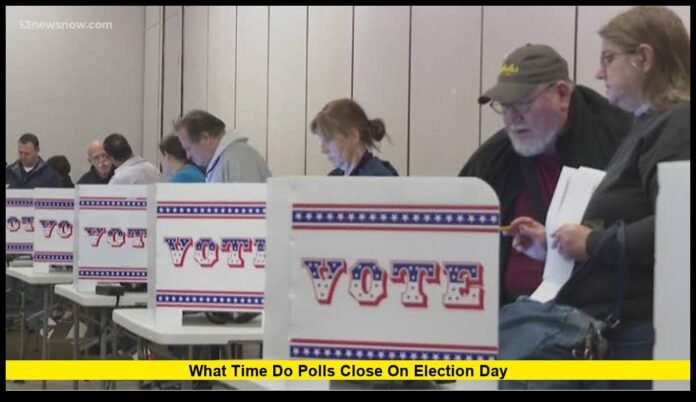

Understanding what time do polls close on election day is an important part of preparing to vote in the United States. Although millions of Americans participate in elections, polling hours are not identical across the country. Each state establishes its own voting schedule, and local election authorities provide information about individual polling locations, registration requirements, and voting procedures.
The November 3, 2026, general election will take place on a Tuesday, with voters across the country heading to designated polling places to participate in federal, state, and local contests. However, the time available to cast an in-person ballot depends on where a voter lives. Some polling locations close at 7 p.m., others remain open until 8 p.m., and certain jurisdictions follow different schedules.
For voters with work commitments, family responsibilities, transportation challenges, or other scheduling concerns, knowing the correct closing deadline can make a significant difference. Arriving at the wrong location or misunderstanding the local voting schedule could create unnecessary problems on Election Day.
The most reliable approach is to confirm the assigned polling location and its operating hours through the appropriate state or county election office. A national voting schedule can provide a general overview, but the official local schedule determines when an individual voter must arrive.
Election Day 2026: Understanding the National Voting Schedule
The 2026 U.S. general election is scheduled for November 3, 2026. Election Day gives registered and otherwise eligible voters an opportunity to participate in contests for federal, state, county, and municipal offices, as well as ballot measures where applicable.
Unlike countries that conduct national voting under one centralized timetable, the United States administers elections through a system involving federal requirements, state laws, and local election authorities.
This structure explains why voting hours vary. Each state establishes its own rules for polling-place operations, while local officials handle important administrative responsibilities.
In many jurisdictions, polling places open in the morning and remain available throughout the day. Closing times commonly fall between 6 p.m. and 9 p.m. local time, although specific schedules differ.
The closing deadline is especially important for people who plan to vote after work or other daytime commitments. Someone who expects to arrive at 7:30 p.m. should not assume that every polling location will still accept voters.
There is no single nationwide closing hour for all American polling places. Voters must follow the schedule applicable to their assigned voting location.
What Time Do Polls Close on Election Day Across Different States?
Polling-place closing times depend on state election laws. Although several states follow similar schedules, voters should understand that the rules are not uniform.
The following examples provide a general overview of commonly established Election Day closing schedules. Local variations, time zones, and special election arrangements may apply.
| State | General Election Day closing time |
|---|---|
| Alabama | 7 p.m. local time |
| Arizona | 7 p.m. local time |
| California | 8 p.m. Pacific Time |
| Colorado | 7 p.m. Mountain Time |
| Florida | 7 p.m. local time |
| Georgia | 7 p.m. local time |
| Illinois | 7 p.m. local time |
| Michigan | 8 p.m. local time |
| New York | 9 p.m. local time in jurisdictions with that schedule |
| Ohio | 7:30 p.m. local time |
| Pennsylvania | 8 p.m. local time |
| Texas | 7 p.m. local time, subject to time-zone rules |
| Virginia | 7 p.m. local time |
| Washington | 8 p.m. Pacific Time at designated ballot return locations |
These schedules should be treated as general reference information rather than confirmation of every polling location’s arrangements for November 3, 2026. Washington, for example, conducts elections primarily through mail ballots, so its voting arrangements differ from states that operate conventional Election Day polling places.
New York also has different arrangements depending on the county and election district. Voters should check their local election authority for the hours assigned to their particular location.
Why checking the official schedule matters: A voter may live in a state where the general closing time is 8 p.m., but a national summary cannot establish every local arrangement. Election officials provide the most accurate information for individual voting locations.
Why Poll Closing Times Are Different in Every State
The American election system gives states considerable responsibility for administering elections. Federal law establishes certain nationwide requirements, but states retain authority over many aspects of polling-place operations.
This arrangement creates differences in voting hours, early voting opportunities, mail-ballot procedures, and the administration of local elections.
State election laws establish voting hours
Every state has election laws that govern when polling locations open and close. Some states establish statewide operating hours, while others provide local election authorities with responsibilities for determining certain details.
These regulations also address procedures for voters who arrive close to the deadline, election-worker responsibilities, and the handling of ballots after voting ends.
A voter who moves from one state to another may discover that Election Day operates differently from what they previously experienced.
Local election officials manage polling locations
County election offices and other local authorities play an important role in organizing voting.
They determine or administer polling locations, provide voter information, train election workers, and communicate changes that affect residents.
A polling location may also change between elections because of building availability, accessibility requirements, construction, or administrative decisions.
For this reason, voters should check their assigned location before every major election instead of automatically returning to the same building they used previously.
Different voting systems affect the schedule
Not every state relies exclusively on traditional polling places.
Some jurisdictions offer early voting centers, vote centers, absentee voting, and mail-ballot systems. Others provide a combination of in-person and remote voting options.
Washington is an important example because it conducts elections primarily by mail. Voters can return their ballots through authorized drop boxes or by mail, subject to the applicable deadlines.
Consequently, the traditional question about when polling stations close does not fully describe how voting works in every state.
How Time Zones Affect Election Day Poll Closing Hours
Time zones are another important factor when determining when voting ends across the United States.
The country includes several major time zones, and polling places generally follow the local time applicable to their jurisdiction.
The four principal continental time zones are:
- Eastern Time
- Central Time
- Mountain Time
- Pacific Time
Alaska and Hawaii follow additional time-zone arrangements.
This difference can make national election coverage confusing for viewers who follow results from different parts of the country.
For example, when a polling location in California closes at 8 p.m. Pacific Time, the corresponding time is 11 p.m. Eastern Time.
Meanwhile, polling places in Eastern Time jurisdictions may have already closed several hours earlier.
States that cover multiple time zones require particular attention. Texas, Florida, and other geographically large states have voting arrangements that can differ according to location.
Voters should always use the local closing time displayed by their election authority rather than converting a national television schedule into a personal voting deadline.
National election coverage and local voting deadlines are not the same thing. Television networks may announce poll closings using Eastern Time, but that does not change the schedule voters must follow at their assigned polling places.
Can Voters Still Cast Ballots After Polls Officially Close?
One of the most important protections for voters concerns people who are already waiting in line when the polling location reaches its official closing time.
In general, eligible voters who are in line before the closing deadline must be allowed to cast their ballots under applicable state procedures.
This rule helps prevent people from losing their opportunity to vote simply because a polling location experiences heavy turnout or delays.
Consider a polling location scheduled to close at 7 p.m. A voter arrives at 6:55 p.m. and joins the designated voting line. If the line remains long after 7 p.m., the voter generally retains the opportunity to cast a ballot.
Election workers may use procedures to identify people who were waiting before the deadline. These procedures can include marking the end of the line or providing other instructions to establish which voters arrived on time.
However, voters should not interpret this protection as permission to arrive whenever they want.
The applicable rules concern eligible voters who were already in line by closing time. Someone arriving after the deadline may not qualify for the same protection.
The best strategy is to reach the polling location well before its scheduled closing time. This gives voters additional time to address registration questions, identification requirements, or unexpected delays.
If an election worker provides instructions about remaining in line, voters should follow those directions.
What Happens When Polling Places Close on Election Day?
Poll closing represents the end of scheduled in-person voting at a particular location. However, election administration continues after the final eligible voter has completed the voting process.
Election workers must complete several responsibilities to protect ballots, document voting activity, and prepare election materials for counting and reporting.
Election officials secure ballots
After voting concludes, election workers follow established procedures to account for ballots and secure election equipment.
Depending on the jurisdiction, ballots may be counted at the polling location or transported to an authorized counting facility.
Officials must follow procedures designed to protect the integrity of election materials throughout this process.
Vote counting continues after closing
Not every ballot is necessarily included in the first election-night totals.
Election officials may need additional time to process mail ballots, provisional ballots, and other eligible ballots that require verification or administrative review.
The number of outstanding ballots and the complexity of individual contests can affect how quickly results become available.
This is particularly relevant in closely contested elections, where even a relatively small number of uncounted ballots may influence the final outcome.
Unofficial results are not final results
News organizations often report election-night totals and make projections after polls close.
However, these figures do not automatically represent the final certified outcome.
Election officials must complete the applicable counting, reconciliation, canvassing, and certification procedures.
Depending on state law and the election, the process may continue for several days or longer.
Therefore, voters should distinguish between preliminary results, media projections, unofficial totals, and officially certified election results.
Does Early Voting Have the Same Closing Time as Election Day?
Early voting is another option available to voters in many parts of the United States.
Instead of waiting until November 3, eligible voters may be able to cast their ballots at designated locations during an earlier voting period.
However, early voting schedules differ considerably between states.
Some states provide several weeks of early voting, while others offer shorter periods. Opening and closing hours may also change depending on the day of the week and the location.
For example, a county may operate an early voting center during daytime hours but provide longer operating hours closer to Election Day.
These schedules are separate from the standard Election Day polling hours.
Voters who cannot visit a polling location on November 3 should check whether early in-person voting is available in their jurisdiction.
It is also important to distinguish between early voting and absentee voting. Although both allow eligible voters to participate before Election Day, the procedures and eligibility requirements can differ.
Checking these options in advance can help people avoid last-minute scheduling difficulties.
Mail-In Ballot Deadlines Are Different From Poll Closing Times
Mail voting provides another way for eligible Americans to participate in elections without visiting a traditional polling location.
However, mail-ballot deadlines do not necessarily follow the same rules as in-person voting.
Some states require election officials to receive completed ballots by Election Day. Other states accept qualifying ballots that are postmarked by Election Day and arrive within a legally established period afterward.
The difference is important because placing a ballot in a mailbox shortly before the polling-place closing time does not automatically mean it will qualify.
Voters should understand three important details:
Ballot return deadlines: Each state establishes requirements for when election officials must receive or accept a returned ballot.
Postmark requirements: Some states use the postmark date to determine whether a ballot was returned on time, subject to additional conditions.
Official drop boxes: Many jurisdictions provide authorized ballot drop boxes where voters can return completed ballots without relying on postal delivery.
Voters should also confirm whether someone else can return a ballot on their behalf and whether additional documentation or signatures are required.
For the 2026 general election, anyone planning to vote by mail should review their state’s specific instructions well before November 3.
How to Check Your Assigned Polling Location Before Election Day
Finding the correct polling location is just as important as knowing when it closes.
Election officials assign voters to locations based on their registration information and applicable local voting arrangements.
A nearby community center or school may serve as a polling location, but that does not mean every resident can vote there.
The following steps can help voters prepare:
1. Verify voter registration
Check whether your voter registration is active and whether your residential information is correct.
Registration requirements differ by state, and some jurisdictions provide same-day registration under specific conditions.
2. Find the assigned voting location
Use the official state or county election information service to identify your polling location.
Check the complete street address rather than relying on a location name alone.
3. Confirm operating hours
Look for the official November 3, 2026, voting schedule.
If your jurisdiction provides different hours for particular voting centers, confirm which schedule applies to your assigned location.
4. Review identification requirements
Some states require voters to present specific identification documents, while others use different verification procedures.
Check the requirements before leaving home so you can bring any necessary documentation.
5. Plan your journey
Consider travel time, parking, public transportation, and possible waiting lines.
People with mobility limitations should also check accessibility arrangements before visiting a polling location.
Preparing these details in advance can make Election Day easier and reduce unnecessary uncertainty.
What Voters Should Know About Election Day 2026
The November 3 general election will involve numerous contests across the country. In addition to federal offices, voters may encounter state legislative races, gubernatorial elections, local government contests, judicial elections, and ballot measures.
Not every state will have the same contests on its ballot. The candidates and issues will depend on the voter’s residential jurisdiction and the offices scheduled for election.
Poll closing times therefore represent only one part of the preparation process.
Voters should also review their sample ballots, understand the offices appearing on their ballot, and confirm any local voting requirements.
Election information may change before November 3 because of administrative decisions, polling-place adjustments, or official emergency notices.
If a county announces that a voting location has moved, the updated instructions should take priority over older information.
Another important consideration is that voting hours do not determine when election results become available. Results depend on counting procedures, ballot processing, reporting schedules, and official verification.
People following election coverage should avoid treating early projections as completed results.
Common Mistakes to Avoid When Planning to Vote
Even voters who regularly participate in elections can encounter problems when preparing for Election Day.
Several common mistakes are preventable with a little advance planning.
Relying on an old polling location: Voting assignments may change between elections. Always verify your current location.
Assuming every state closes at 8 p.m.: Poll closing times differ across jurisdictions. Check the official local schedule.
Ignoring time-zone differences: National election coverage may report times in Eastern Time, while your polling location follows another time zone.
Waiting until the last minute: Long lines, transportation problems, and identification questions can delay voting.
Confusing mail-ballot deadlines with polling hours: Mail voting follows separate return and receipt requirements.
Assuming election-night results are final: Unofficial totals and projections do not replace the official certification process.
Avoiding these mistakes can help voters participate without unnecessary confusion.
Final Thoughts on What Time Do Polls Close on Election Day
Knowing what time do polls close on election day is essential for anyone planning to vote in the 2026 U.S. general election. Although many American polling places close between 7 p.m. and 8 p.m. local time, the actual deadline depends on state laws and local election arrangements.
November 3, 2026, is an important date for voters across the country, but preparing for Election Day involves more than remembering the date. Voters should verify their registration, confirm their assigned polling location, review identification requirements, and check the official closing time before making travel plans.
People who cannot vote during regular polling hours may have other options, including early in-person voting or mail voting, depending on their state’s rules.
It is also important to remember that eligible voters already waiting in line when polls officially close generally retain their opportunity to cast a ballot under applicable procedures. Nevertheless, arriving early remains the most practical way to avoid last-minute difficulties.
As election activity continues, official state and county election offices remain the most dependable places to find information about voting schedules, location changes, and ballot-return requirements.
Have you checked your local polling hours for November 3, 2026? Share your thoughts in the comments and stay informed about the latest U.S. election developments.