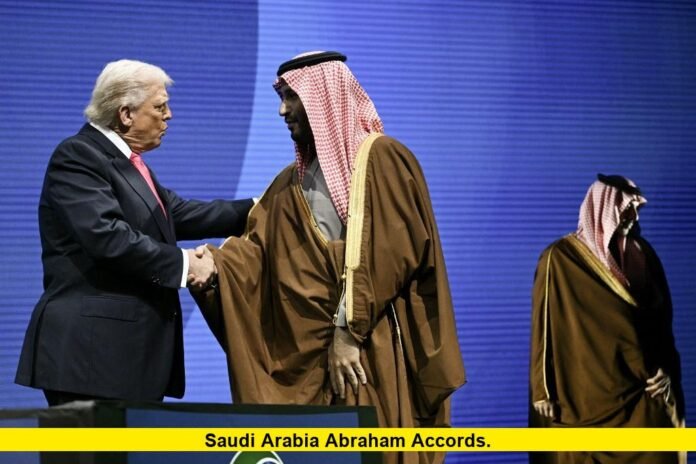

The topic of Saudi Arabia Abraham Accords remains one of the most closely watched issues in Middle East diplomacy. Since the Abraham Accords were introduced in 2020, speculation has continued about whether Saudi Arabia would eventually normalize diplomatic relations with Israel. While discussions have taken place over several years, Saudi Arabia has not joined the Abraham Accords as of today, and officials have consistently maintained that any normalization must align with the kingdom’s stated conditions.
Understanding where negotiations stand requires examining the history of the accords, Saudi Arabia’s foreign policy priorities, regional security concerns, and the latest diplomatic developments.
What Are the Abraham Accords?
The Abraham Accords are a series of normalization agreements between Israel and several Arab countries that were first announced in 2020 with U.S. mediation.
The initial participants included:
- United Arab Emirates
- Bahrain
- Morocco
- Sudan
The agreements established diplomatic relations with Israel while expanding cooperation in areas such as:
- Trade
- Tourism
- Investment
- Technology
- Security
- Scientific research
Supporters describe the accords as a major diplomatic breakthrough, while critics argue they did not resolve the long-standing Israeli-Palestinian conflict.
Saudi Arabia’s Position on the Abraham Accords
Saudi Arabia has never been a signatory to the Abraham Accords.
Instead, the kingdom has repeatedly stated that its position is linked to progress toward resolving the Palestinian issue. Saudi leaders have consistently emphasized support for the establishment of an independent Palestinian state through a negotiated two-state solution.
Although Saudi Arabia has participated in regional discussions involving the United States and other partners, it has not formally agreed to normalize relations with Israel.
The kingdom’s public position has remained largely consistent even as diplomatic efforts have continued behind the scenes.
Why Saudi Arabia Matters
Saudi Arabia occupies a unique position in the Arab and Muslim worlds.
Several factors make its potential participation especially significant:
- It is the largest economy in the Middle East.
- It is home to Islam’s two holiest cities, Mecca and Medina.
- It plays a leading political role within the Gulf Cooperation Council (GCC).
- It is one of the United States’ most important regional partners.
- It has growing influence through Vision 2030 economic reforms.
If Saudi Arabia eventually joins the Abraham Accords, it would represent one of the most consequential diplomatic developments in the region since the accords were first announced.
Diplomatic Relations Between Saudi Arabia and Israel
Although Saudi Arabia and Israel do not have formal diplomatic relations, observers have noted periods of indirect cooperation over shared regional interests.
Areas frequently discussed include:
- Regional security
- Maritime stability
- Countering extremist threats
- Economic modernization
- Technology opportunities
However, these discussions have not resulted in official diplomatic recognition.
Saudi officials continue to distinguish between practical regional cooperation and formal normalization.
The Palestinian Issue Remains Central
One of the primary reasons Saudi Arabia has not joined the Abraham Accords is its long-standing position regarding Palestinian statehood.
Saudi Arabia has repeatedly stated that lasting regional peace requires meaningful progress toward establishing an independent Palestinian state alongside Israel.
Following periods of heightened conflict in Gaza, Saudi officials reiterated that normalization would require credible progress toward a political solution rather than symbolic agreements alone.
This position has remained a central element of Saudi foreign policy.
The Role of the United States
The United States has played an important role in encouraging broader regional normalization.
Successive U.S. administrations have explored frameworks involving:
- Security cooperation
- Defense partnerships
- Economic investment
- Civilian nuclear cooperation
- Regional infrastructure projects
American officials have frequently described Saudi-Israeli normalization as a strategic objective because of its potential regional impact.
However, negotiations have involved multiple complex issues extending beyond diplomatic recognition alone.
Latest Updates on Saudi Arabia Abraham Accords
The latest developments have renewed international attention on the Saudi Arabia Abraham Accords discussion.
In July 2026, U.S. President Donald Trump stated that a proposed civilian nuclear agreement with Saudi Arabia would be tied to the kingdom joining the Abraham Accords and normalizing relations with Israel. The announcement linked the nuclear cooperation framework to broader diplomatic objectives in the region.
Despite these remarks, Saudi Arabia has not announced that it will join the Abraham Accords. Saudi officials have continued to emphasize that normalization depends on credible progress toward the establishment of an independent Palestinian state, reflecting the kingdom’s publicly stated policy.
As of today, no official agreement has been announced that would make Saudi Arabia a signatory to the Abraham Accords.
Economic Opportunities of Normalization
If diplomatic normalization were eventually achieved, analysts believe several economic sectors could benefit.
Potential areas include:
- Trade expansion
- Tourism
- Aviation
- Artificial intelligence
- Renewable energy
- Water technology
- Agriculture
- Healthcare
- Logistics
- Financial services
Saudi Arabia’s Vision 2030 program seeks to diversify the country’s economy beyond oil, making international investment and technological cooperation important national priorities.
However, these potential opportunities remain hypothetical until an official agreement is reached.
Regional Security Considerations
Security remains an important factor in discussions surrounding the Saudi Arabia Abraham Accords.
The Middle East continues to face challenges involving:
- Regional conflicts
- Maritime security
- Missile threats
- Energy infrastructure
- Cybersecurity
- Counterterrorism
Many policymakers argue that broader regional cooperation could strengthen collective security.
Others believe political disputes must first be resolved before lasting security partnerships can be established.
These differing perspectives continue to shape diplomatic negotiations.
International Reactions
Many governments have expressed support for expanding diplomatic relations between Israel and Arab countries.
Supporters argue that wider normalization could encourage:
- Greater regional stability
- Increased economic integration
- More investment
- Improved transportation links
- Enhanced scientific cooperation
At the same time, numerous countries and international organizations continue to stress that sustainable peace should also address the Israeli-Palestinian conflict.
These parallel priorities remain central to ongoing diplomatic discussions.
Challenges Facing Future Negotiations
Several complex issues continue to influence negotiations involving Saudi Arabia.
These include:
- Palestinian statehood
- Regional security guarantees
- Defense cooperation
- Civilian nuclear policy
- Domestic political considerations
- Ongoing regional conflicts
- Long-term peace arrangements
Because these issues are interconnected, negotiations have remained highly complex and time-consuming.
Public Interest in Saudi Arabia Abraham Accords
Interest in the Saudi Arabia Abraham Accords extends well beyond the Middle East.
Investors, businesses, policymakers, and international observers continue monitoring developments because any future agreement could influence:
- Global energy markets
- International investment
- Aviation routes
- Tourism
- Technology partnerships
- Regional diplomacy
At present, however, discussions remain diplomatic rather than finalized.
Current Status
As of today:
- Saudi Arabia has not joined the Abraham Accords.
- No official normalization agreement with Israel has been announced.
- Saudi Arabia continues to publicly maintain that progress toward an independent Palestinian state is a prerequisite for normalization.
- Diplomatic discussions involving the United States and regional partners continue, but no final agreement has been confirmed.
Final Thoughts
The Saudi Arabia Abraham Accords remain one of the most important ongoing diplomatic issues in the Middle East. A future agreement could reshape regional politics, economics, and security, but significant diplomatic challenges remain.
While negotiations and international discussions continue, there is currently no official confirmation that Saudi Arabia has agreed to join the Abraham Accords. Any future decision will likely depend on broader regional negotiations, including the kingdom’s long-standing position regarding Palestinian statehood, as well as wider security and strategic considerations.
Stay informed as diplomatic developments continue, and share your thoughts on how future Middle East agreements may shape the region.