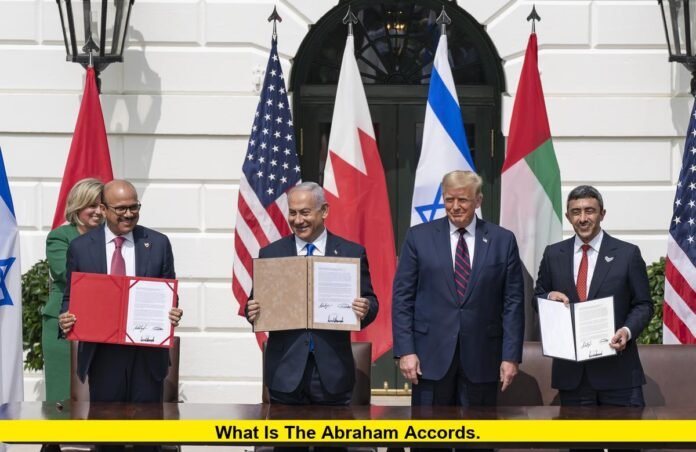

The question what is the Abraham Accords has become increasingly important as the agreements continue to influence diplomacy, trade, and security across the Middle East. The Abraham Accords are a series of normalization agreements that established formal diplomatic relations between Israel and several Arab countries beginning in 2020. Brokered by the United States, the accords marked one of the most significant diplomatic developments in the region in decades.
Supporters view the agreements as an opportunity to expand regional cooperation, while critics argue that they do not resolve the long-standing Israeli-Palestinian conflict. Years after their signing, the accords remain an important part of Middle Eastern diplomacy and continue to shape discussions about future peace efforts.
Understanding the Abraham Accords
The Abraham Accords are diplomatic agreements designed to normalize relations between Israel and participating Arab nations. Before these agreements, only Egypt and Jordan had established formal peace treaties with Israel.
The accords take their name from Abraham, a religious figure respected in Judaism, Christianity, and Islam, symbolizing the shared heritage of the participating countries.
The first agreements were signed at the White House in September 2020 during President Donald Trump’s first administration.
Their primary goals include:
- Establishing diplomatic relations
- Opening embassies
- Expanding trade and investment
- Increasing tourism
- Enhancing scientific and technological cooperation
- Strengthening regional security cooperation
Rather than functioning as a single treaty, the Abraham Accords consist of several bilateral agreements between Israel and individual participating countries.
Which Countries Joined the Abraham Accords?
Several countries have agreed to normalize relations with Israel through the Abraham Accords framework.
These include:
- United Arab Emirates
- Bahrain
- Morocco
- Sudan
The United Arab Emirates and Bahrain became the first Gulf Arab nations in decades to establish official diplomatic ties with Israel.
Morocco later agreed to normalize relations while the United States recognized Moroccan sovereignty claims over Western Sahara as part of broader diplomatic arrangements.
Sudan also agreed to join the framework, although full implementation has faced significant challenges because of political instability and ongoing internal conflict.
Why the Abraham Accords Were Considered Historic
The agreements represented a major shift in Middle Eastern diplomacy.
For decades, many Arab governments maintained that formal recognition of Israel should occur only after the establishment of a Palestinian state.
The Abraham Accords broke from that long-standing approach by allowing participating countries to normalize relations independently of final Israeli-Palestinian peace negotiations.
The agreements reflected changing regional priorities, including:
- Economic development
- Technology partnerships
- Security cooperation
- Shared concerns about regional instability
- Increased investment opportunities
This new diplomatic model significantly altered regional political dynamics.
Economic Impact of the Abraham Accords
One of the most visible outcomes has been rapid economic cooperation.
Since 2020, participating countries have expanded collaboration across numerous industries.
Examples include:
- Direct commercial flights
- Tourism growth
- Technology partnerships
- Renewable energy projects
- Medical research
- Financial services
- Artificial intelligence initiatives
- Agricultural innovation
Trade between Israel and the United Arab Emirates grew rapidly after normalization, making the UAE Israel’s largest Arab trading partner.
Businesses have signed agreements covering logistics, cybersecurity, healthcare, education, finance, and infrastructure development.
Security and Strategic Cooperation
Security cooperation has become another important element of the Abraham Accords.
Participating governments have increased dialogue regarding:
- Counterterrorism
- Maritime security
- Cybersecurity
- Intelligence sharing
- Regional stability
- Missile defense cooperation
Although many details remain confidential, analysts generally agree that security coordination has expanded considerably since normalization.
Growing concerns over regional tensions have further encouraged closer strategic relationships among several participating countries.
The Palestinian Issue
Despite their achievements, the Abraham Accords remain controversial.
Many Palestinian leaders criticized the agreements, arguing that normalization occurred without securing a comprehensive solution to the Israeli-Palestinian conflict.
Supporters of the accords contend that improved regional relationships may eventually create new opportunities for diplomacy and economic cooperation.
Critics maintain that lasting peace will require meaningful progress toward resolving core issues involving Israel and the Palestinians.
As a result, the accords continue to generate differing opinions among governments, policy experts, and the public.
The Role of the United States
The United States played a central role in negotiating the Abraham Accords.
Senior American officials worked closely with Israeli and Arab leaders to facilitate the agreements.
Since their signing, successive U.S. administrations have generally supported maintaining and expanding the framework, although policy priorities have varied.
American diplomatic efforts have continued to encourage additional countries to consider normalization where conditions permit.
Public Interest Around the Abraham Accords
Interest in understanding what is the Abraham Accords has remained high because the agreements affect several important global issues.
People often follow developments involving:
- Middle East diplomacy
- International trade
- Oil markets
- Regional security
- U.S. foreign policy
- Israel’s diplomatic relations
- Peace negotiations
The accords are frequently discussed during periods of heightened regional tension or major diplomatic initiatives.
Latest Updates
As of today, the Abraham Accords remain in effect despite significant regional challenges, including the Israel-Hamas war and broader Middle East tensions.
Relations between Israel and existing Abraham Accords partners continue, although some areas of public cooperation have slowed because of political and security developments. Economic and diplomatic ties have generally remained intact.
Expansion of the accords remains an active diplomatic objective. Discussions have periodically focused on whether additional countries could eventually normalize relations with Israel. Saudi Arabia has often been viewed as the most significant potential future participant because of its regional influence.
However, there is currently no official confirmation that Saudi Arabia has joined the Abraham Accords. Saudi officials have consistently stated that normalization with Israel depends on progress toward resolving the Palestinian issue, including movement toward Palestinian statehood. Diplomatic discussions continue, but no finalized agreement has been announced.
Challenges Facing the Abraham Accords
Although the agreements have survived several years of regional instability, they continue to face obstacles.
Key challenges include:
- Ongoing conflict in Gaza
- Regional political tensions
- Domestic public opinion in participating countries
- The unresolved Israeli-Palestinian conflict
- Changing geopolitical priorities
Even with these challenges, none of the original participating governments has formally withdrawn from the framework.
Many experts believe the long-term success of the accords will depend on whether participating countries continue expanding practical cooperation while managing political disagreements.
Why the Abraham Accords Matter Today
The Abraham Accords have reshaped diplomatic relationships across the Middle East.
Their significance extends beyond political symbolism because they have created measurable cooperation in trade, tourism, technology, investment, and security.
Whether additional countries eventually join remains uncertain. Future expansion will likely depend on evolving regional politics, security conditions, and broader peace efforts.
Regardless of future developments, the Abraham Accords represent one of the most consequential diplomatic initiatives in the Middle East during the 21st century.
Final Thoughts
Understanding what is the Abraham Accords provides valuable insight into one of the most important diplomatic changes in recent Middle Eastern history. The agreements transformed relationships between Israel and several Arab nations by emphasizing cooperation in diplomacy, business, technology, and security. While debates continue over their long-term impact and their relationship to the Israeli-Palestinian conflict, the accords remain a central element of regional diplomacy and continue to influence international discussions about peace and stability.
What do you think about the future of the Abraham Accords? Share your thoughts in the comments and stay updated on the latest global developments.