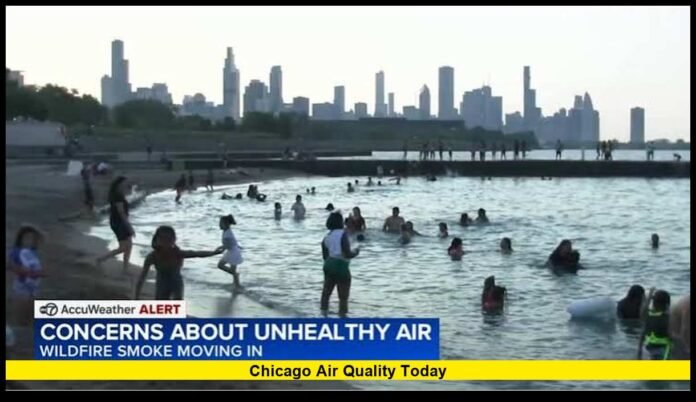

Air quality across Chicago has deteriorated significantly as smoke from large Canadian wildfires continues to spread into the Midwest. Residents stepping outside have noticed hazy skies, reduced visibility, and the smell of smoke lingering in the air. While these conditions may appear temporary, the fine particles carried by wildfire smoke can pose serious health risks, particularly for children, older adults, and people with existing respiratory or heart conditions.
The current conditions have prompted air quality alerts across northeastern Illinois, with pollution levels reaching unhealthy ranges in many communities. Officials are encouraging residents to monitor changing conditions throughout the day and limit outdoor activities whenever pollution levels remain elevated.
Why Air Quality Has Declined Across Chicago
The latest deterioration is being driven by massive wildfire smoke plumes traveling hundreds of miles from active fires burning across parts of Canada. Favorable wind patterns have transported the smoke southward into Illinois, where it has mixed with local atmospheric conditions to create widespread haze.
Unlike pollution produced by vehicles or industrial facilities, wildfire smoke can affect enormous geographic areas. Even cities located far from the fires can experience dangerous levels of fine-particle pollution when weather systems transport smoke over long distances.
Meteorologists explain that stable atmospheric conditions have prevented much of the smoke from dispersing quickly. Instead, it has remained trapped closer to the surface, allowing concentrations of microscopic particles to build across the Chicago metropolitan area.
Residents throughout downtown Chicago, nearby suburbs, and surrounding counties have reported noticeably reduced visibility and persistent smoky conditions.
Understanding the Air Quality Index
The Air Quality Index (AQI) serves as the standard measurement used to communicate pollution levels to the public. It converts scientific air pollution measurements into easy-to-understand categories that indicate potential health concerns.
Lower AQI values represent cleaner air, while higher values indicate increasing health risks.
When the index rises into unhealthy categories, everyone—not just vulnerable populations—can begin experiencing adverse health effects. Sensitive groups typically experience symptoms earlier and more severely.
Because wildfire smoke consists primarily of PM2.5, or extremely fine particulate matter, AQI values can rise quickly even when weather appears calm.
These microscopic particles are small enough to bypass the body’s natural defenses and penetrate deep into the lungs. Some particles may even enter the bloodstream, increasing health risks beyond the respiratory system.
Wildfire Smoke Is Different From Everyday Pollution
Chicago regularly experiences pollution generated by traffic, manufacturing, construction, and other urban activities. Wildfire smoke differs because it contains enormous quantities of tiny particles created when forests, vegetation, structures, and other materials burn.
Smoke from large wildfires often contains:
- Fine particulate matter (PM2.5)
- Carbon monoxide
- Volatile organic compounds
- Nitrogen oxides
- Various combustion byproducts
The exact composition changes depending on what is burning, but PM2.5 remains the primary concern during major smoke events.
Because these particles are nearly invisible individually, dangerous pollution levels may exist even when the smoke appears to be thinning.
Health Effects Can Develop Quickly
Many people notice symptoms after only a short period outdoors during significant smoke events.
Common short-term effects include:
- Burning or watery eyes
- Scratchy throat
- Persistent coughing
- Nasal irritation
- Headaches
- Fatigue
- Difficulty breathing
- Chest tightness
Healthy adults often recover after limiting exposure, but individuals with asthma, chronic obstructive pulmonary disease (COPD), emphysema, or cardiovascular disease face greater risks.
For some people, smoke exposure can trigger asthma attacks or worsen chronic respiratory illnesses.
Emergency departments often experience increased visits during prolonged periods of unhealthy air because vulnerable individuals may require additional medical treatment.
Who Should Be Especially Careful
Although poor air quality affects everyone, several groups face significantly greater health risks.
These include:
- Infants and young children
- Older adults
- Pregnant women
- People living with asthma
- Individuals with COPD
- Heart disease patients
- Outdoor workers
- Athletes
- Individuals recovering from respiratory infections
Children deserve special attention because they breathe more rapidly than adults while their lungs are still developing. Increased breathing rates mean they inhale larger amounts of polluted air during outdoor play.
Older adults may also have reduced ability to tolerate respiratory stress caused by elevated particulate pollution.
Read More – Naperville Weather Today: June 12, 2026 — Forecast, Severe Storm Alert & Weekly Outlook
What Residents Can Do to Protect Themselves
Reducing exposure remains the most effective strategy whenever smoke causes unhealthy air quality.
Residents can take several practical steps:
- Stay indoors whenever possible.
- Keep windows and exterior doors closed.
- Use central air conditioning if available.
- Install or replace high-efficiency HVAC filters.
- Operate portable HEPA air purifiers.
- Postpone strenuous outdoor exercise.
- Avoid smoking indoors.
- Limit candle use and wood-burning fireplaces.
- Wear a properly fitted N95 respirator if extended outdoor activity cannot be avoided.
Ordinary cloth face coverings are not designed to filter microscopic wildfire smoke particles effectively.
Improving Indoor Air Quality
Indoor environments generally offer greater protection, but smoke can still enter homes through ventilation systems, small openings, and frequently opened doors.
Simple improvements can make indoor air significantly cleaner during smoke events.
Running a portable HEPA purifier in the room where family members spend the most time can substantially reduce airborne particles.
Replacing HVAC filters according to manufacturer recommendations also helps improve indoor air circulation.
Residents should avoid activities that create additional indoor pollution, including:
- Frying food at high temperatures
- Burning incense
- Using fireplaces
- Smoking tobacco products
Keeping indoor air as clean as possible becomes increasingly important when outdoor pollution remains elevated for multiple days.
Outdoor Activities May Need to Be Adjusted
Poor air quality can interfere with many aspects of daily life.
Joggers, cyclists, construction workers, landscapers, delivery drivers, and outdoor sports participants often experience greater smoke exposure because they spend extended periods outside.
Physical activity increases breathing rates, allowing more polluted air to enter the lungs.
Families may also consider postponing:
- Long walks
- Outdoor sports
- Park visits
- Recreational cycling
- Yard work
- Community events
Even healthy individuals may notice decreased exercise performance during smoke events.
How Weather Influences Air Quality
Weather plays a major role in determining how long smoke remains over Chicago.
Wind direction largely determines whether additional smoke continues arriving from wildfire regions.
Temperature inversions can also trap pollution close to the surface, preventing natural dispersion.
Rainfall may temporarily improve conditions by removing airborne particles from the atmosphere, although meaningful improvement depends on the amount of precipitation and continued smoke transport from wildfire areas.
Meteorologists continue monitoring changes in regional weather patterns because even relatively small wind shifts can produce noticeable differences in local air quality.
Changing Conditions Throughout the Day
Air pollution caused by wildfire smoke rarely remains constant.
Morning hours sometimes experience the highest concentrations because overnight atmospheric conditions trap smoke closer to ground level.
As daytime temperatures rise, changing wind patterns may either improve or worsen conditions depending on the movement of smoke plumes.
One neighborhood may experience cleaner air while another only a few miles away remains heavily affected.
Because conditions fluctuate, residents planning outdoor activities should remain aware that pollution levels can change within hours.
The Impact on Daily Life Across Chicago
The smoky conditions have affected more than visibility.
Many residents have chosen to cancel outdoor exercise, while schools, recreation programs, and community organizations continue monitoring air quality before holding activities outside.
Businesses employing outdoor workers have also been encouraged to adjust schedules where possible to reduce prolonged smoke exposure.
Drivers may notice reduced visibility during periods when smoke becomes especially dense, particularly during sunrise and sunset when light interacts with suspended particles.
Although these visual effects are obvious, health experts emphasize that invisible microscopic particles remain the primary concern.
Why These Smoke Events Are Becoming More Noticeable
Over recent years, Chicago has experienced several major smoke episodes linked to large wildfire seasons across Canada.
Climate conditions, prolonged dry weather, and expansive forest fires have allowed enormous smoke plumes to travel across international borders and affect millions of Americans.
Modern satellite technology enables meteorologists to track these smoke plumes with remarkable precision, providing earlier warnings than in previous decades.
Even so, smoke movement remains highly dependent on rapidly changing weather patterns.
As long as significant wildfire activity continues across northern regions, additional smoke episodes remain possible throughout the summer.
Current Conditions Across the Region
The latest air quality alerts remain focused on northeastern Illinois, including Chicago and surrounding communities.
PM2.5 continues to be the dominant pollutant responsible for elevated AQI readings. Pollution levels have fluctuated throughout the day, with some locations experiencing unhealthy conditions for extended periods.
Health officials continue encouraging residents to reduce unnecessary outdoor exposure until air quality improves.
Forecast models indicate that changing winds could gradually improve conditions, although ongoing wildfire activity means smoke may continue affecting the region if atmospheric patterns shift again.
Residents should remain prepared for changing conditions over the coming days, as smoke concentrations can increase or decrease relatively quickly depending on weather developments.
Staying Safe During Extended Smoke Events
Wildfire smoke has become an increasingly familiar challenge for many parts of North America, including cities located far from the fires themselves.
Remaining informed, limiting exposure during unhealthy conditions, and improving indoor air quality can significantly reduce health risks.
Simple precautions such as monitoring local conditions, avoiding strenuous outdoor activity, and using effective air filtration systems can make a meaningful difference, especially for families with children, older adults, or individuals managing chronic health conditions.
As Chicago continues dealing with smoke drifting into the Midwest, staying aware of changing conditions remains the best way to protect both personal health and daily routines.
Keep checking for the latest air quality updates, and feel free to share how conditions are affecting your area in the comments below.