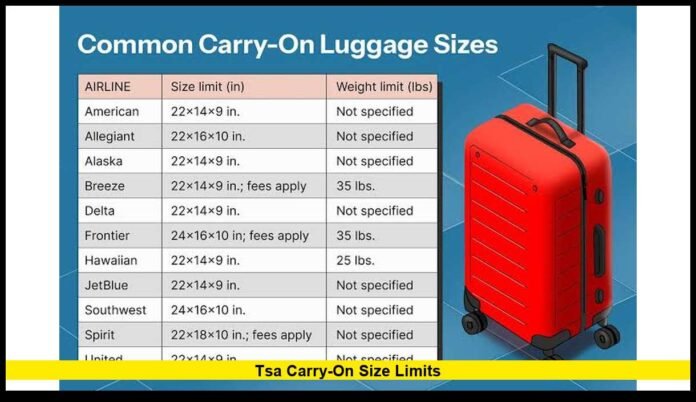

Travelers searching for tsa carry-on size limits should know that the latest rules remain largely consistent across most U.S. airlines in 2026, but enforcement has become stricter at many airports. While the Transportation Security Administration (TSA) does not set a universal carry-on size, airlines continue to enforce their own baggage dimensions, and newer airport screening technology is making oversized bags easier to identify before passengers reach their gate.
Whether you’re flying for business, vacation, or a weekend getaway, understanding current carry-on requirements can help you avoid unexpected baggage fees, boarding delays, and unnecessary stress at the airport.
Does TSA Set Carry-On Size Limits?
A common misunderstanding is that TSA determines the maximum size of carry-on luggage.
In reality, TSA is responsible for airport security screening. Individual airlines decide how large your carry-on bag can be inside the aircraft cabin.
Security officers inspect luggage for prohibited items, while airline employees determine whether your bag meets cabin baggage requirements.
Because of this distinction, a bag can successfully pass through airport security but still be rejected at the boarding gate if it exceeds the airline’s limits.
Standard Carry-On Size Used by Most U.S. Airlines
Although every airline publishes its own baggage policy, most major domestic carriers continue using nearly identical dimensions.
| Measurement | Typical Maximum |
|---|---|
| Length | 22 inches |
| Width | 14 inches |
| Height | 9 inches |
These measurements include every external part of the suitcase, including:
- Wheels
- Handles
- Side pockets
- Protective bumpers
Many travelers only measure the suitcase body, which can lead to problems at the airport.
Why Oversized Carry-On Bags Are Being Flagged More Often
Airports across the United States continue expanding the use of advanced computed tomography (CT) scanners.
Unlike older X-ray machines, CT scanners create detailed three-dimensional images of luggage, allowing TSA officers to inspect bags more efficiently.
Another effect of these newer scanners is that bags physically must fit through the screening equipment. Oversized luggage that previously might have reached the gate is increasingly being identified earlier during security screening.
While airline staff still make the final decision about cabin baggage, travelers are noticing stricter enforcement than in previous years.
Carry-On Size Policies at Major U.S. Airlines
Most large domestic airlines continue following similar standards.
| Airline | Maximum Carry-On Size |
|---|---|
| American Airlines | 22 x 14 x 9 inches |
| Delta Air Lines | 22 x 14 x 9 inches |
| United Airlines | 22 x 14 x 9 inches |
| Alaska Airlines | 22 x 14 x 9 inches |
| JetBlue | 22 x 14 x 9 inches |
| Hawaiian Airlines | 22 x 14 x 9 inches |
| Southwest Airlines | 24 x 16 x 10 inches |
| Frontier Airlines | 24 x 16 x 10 inches |
Low-cost carriers may charge additional fees depending on your ticket type, so reviewing baggage allowances before traveling remains important.
Carry-On Bag vs. Personal Item
Most airlines allow travelers to bring:
- One carry-on suitcase
- One personal item
Personal items commonly include:
- Backpack
- Purse
- Laptop bag
- Small duffel bag
- Briefcase
- Tote bag
The personal item should fit completely beneath the seat in front of you.
Airlines often have different measurements for personal items, making it worthwhile to verify the requirements before departure.
Do Wheels and Handles Count?
Yes.
Airlines measure the overall exterior dimensions of your luggage.
That means these parts count toward the maximum size:
- Wheels
- Handles
- Feet
- Exterior compartments
- Protective corner guards
A suitcase advertised as “22-inch luggage” can sometimes exceed airline limits once every exterior component is measured.
Does TSA Measure Carry-On Bags?
TSA officers generally do not measure bags simply to enforce airline baggage policies.
Their responsibility is screening luggage for prohibited items.
However, if a suitcase cannot fit through screening equipment or creates operational issues, travelers may be directed to alternative screening or asked to return to the airline counter.
The airline ultimately decides whether luggage qualifies as cabin baggage.
Read More- TSA Announces Clear Bags? The Viral Airport Claim Spreading Fast—and What Travelers Are Overlooking
Current TSA Liquids Rule
The long-standing liquids policy remains in effect at most U.S. airports.
Passengers may bring:
- Liquids
- Gels
- Creams
- Aerosols
- Pastes
Each container must hold no more than 3.4 ounces (100 milliliters).
All liquid containers must fit inside one clear quart-sized plastic bag.
Some airports equipped with CT scanners no longer require travelers to remove liquids from carry-on bags during screening, but the size limits themselves have not changed nationwide.
Electronics Screening Has Become Easier
Modern CT scanners also simplify the screening process for electronics.
At many upgraded checkpoints, passengers may leave laptops, tablets, and similar devices inside their carry-on bags.
However, not every airport has installed this technology.
Travelers should still be prepared to remove larger electronics if instructed by TSA officers.
Items You Can Bring in a Carry-On
Most everyday travel items remain permitted.
Examples include:
- Clothing
- Shoes
- Books
- Mobile phones
- Laptops
- Tablets
- Cameras
- Prescription medication
- Empty reusable water bottles
- Snacks
- Baby supplies
Certain items may require additional inspection but are still allowed.
Lithium Battery Rules Remain Important
Lithium batteries continue to receive close attention during airport security screening.
Passengers should keep:
- Power banks
- Spare lithium batteries
- Rechargeable battery packs
inside their carry-on luggage rather than checked baggage whenever required by airline safety policies.
Damaged batteries should never be packed for air travel.
Common Mistakes Travelers Make
Airport staff frequently encounter the same baggage issues.
Some of the most common include:
- Measuring only the suitcase body
- Forgetting wheels increase dimensions
- Overfilling expandable luggage
- Carrying oversized liquid containers
- Packing prohibited items
- Assuming every airline follows identical baggage rules
Avoiding these mistakes can help speed up the airport experience.
Tips for Packing Smarter
Before heading to the airport:
- Measure your suitcase completely.
- Weigh your luggage if flying internationally.
- Keep travel documents accessible.
- Place liquids together.
- Charge electronic devices.
- Carry medications in your cabin bag.
- Leave some extra room inside your luggage.
These small steps can save valuable time during security screening.
Choosing the Best Carry-On Luggage
When buying new luggage, focus on actual measurements rather than advertising labels.
Features worth considering include:
- Lightweight construction
- Durable wheels
- Comfortable handles
- Expandable storage
- TSA-compatible locks
- Strong zippers
- Water-resistant materials
Checking the manufacturer’s published exterior dimensions helps prevent surprises later.
Soft-Sided or Hard-Sided Luggage?
Both styles offer advantages.
Soft-Sided Bags
Benefits include:
- Greater flexibility
- Easier overhead storage
- Exterior pockets
- Slight compression when bins are full
Potential drawback:
Expandable sections may exceed airline limits if fully packed.
Hard-Sided Bags
Benefits include:
- Better protection
- Modern appearance
- Easier cleaning
- Improved durability
Potential drawback:
Less flexibility inside crowded overhead compartments.
What Happens If Your Bag Is Too Large?
Oversized luggage may result in several outcomes.
Depending on the airline, passengers could be required to:
- Check the bag before security
- Gate-check the luggage
- Pay additional baggage fees
- Transfer belongings into another bag
On full flights, even correctly sized bags may occasionally be gate-checked because of limited overhead space.
Frequently Asked Questions
Is there a nationwide TSA carry-on size limit?
No.
TSA does not establish one universal carry-on size for every airline. Airlines continue setting their own cabin baggage policies.
What size do most airlines allow?
Most major U.S. airlines continue using a maximum size of 22 x 14 x 9 inches.
Do personal items count as carry-on bags?
No.
Most airlines allow one carry-on bag plus one smaller personal item.
Can I bring food through airport security?
Many solid foods are allowed.
Liquid or spreadable foods remain subject to TSA liquid restrictions.
Are airport scanners becoming stricter?
Yes.
The growing use of CT scanners has made oversized luggage easier to identify during security screening.
Final Thoughts
Packing correctly before leaving home remains one of the easiest ways to enjoy a smoother airport experience. While TSA focuses on keeping travelers safe through security screening, airlines continue enforcing carry-on baggage dimensions for cabin storage. Measuring your luggage carefully, following current liquid rules, and understanding your airline’s baggage policy can help you avoid delays, extra fees, and last-minute surprises before your next flight.
Have questions about your next trip or tips for packing smarter? Share your thoughts in the comments and stay updated with the latest travel information.