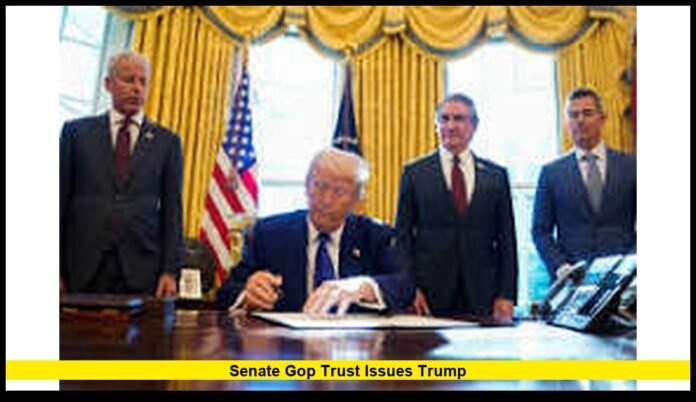

Senate GOP trust issues Trump continue to attract national attention as tensions between President Donald Trump and several Republican senators shape major political debates in Washington during 2026. While Republicans remain united on many policy priorities, recent disputes over election legislation, Senate strategy, foreign policy, and congressional authority have exposed differences that party leaders can no longer easily dismiss.
The disagreements do not represent a complete break between Trump and Senate Republicans. Instead, they reflect a growing struggle over how the Republican Party should govern while preparing for critical midterm elections. As lawmakers confront legislative deadlines and campaign pressures, questions about trust, communication, and political strategy have become increasingly important inside the GOP.
A New Political Challenge for Senate Republicans
Republicans entered 2026 with expectations of advancing key priorities and demonstrating effective governance. Instead, several high-profile disputes have complicated those efforts.
Many senators continue to support Trump’s broader agenda. They back stronger border security, conservative judicial appointments, tax policies aimed at economic growth, and efforts to reduce federal regulation. However, support for those goals has not prevented disagreements over the methods used to achieve them.
In recent months, senators have openly expressed concerns about legislative tactics, public pressure campaigns, and demands that some lawmakers believe are difficult to accomplish under Senate rules.
These concerns have contributed to the broader discussion surrounding Senate GOP trust issues Trump and what they mean for the future of Republican leadership.
The Reality of Senate Rules
One of the biggest factors behind recent tensions is the difference between political expectations and legislative reality.
The Senate operates under rules that often require broad support to advance major legislation. Even when one party controls the chamber, procedural hurdles can slow or block proposals.
Several Republican senators have emphasized this reality when discussing Trump’s legislative priorities.
Many lawmakers argue that public demands for immediate action do not always match the practical limits of the Senate. They point out that vote counts, procedural requirements, and committee processes often determine whether legislation succeeds.
Trump’s supporters frequently counter that voters expect stronger action and faster results.
This difference in perspective has become a recurring source of frustration.
For senators focused on passing legislation, political pressure can sometimes make negotiations more difficult. For Trump and many grassroots supporters, caution can appear indistinguishable from inaction.
The clash between those viewpoints has become one of the defining issues within the Republican Party.
Election Legislation Remains a Central Dispute
Election policy has become one of the most visible areas of disagreement.
Trump has repeatedly emphasized election integrity measures as a major priority. Many Republican senators support stronger safeguards and verification requirements. However, divisions have emerged over strategy and timing.
Some senators believe that legislation should move through traditional Senate procedures, even if that means slower progress.
Others favor a more aggressive approach designed to maximize political pressure.
The debate has become increasingly significant because election issues remain highly important to Republican voters nationwide.
As a result, senators often find themselves balancing practical legislative considerations against expectations from conservative activists and voters.
This balancing act has contributed to ongoing friction inside the Republican conference.
The Pressure Facing Senate Leadership
Republican Senate leaders face one of the most difficult jobs in Washington.
They must manage relationships with the White House, coordinate legislative priorities, maintain unity among senators, and prepare for upcoming elections.
That responsibility has become more challenging as disagreements have moved into public view.
Leadership teams must constantly evaluate competing concerns:
- Advancing Republican policy goals
- Protecting vulnerable incumbents
- Maintaining conference unity
- Responding to White House priorities
- Managing Senate procedures
- Preparing for election campaigns
Each objective can pull lawmakers in different directions.
A strategy that energizes Republican voters in one state may create difficulties in another.
This reality explains why Senate leaders often take a more cautious approach than political activists would prefer.
Their responsibility extends beyond a single issue or news cycle. They must consider the broader implications of every major decision.
Read More – Trump Approval Rating Graph: What the Latest Polls Reveal About America’s Divided Verdict
Foreign Policy Differences Add Complexity
Foreign policy debates have also highlighted divisions between Trump and some Senate Republicans.
Historically, foreign policy has often created disagreements within both major political parties. Republicans are no exception.
Recent discussions involving international agreements, military policy, and America’s role abroad have revealed different perspectives among GOP leaders.
Some senators advocate a strong congressional role in overseeing foreign policy decisions.
Others focus on preserving presidential flexibility during international negotiations.
While Republicans generally agree on supporting American interests and national security, disagreements over implementation continue to surface.
These debates have become increasingly important as global conflicts and diplomatic challenges remain major concerns for voters.
Foreign policy disagreements may not dominate election campaigns, but they often influence relationships between presidents and members of Congress.
That dynamic is clearly visible today.
Why Trust Matters in Washington
Trust plays a critical role in any political relationship.
Presidents depend on congressional allies to advance legislation.
Lawmakers depend on presidents to provide consistent messaging and strategic coordination.
When trust weakens, governing becomes more difficult.
Several Republican senators have privately and publicly raised concerns about communication and expectations.
Some lawmakers believe they receive conflicting signals regarding legislative priorities.
Others worry that public criticism from influential figures can undermine ongoing negotiations.
These concerns have fueled conversations about trust within Republican circles.
Even when lawmakers agree on policy goals, disagreements about strategy can create lasting tension.
The challenge for Republican leaders is finding ways to rebuild confidence while continuing to pursue shared objectives.
Trump’s Influence Remains Enormous
Despite the recent disagreements, Donald Trump remains the dominant figure in Republican politics.
His endorsements continue to matter in primary elections.
Candidates frequently seek his support.
Grassroots activists remain highly engaged with his political movement.
For many Republican voters, Trump continues to represent the party’s most influential voice.
That reality shapes every major decision made by Senate Republicans.
Even senators who disagree with specific strategies understand Trump’s importance within the party.
As a result, criticism is often measured and carefully worded.
Most Republican lawmakers avoid direct confrontations whenever possible.
Instead, they focus on procedural concerns or legislative realities rather than personal disagreements.
This approach reflects Trump’s continued influence over Republican voters and candidates.
The Midterm Election Factor
The approaching midterm elections add another layer of complexity.
Every political decision now carries electoral implications.
Republican senators running for reelection must consider how voters in their states will respond to ongoing disputes.
The political environment varies significantly across the country.
Some Republican senators represent states where Trump remains overwhelmingly popular.
Others compete in closely divided states where independent voters often determine election outcomes.
This creates different political incentives.
A senator from a strongly conservative state may face pressure to align closely with Trump on every issue.
A senator from a competitive state may prioritize bipartisan appeal or legislative accomplishments.
These differing priorities can create tension within the conference.
As election season intensifies, those differences become increasingly visible.
The Challenge of Party Unity
Maintaining party unity is one of the most difficult tasks in modern American politics.
Republicans, like Democrats, represent a broad coalition of voters with different priorities.
Within the GOP, divisions exist among conservatives, moderates, populists, libertarians, and national security-focused lawmakers.
Trump’s leadership has often helped unify those groups.
However, recent disagreements demonstrate that unity cannot always be assumed.
Senators face unique pressures compared with House members or presidential advisers.
They represent entire states and often serve six-year terms.
This longer political horizon can influence how they evaluate policy decisions and political risks.
As a result, senators sometimes reach different conclusions than White House officials.
These differences do not necessarily indicate ideological conflict.
Often, they reflect varying responsibilities and political calculations.
How Republican Voters View the Situation
Republican voters remain deeply engaged in the debate.
Many grassroots conservatives support Trump’s calls for stronger action on major policy issues.
They want elected officials to deliver visible results.
At the same time, many voters also expect effective governance.
They want Congress to pass legislation, confirm qualified nominees, and address national challenges.
When internal disputes dominate headlines, some voters become concerned about the party’s ability to focus on policy priorities.
Others view disagreements as a normal part of democratic governance.
Polling throughout recent years has shown that Republican voters generally remain supportive of Trump while also expecting elected officials to work together effectively.
That expectation places additional pressure on party leaders.
Legislative Priorities at Stake
Several important policy areas could be affected by ongoing tensions.
These include:
| Policy Area | Why It Matters |
|---|---|
| Election Security | Major priority for Republican voters |
| Border Security | Central issue in GOP campaigns |
| Economic Policy | Key focus for lawmakers and voters |
| Judicial Confirmations | Long-term impact on federal courts |
| National Security | Critical concern amid global tensions |
| Government Spending | Ongoing debate within the party |
Progress in these areas often depends on cooperation between the White House and Senate Republicans.
When disagreements emerge, legislative momentum can slow.
That reality helps explain why party leaders continue working to minimize divisions.
Historical Perspective on Intraparty Disputes
Political disagreements between presidents and members of their own party are not unusual.
American history includes numerous examples of congressional leaders challenging presidents from the same party.
Differences often emerge over spending, foreign policy, nominations, or legislative tactics.
What makes today’s situation distinctive is the speed with which disagreements become public.
Modern media, social platforms, and constant political coverage amplify every dispute.
Comments that might once have remained private can now become national headlines within minutes.
This environment makes it harder to manage internal disagreements quietly.
As a result, even relatively routine disputes can appear larger and more significant.
That visibility contributes to ongoing attention surrounding Senate GOP trust issues Trump.
Can Republicans Bridge the Divide?
Many Republican leaders continue working to strengthen communication and reduce tensions.
Both sides share significant policy goals.
Both want Republican electoral success.
Both recognize the importance of presenting a strong governing record before voters head to the polls.
Those shared interests create incentives for cooperation.
At the same time, disagreements over strategy are unlikely to disappear completely.
The Senate’s institutional role often leads lawmakers to prioritize procedure and coalition-building.
Presidents typically focus on achieving policy objectives and energizing supporters.
Those differences are likely to remain part of the relationship between Trump and Senate Republicans.
The key question is whether leaders can manage disagreements without allowing them to undermine broader political goals.
The Road Ahead
The coming months will be critical for Republicans in Washington.
Congress faces major legislative decisions. Election campaigns are accelerating. National and international issues continue demanding attention.
Against that backdrop, the relationship between President Trump and Senate Republicans will remain a major political story.
Recent events demonstrate that support for shared policy objectives does not eliminate disagreements over tactics and priorities.
Republicans continue searching for ways to balance legislative realities, voter expectations, and electoral strategy.
How successfully they navigate those challenges could influence both their governing agenda and their political fortunes in the months ahead.
For now, Senate GOP trust issues Trump remain an important test of Republican unity, leadership, and the party’s ability to govern effectively while preparing for a highly competitive election season.
As Washington’s political battles continue, readers will be watching closely to see whether Republicans can strengthen unity or whether these tensions become an even bigger factor in the nation’s political landscape.