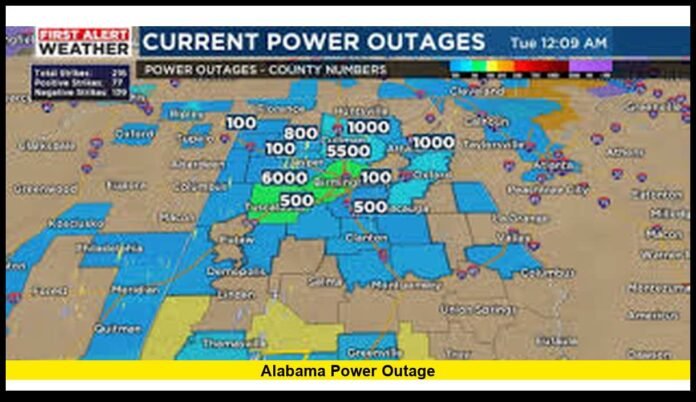

Alabama Power outage concerns remain in focus across several parts of the state as thousands of customers continue to deal with service interruptions while utility crews work around the clock to restore electricity. Outage numbers have fluctuated throughout the day, with Mobile County, Jefferson County, Baldwin County, Monroe County, and Cullman County among the areas reporting the largest impacts.
Power outages can disrupt daily life within minutes. Homes lose air conditioning, businesses face interruptions, traffic signals stop functioning, and communication becomes more difficult. As restoration efforts continue, many residents are closely monitoring updates and estimated repair times.
Current Outage Situation Across Alabama
The latest outage reports show that thousands of Alabama residents remain without electricity. While many customers have already seen service restored, active outages continue in multiple regions.
Alabama Power serves millions of residents and businesses throughout the state. Because of the size of its service territory, even isolated equipment failures can affect a significant number of customers.
Outage numbers often change rapidly throughout the day. Restoration crews may return service to one area while new outages develop elsewhere due to equipment issues, weather conditions, or other incidents.
Many affected customers reported losing power during periods of severe weather and strong thunderstorms. In other locations, isolated infrastructure problems contributed to service disruptions.
Mobile County Reports Highest Outage Totals
Mobile County has emerged as one of the hardest-hit areas during the latest round of outages.
Located along Alabama’s Gulf Coast, the county frequently experiences weather conditions that can challenge electrical infrastructure. Strong winds, lightning strikes, and heavy rainfall can create problems for power lines and utility equipment.
The combination of coastal weather patterns and a large customer base often places Mobile County among the counties with the highest outage totals during major service interruptions.
Residents in affected neighborhoods have experienced varying restoration timelines depending on the extent of damage and the complexity of repairs.
Jefferson County Faces Significant Service Interruptions
Jefferson County also continues to report a substantial number of customers without electricity.
As Alabama’s most populated county, Jefferson includes a large concentration of homes, businesses, schools, healthcare facilities, and industrial operations. Any disruption affecting major distribution lines can impact thousands of customers in a short period.
The Birmingham metropolitan area relies on an extensive network of substations, transmission lines, and local distribution systems. When severe weather affects these facilities, restoration can require coordinated efforts from multiple utility teams.
Many outages in urban areas can be restored relatively quickly. However, widespread storm damage may require additional repairs before power returns to every affected customer.
Baldwin County Continues to See Outage Activity
Baldwin County remains another area experiencing service interruptions.
The county has seen rapid population growth in recent years. New residential developments, expanding commercial districts, and growing infrastructure demands have increased the importance of reliable electrical service throughout the region.
Weather remains one of the primary factors affecting power reliability in Baldwin County. Thunderstorms and strong wind events can damage poles, transformers, and overhead power lines.
Utility crews continue monitoring conditions and restoring service as quickly as safety conditions allow.
Understanding Why Power Outages Occur
Many customers wonder why outages happen even when weather conditions appear relatively calm.
Electric systems operate through a complex network of equipment. A single failure can sometimes affect hundreds or even thousands of customers.
Common causes of outages include:
- Severe thunderstorms
- Lightning strikes
- Falling trees
- Broken utility poles
- Equipment malfunctions
- Vehicle accidents involving poles
- High winds
- Flooding
- Animal contact with electrical equipment
- Construction-related damage
Trees remain one of the most common causes of outages throughout Alabama. Strong winds can break branches or topple entire trees onto power lines.
Even routine weather events can create localized service interruptions when vegetation comes into contact with electrical infrastructure.
The Restoration Process Explained
Restoring electricity involves much more than replacing a damaged wire.
Utility companies follow a carefully planned restoration process designed to restore power to the largest number of customers as quickly and safely as possible.
Initial Damage Assessment
The first step involves identifying the cause and location of the outage.
Field crews inspect affected areas and evaluate damage to poles, wires, transformers, substations, and other equipment.
This assessment helps determine what repairs are necessary and how long restoration may take.
Repairing Major Infrastructure
Transmission lines and substations form the backbone of the electrical system.
When these facilities suffer damage, large portions of the service area can lose power.
Repairing major infrastructure receives priority because these repairs can restore electricity to thousands of customers simultaneously.
Restoring Distribution Networks
After major transmission facilities return to service, crews focus on distribution lines.
These lines carry electricity from substations into communities, neighborhoods, and commercial areas.
Repairs at this stage often restore service to large groups of customers.
Final Neighborhood Repairs
The final phase focuses on smaller outages affecting individual streets, homes, or businesses.
These repairs may take additional time because each fix serves fewer customers and can require specialized equipment or access to difficult locations.
Read More – Tornado Montgomery AL
Weather Continues to Challenge Utility Operations
Alabama experiences some of the most active weather conditions in the United States.
Thunderstorms develop frequently throughout much of the year. Lightning, high winds, heavy rain, and occasional tornadoes can all threaten electrical infrastructure.
Summer weather patterns often increase the likelihood of outages. Warm temperatures create conditions favorable for afternoon and evening thunderstorms.
Even storms that last only a short time can cause significant damage if strong winds or lightning affect critical utility equipment.
Because weather remains unpredictable, utilities must maintain crews and equipment capable of responding quickly when outages occur.
How Crews Work During Large-Scale Outages
Large restoration efforts require extensive coordination.
Utility companies deploy workers from multiple departments to assist with repairs.
A typical restoration effort may involve:
- Line workers
- Engineers
- Equipment operators
- Tree removal crews
- Safety specialists
- Damage assessment teams
- Dispatch personnel
- Logistics coordinators
Crews often work long shifts during major outage events. Their goal is to restore service safely while minimizing downtime for customers.
Restoration work frequently continues overnight when necessary.
In large outage situations, utilities may also bring in additional personnel and specialized equipment to accelerate repairs.
Why Restoration Times Can Change
Customers sometimes receive restoration estimates that later change.
Several factors can contribute to revised timelines.
Additional Damage Discovery
Crews occasionally discover new problems after beginning repairs.
A damaged line may reveal additional equipment failures that were not visible during the initial assessment.
Safety Concerns
Lightning, high winds, flooding, or other dangerous conditions may temporarily halt repair work.
Safety remains the highest priority for utility workers and the public.
Equipment Replacement Needs
Some outages require replacement poles, transformers, switches, or other components.
Obtaining and installing these materials can extend restoration timelines.
Access Issues
Flooded roads, fallen trees, and blocked pathways can slow access to damaged infrastructure.
Crews sometimes need to clear obstacles before repairs can begin.
Customer Safety During Power Outages
Safety becomes especially important during extended outages.
Residents should avoid approaching any downed power line.
A wire lying on the ground may still carry electricity and can be extremely dangerous.
Important safety recommendations include:
- Stay away from fallen wires.
- Keep children and pets away from damaged areas.
- Report hazardous conditions immediately.
- Avoid touching objects in contact with power lines.
- Use flashlights instead of candles whenever possible.
- Operate generators outdoors only.
- Follow local emergency guidance during severe weather.
These precautions help reduce risks while restoration efforts continue.
The Importance of Grid Reliability
Modern communities depend heavily on reliable electrical service.
Homes rely on electricity for cooling, heating, lighting, communication, and food preservation.
Businesses depend on uninterrupted power to serve customers and maintain operations.
Hospitals, emergency services, schools, and public infrastructure also require dependable electricity.
Because of these demands, utilities continuously invest in system improvements designed to strengthen reliability and reduce outage risks.
These projects may include:
- Vegetation management
- Pole replacement programs
- Substation upgrades
- Smart grid technology
- Infrastructure modernization
- Storm hardening initiatives
Such improvements help reduce future outage impacts and improve restoration efficiency.
Challenges of Serving Alabama’s Diverse Landscape
Alabama’s geography creates unique challenges for utility providers.
The state includes urban centers, suburban communities, rural farmland, forests, wetlands, and coastal regions.
Each environment presents different maintenance and restoration requirements.
Rural service areas often require long stretches of power lines that cross wooded terrain. Urban areas contain dense infrastructure and heavy demand.
Coastal communities face weather risks that differ from those in northern Alabama.
Maintaining reliable service across such a diverse landscape requires continuous planning, inspection, and investment.
Looking Ahead
Restoration efforts remain ongoing as utility crews continue responding to active outages throughout Alabama. Service has already returned to many affected customers, and additional repairs are expected to reduce outage numbers further.
Weather conditions, infrastructure damage, and local repair requirements will continue to influence restoration progress in the coming hours. Customers in affected areas should remain alert for service updates and continue following safety recommendations until power is fully restored.
The current Alabama Power outage situation highlights both the challenges of maintaining a large electrical network and the importance of rapid response efforts when disruptions occur. As crews continue their work across the state, thousands of customers are expected to see service restored as repairs move forward.
Have you been affected by a recent power outage in Alabama? Share your experience in the comments and check back for the latest updates on restoration efforts across the state.