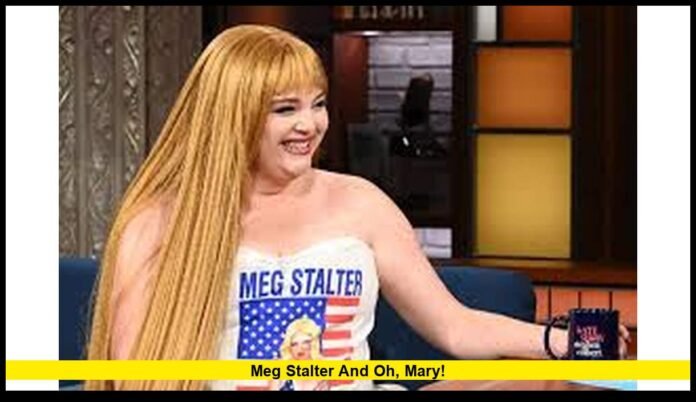

The surge in searches for “meg stalter oh mary” highlights one of the most interesting entertainment trends of 2026: the growing crossover between internet comedy culture and modern Broadway success stories. Fans of Meg Stalter’s wildly unpredictable comedic style are increasingly paying attention to Oh, Mary!, the hit theatrical production that has become one of the most talked-about comedy events in America. Together, they represent a new era of entertainment where eccentric humor, theatrical chaos, and fearless performances are connecting with audiences across television, social media, streaming, and live theater.
Meg Stalter has spent the last several years transforming herself from an online comedy favorite into one of the most recognizable comedic performers in mainstream entertainment. Meanwhile, Oh, Mary! continues building momentum as a cultural phenomenon that has expanded far beyond the Broadway community. The growing overlap between these fan bases has fueled nonstop conversation online, with audiences searching for updates, performances, casting rumors, and comedy news tied to both names.
Entertainment fans are increasingly drawn toward projects that feel original, emotionally exaggerated, and completely unpredictable. That demand is helping performers like Stalter and productions like Oh, Mary! dominate cultural conversations in ways that traditional comedy projects often cannot.
Meg Stalter’s Rise From Internet Star to Mainstream Comedy Force
Few comedians in recent years have experienced a career trajectory quite like Meg Stalter’s.
Before becoming a familiar face on television and red carpets, Stalter developed a devoted following through short-form online comedy videos that showcased her unusual approach to character performance. Her sketches often featured hilariously awkward personalities trying desperately to appear confident while slowly unraveling in front of viewers.
That style immediately stood out.
At a time when many comedians focused on polished stand-up clips or traditional sketch comedy, Stalter leaned fully into discomfort, chaos, and emotional unpredictability. Her characters often behaved with complete confidence even when every interaction around them was clearly falling apart.
Audiences connected strongly with that energy.
Her breakthrough into mainstream television came through Hacks, where she played Kayla, an eccentric and wildly inappropriate assistant who quickly became one of the show’s most memorable characters. While Hacks already had critical acclaim and a strong fan base, Stalter’s performance introduced a different comedic rhythm that viewers instantly embraced.
Fans praised her ability to steal scenes with exaggerated facial expressions, awkward pauses, chaotic delivery, and emotional intensity. Those qualities helped turn her into one of comedy’s fastest-rising performers.
As her visibility increased, so did opportunities across entertainment.
Over the past year, Stalter has appeared at major industry events, fashion showcases, comedy festivals, and television appearances while continuing to maintain the offbeat comedic personality that made audiences love her in the first place. Her social media presence also remains a major part of her appeal, allowing her to stay directly connected with fans while continuing to create viral comedic moments.
Unlike many performers who soften their style after reaching mainstream success, Stalter has remained committed to the bizarre comedic sensibility that first made her popular online.
That authenticity continues to resonate with audiences.
Why Oh, Mary! Became One of Broadway’s Biggest Comedy Hits
At the same time Meg Stalter’s profile continued rising, Oh, Mary! exploded into one of the most celebrated stage productions in recent memory.
The show quickly became known for its absurd humor, theatrical unpredictability, and outrageous reinterpretation of historical figures. Instead of presenting a traditional historical drama, the production embraced complete comedic chaos, transforming Mary Todd Lincoln into a hilariously exaggerated central character navigating emotional instability, frustration, and theatrical absurdity.
The result immediately captured audience attention.
Broadway has seen successful comedies before, but Oh, Mary! arrived with a distinctly modern comedic voice that felt connected to internet humor, alternative comedy scenes, and contemporary character-driven performance styles.
The production’s unconventional tone helped attract younger audiences who may not normally follow theater productions closely. Social media discussions, viral audience reactions, and celebrity endorsements helped fuel ticket demand and national interest.
People who had never paid attention to Broadway suddenly wanted to know more about the show.
One reason for its success is that Oh, Mary! refuses to behave like a conventional stage comedy. The performances are intentionally exaggerated, emotionally explosive, and completely committed to absurdity. That level of theatrical commitment creates an experience audiences describe as unpredictable and exhilarating.
The production also arrived during a time when audiences increasingly crave entertainment that feels strange, bold, and different from formula-driven studio projects.
That timing worked perfectly in the show’s favor.
**Why Fans Keep Connecting Meg Stalter and Oh, Mary! **
Although Meg Stalter has not officially joined the production, the association between her comedic style and Oh, Mary! continues growing stronger online.
The reason is simple: both represent a similar evolution in modern comedy.
Traditional mainstream comedy often relies on realism, sarcasm, or observational humor. But performers like Stalter and productions like Oh, Mary! succeed because they embrace emotional exaggeration, awkward theatricality, and larger-than-life character work.
Their comedy feels intentionally messy.
That messiness creates unpredictability, and unpredictability is becoming one of the most valuable qualities in entertainment today.
Fans who love Meg Stalter’s performances often discover Oh, Mary! and immediately recognize similar comedic instincts. Likewise, theater audiences who enjoy Oh, Mary! frequently gravitate toward comedians whose work shares that same fearless energy.
The growing popularity of search terms connected to “meg stalter oh mary” reflects how audiences increasingly view entertainment through broader cultural connections rather than strict categories like television, theater, or internet comedy.
Modern audiences move fluidly between all of them.
The Rise of Absurdist Comedy in Mainstream Entertainment
One of the biggest reasons these names remain culturally connected is the growing popularity of absurdist comedy.
For years, mainstream entertainment leaned heavily toward grounded realism and carefully structured storytelling. Today, audiences appear far more interested in projects willing to take creative risks and embrace emotional chaos.
Absurdist comedy has become increasingly influential across television, streaming, theater, and social media.
Meg Stalter’s performances thrive within that environment because they reject traditional comedic restraint. Her characters often spiral emotionally in ways that feel both deeply uncomfortable and incredibly funny.
Similarly, Oh, Mary! embraces theatrical absurdity without apology.
The production exaggerates emotions, behaviors, and interactions to intentionally ridiculous levels. Rather than trying to make characters relatable in a traditional sense, it pushes them toward emotional extremes that audiences find hilarious precisely because they feel so outrageous.
This approach has become increasingly attractive to younger viewers who grew up consuming internet comedy, meme culture, surreal online videos, and experimental digital entertainment.
In many ways, Oh, Mary! feels like internet humor translated into live theater.
That crossover appeal explains why so many online users connect it with comedians like Stalter.
Broadway’s Relationship With Internet Culture Has Changed
The success of Oh, Mary! also demonstrates how Broadway itself has evolved.
For decades, theater audiences were often viewed as separate from mainstream pop culture conversations. Today, Broadway productions can trend online alongside television shows, celebrity gossip, streaming releases, and viral social media moments.
That shift has transformed how productions gain attention.
Instead of relying solely on reviews and traditional advertising, shows now build momentum through clips, memes, audience reactions, celebrity visits, and social sharing. Theater has become much more digitally connected.
Oh, Mary! benefited enormously from this environment.
Audience members posted reactions describing the show as chaotic, hilarious, shocking, and unlike anything else on Broadway. Those reactions helped attract younger viewers eager to experience the production for themselves.
As online interest grew, celebrity attendance and entertainment industry support increased even further.
This broader cultural visibility helped turn Oh, Mary! into more than just a successful stage production. It became a recognizable entertainment event.
Meg Stalter’s Influence on Modern Character Comedy
Another reason Meg Stalter continues attracting attention is her influence on contemporary character-based comedy.
Many younger comedians now embrace exaggerated personalities, emotionally unstable characters, and awkward improvisational energy in ways that feel inspired by performers like Stalter.
She helped popularize a comedic style that intentionally blurs confidence and insecurity.
Her characters often appear desperate to impress others while simultaneously sabotaging themselves in spectacular ways. That emotional contradiction creates tension that audiences find deeply entertaining.
Importantly, Stalter commits fully to every performance choice.
There is no sense that she is trying to appear cool or detached. Her comedy works because she embraces total vulnerability and complete ridiculousness at the same time.
That fearless commitment has become increasingly influential in modern comedy spaces.
It also mirrors the kind of theatrical commitment audiences celebrate in Oh, Mary!.
Entertainment Audiences Want Originality Again
Another major reason these names continue trending together is audience fatigue with repetitive entertainment formulas.
Viewers increasingly complain about endless reboots, franchise expansions, and overly familiar storytelling structures. In response, projects that feel genuinely original stand out more than ever.
Both Meg Stalter and Oh, Mary! benefit from this shift.
Stalter’s performances rarely feel predictable. Even during interviews or live appearances, audiences never fully know what energy she will bring into a moment.
Similarly, Oh, Mary! succeeds because it feels unlike anything else currently dominating Broadway.
That originality creates excitement.
Entertainment consumers are more likely to discuss, share, and recommend projects that surprise them. In the digital age, surprise often translates directly into online visibility.
This dynamic helps explain why online conversations surrounding “meg stalter oh mary” continue expanding throughout 2026.
The Future of Comedy Looks Increasingly Theatrical
Comedy itself may be entering a more theatrical era overall.
As streaming content becomes increasingly crowded, performers and productions capable of creating visually memorable, emotionally exaggerated experiences are standing out more easily.
Meg Stalter represents this shift on the television and digital comedy side.
Oh, Mary! represents it in live theater.
Both succeed because they understand modern audiences want more than simple punchlines. They want emotional chaos, larger-than-life characters, unpredictable energy, and performances bold enough to feel dangerous or unstable in the best possible way.
That appetite for theatricality appears likely to continue shaping entertainment trends moving forward.
Studios, producers, streaming platforms, and theater companies are already paying closer attention to performers capable of generating passionate fan engagement through originality alone.
Few current comedy figures embody that movement more clearly than Meg Stalter.
Likewise, few theatrical productions capture it better than Oh, Mary!.
Their growing cultural connection reflects a broader transformation happening across the entertainment industry right now — one where weirdness, boldness, and unpredictability are finally becoming mainstream strengths rather than niche artistic risks.
Comedy fans can expect even more conversation around breakout performers and unconventional productions as 2026 continues to reshape what mainstream entertainment looks like.