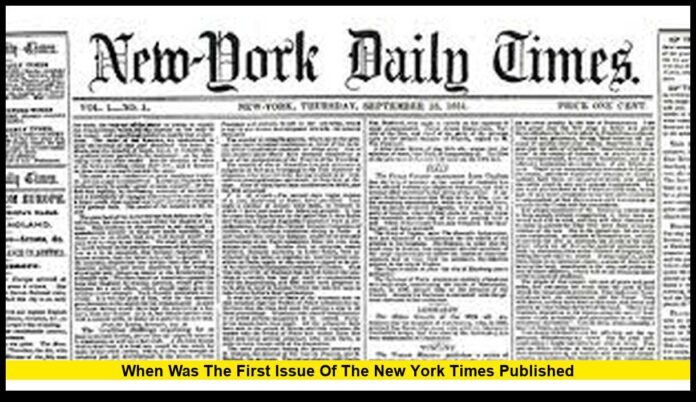

For readers searching when was the first issue of the new york times published, the historic answer dates back to September 18, 1851. That was the day the publication released its very first edition under the name The New-York Daily Times, beginning a journey that would eventually transform it into one of the most influential media organizations in the world. What started as a four-page newspaper in lower Manhattan quickly became a defining force in American journalism, political reporting, and public conversation.
The launch came during a period of explosive growth in New York City. Immigration surged, businesses expanded rapidly, and readers demanded faster and more reliable access to information. Against that backdrop, founders Henry Jarvis Raymond and George Jones introduced a publication built around serious reporting and editorial discipline rather than sensational headlines.
Their approach stood out immediately in a crowded newspaper market filled with aggressive competition.
The founders believed audiences wanted more than gossip and political attacks. They aimed to build a newspaper focused on credibility, business coverage, government affairs, and carefully written reporting that appealed to thoughtful readers.
Readers interested in media history continue to revisit this moment because the newspaper’s launch reflects the broader evolution of journalism in the United States.
American journalism history is filled with dramatic turning points, and this 1851 debut remains one of the most important. Keep reading for more fascinating stories that shaped modern media and public life.
The Origins of a Newspaper That Changed America
Before becoming globally recognized, the publication started as a risky business venture. Henry Jarvis Raymond had already established himself as a talented journalist and political figure before deciding to launch a new daily paper in New York City.
Raymond partnered with George Jones, a former banker known for financial discipline and strong business instincts. Together, they raised investment capital and formed Raymond, Jones & Company in 1851.
The timing was ambitious.
New York already had powerful newspapers competing fiercely for readers. Several earlier publications carrying similar names had failed. Entering that market required confidence, funding, and a distinct editorial identity.
Raymond believed many newspapers relied too heavily on outrage and sensational reporting. His vision centered on calm analysis, broad coverage, and trustworthy journalism.
That philosophy shaped the newspaper from its very first edition.
The Historic First Issue on September 18, 1851
The inaugural issue appeared on September 18, 1851, from a basement office at 113 Nassau Street in Manhattan. At the time, the publication carried the title The New-York Daily Times.
The newspaper sold for one cent per copy.
That price mattered because penny newspapers had revolutionized journalism during the mid-19th century. Affordable pricing expanded readership beyond wealthy elites and allowed working-class Americans greater access to daily news.
The first edition included coverage of:
- Politics
- Commerce
- Shipping activity
- Local events
- International developments
- Advertisements
- Editorial commentary
One of the most important features in the debut edition was its opening editorial statement explaining the paper’s mission.
The founders pledged to avoid reckless sensationalism while still covering important public issues directly and honestly. That commitment became central to the newspaper’s identity and reputation in later decades.
Early readers responded positively.
Within a short period, circulation increased rapidly, helping the paper establish itself in the competitive New York newspaper industry.
Why the Original Name Was Different
Modern audiences recognize the publication as The New York Times, but the first editions carried a different version of the name.
The original title was The New-York Daily Times.
In 1857, the paper shortened the name to The New-York Times. Eventually, the hyphen disappeared, creating the modern title used today.
Those naming conventions reflected common publishing styles of the era. Many newspapers in the 1800s used hyphenated city names and descriptive titles emphasizing publication frequency.
Despite the branding changes over time, the publication maintained its focus on reporting and editorial standards.
New York City’s Newspaper Wars
Launching a newspaper in 1851 New York was incredibly difficult.
The city already had influential publications competing aggressively for circulation, advertising revenue, and political influence. Editors frequently attacked rival papers in print, creating a fierce media environment.
Some newspapers emphasized crime reporting and scandal to attract readers quickly. Others aligned heavily with political parties and used emotional rhetoric to energize supporters.
Raymond wanted a different approach.
He believed readers would support a publication that balanced speed with reliability and seriousness. Instead of focusing entirely on sensational stories, the paper emphasized public affairs, financial reporting, and measured editorial writing.
That strategy helped the newspaper stand apart from competitors.
It also laid the groundwork for the publication’s long-term credibility.
The Role of Technology in Early Journalism
The newspaper launched during a period of rapid technological transformation in America.
Railroads expanded transportation networks across the country. Telegraph systems dramatically accelerated communication speeds. Printing technology improved production efficiency and circulation capabilities.
These developments changed how newspapers gathered and distributed information.
Before telegraph systems became widespread, news often traveled slowly by ship, horseback, or train. Reports from distant regions could take days or weeks to arrive.
As communication technology improved, newspapers gained the ability to deliver more timely information to readers.
The publication benefited from those changes and invested heavily in news gathering.
Its early growth reflected the increasing importance of daily journalism in American life.
Civil War Coverage Elevated the Newspaper’s Influence
One of the newspaper’s most significant periods came during the American Civil War.
The publication devoted major resources to battlefield reporting and political coverage during the conflict. Correspondents gathered information directly from military fronts and government officials, giving readers detailed updates about rapidly changing events.
The war transformed journalism nationwide.
Americans depended heavily on newspapers for information about military campaigns, political leadership, and national developments. Publications that delivered accurate and timely coverage gained substantial influence.
The newspaper’s Civil War reporting strengthened its reputation as a reliable source of information.
That era also expanded the paper’s national readership far beyond New York City.
Investigative Reporting and the Boss Tweed Scandal
The newspaper earned additional prominence during the 1870s through its investigation into corruption connected to William “Boss” Tweed and Tammany Hall.
Reporters uncovered extensive financial abuses involving New York City government operations.
The publication printed detailed records exposing misuse of public funds, drawing national attention to political corruption in the city.
Those investigations became one of the defining moments in American investigative journalism.
The reporting demonstrated the growing power of newspapers to challenge influential political figures and hold public officials accountable.
Historians still view the coverage as a landmark achievement in watchdog journalism.
Adolph Ochs and the Modern Transformation
By the late 1800s, the newspaper faced major financial challenges despite its growing reputation.
Everything changed in 1896 when Adolph Ochs purchased the struggling publication.
Ochs introduced significant reforms aimed at rebuilding circulation and strengthening public trust. He focused heavily on high editorial standards and responsible reporting practices.
Under his leadership, the newspaper adopted the famous slogan:
“All the News That’s Fit to Print.”
The phrase became closely associated with the paper’s identity and broader journalism values.
Ochs helped transform the publication into a nationally influential institution with expanding international reach.
The Newspaper’s Expansion Into a Global Brand
From its modest 1851 origins, the newspaper gradually evolved into a worldwide media organization.
Over the decades, it adapted through multiple technological revolutions, including:
- Radio broadcasting
- Television competition
- Digital publishing
- Online subscriptions
- Mobile platforms
- Multimedia storytelling
The ability to evolve with changing technology helped the publication remain influential across generations.
Today, the organization reaches millions of readers around the globe through digital platforms, podcasts, apps, videos, and print editions.
Despite those transformations, historians often point back to the publication’s earliest mission statement as foundational to its long-term identity.
Why Americans Still Search This Historic Question
Interest in historical journalism continues to grow as readers explore the origins of major institutions that shaped public life.
Questions about when was the first issue of the new york times published frequently appear in searches tied to media history, journalism education, and historical anniversaries.
The date matters because it marks more than the launch of a newspaper.
It represents the emergence of a reporting philosophy centered on credibility, editorial discipline, and broad public coverage during a transformative era in American society.
For historians and journalism students, the 1851 launch symbolizes a major shift in how news organizations approached reporting and audience trust.
Journalism Then and Now
The media landscape today looks dramatically different from the newspaper world of the 1850s.
Modern audiences receive information instantly through smartphones, streaming platforms, podcasts, and social media feeds. News organizations compete globally in real time for reader attention.
Yet many challenges facing journalism today resemble the issues newspaper founders confronted in the 19th century.
Key questions still shape the industry:
- How should publications balance speed and accuracy?
- What responsibilities do journalists have during political division?
- How can media organizations maintain public trust?
- What business models support quality reporting?
Those questions existed in different forms even when the first issue appeared in 1851.
The newspaper’s founders believed readers valued dependable reporting over exaggerated headlines. That belief helped establish a lasting identity during one of the most competitive periods in American publishing history.
The Lasting Significance of September 18, 1851
September 18, 1851, remains one of the defining dates in American journalism.
A small four-page penny newspaper launched from a Manhattan office and gradually became one of the most recognizable publications in the world.
The founders could not have predicted the scale of the newspaper’s future influence across politics, culture, business, and international affairs.
Still, many of the values outlined in the debut issue continue to shape discussions about journalism today.
The story behind the newspaper’s first publication also reflects the broader story of America itself during the 19th century — rapid urban growth, technological innovation, fierce business competition, and rising demand for information.
For readers exploring media history, the launch of The New-York Daily Times offers a fascinating look at how modern journalism began taking shape in the United States.
As the media industry continues evolving in the digital age, the legacy of that first issue from 1851 remains deeply connected to ongoing conversations about trust, reporting standards, and the future of news.
What do you think was the most important turning point in American journalism history? Share your thoughts and keep following for more deep historical features and trending stories.