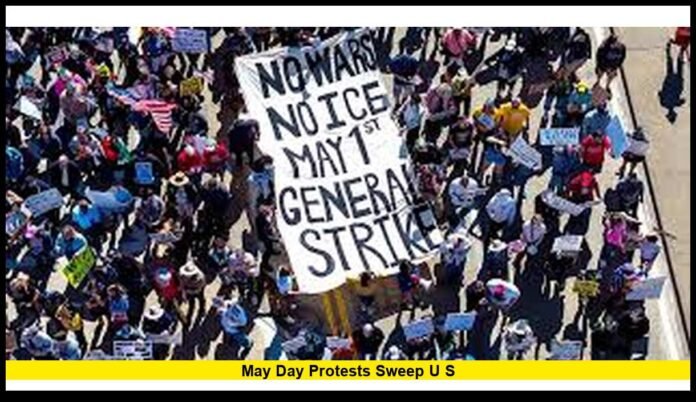

The scale and intensity of this year’s may day protests have captured national attention, with demonstrations unfolding across the United States as workers, students, and advocacy groups unite around economic concerns, labor rights, and social issues. From coast to coast, May 1 has transformed into a day of coordinated action, signaling a renewed wave of civic participation and collective organizing.
Cities large and small reported gatherings that ranged from peaceful marches to organized walkouts and community-led rallies. What makes this moment stand out is not just the number of participants, but the breadth of voices involved—union members, young people, immigrant communities, and local organizers all stepping forward with shared concerns about wages, opportunity, and economic stability.
A Nationwide Call for Action Gains Momentum
Across the country, organizers promoted a unified message encouraging people to step away from their daily routines. The concept of temporarily halting work, school, and spending gained traction in many areas, drawing attention to how much the economy depends on everyday participation.
In urban centers, thousands gathered in public squares and along major streets. In suburban and smaller communities, local rallies reflected similar concerns, often organized through grassroots networks. The widespread participation points to a broader shift in how Americans are engaging with labor and economic issues.
The movement’s decentralized nature allowed different regions to highlight local concerns while still contributing to a unified national effort. This balance between local priorities and nationwide coordination gave the demonstrations a unique and powerful presence.
Economic Pause Strategy Draws National Attention
One of the most talked-about elements of this year’s demonstrations is the push for a collective pause in economic activity. Participants were encouraged to refrain from working, attending classes, or making purchases for the day.
Supporters say this strategy underscores the influence of workers and consumers in shaping economic outcomes. By stepping back simultaneously, participants aimed to create a visible impact that extends beyond traditional protests.
While participation levels varied, the idea itself sparked widespread conversation. Some small businesses chose to close in solidarity, while others acknowledged the significance of the day even as they remained open. In several areas, reduced foot traffic and quieter commercial districts reflected the message organizers hoped to send.
👉 Follow along as developments continue to unfold and communities share their experiences from across the country.
Key Issues Uniting Diverse Groups
The demonstrations brought together a wide range of concerns, reflecting the evolving priorities of participants in today’s economic and social climate.
Rising Cost of Living
Many protesters highlighted the increasing cost of essentials such as housing, groceries, and utilities. Participants voiced concerns about keeping up with expenses despite working full-time jobs, pointing to a growing gap between wages and living costs.
Fair Wages and Workplace Conditions
Calls for higher wages and improved working conditions remained central to the demonstrations. Workers from multiple industries emphasized the need for stability, safety, and respect in the workplace.
Immigration and Worker Protections
Immigrant communities played a significant role in organizing and participating in rallies. Demonstrators called for policies that protect workers regardless of immigration status, emphasizing the contributions of immigrant labor to the economy.
Access to Education and Opportunity
Students and educators used the platform to address issues related to education funding, student debt, and future job prospects. Many young participants connected these concerns to broader economic challenges.
Major Cities See Significant Turnout
Chicago
Chicago once again served as a major focal point for May Day activities. Large crowds gathered for marches and rallies, reflecting the city’s deep-rooted connection to labor history. Educators and students joined union members in calling for policy changes and economic reforms.
Los Angeles
In Los Angeles, demonstrations emphasized immigrant rights alongside labor issues. Participants filled streets with signs and chants, creating a vibrant display of community solidarity.
New York City
New York City saw a series of coordinated events throughout the day, including marches, speeches, and cultural performances. The city’s diverse population was reflected in the wide range of voices represented.
Houston and Dallas
Texas cities hosted a mix of marches and community gatherings, with participants highlighting both local and national concerns. The events drew families, workers, and students alike.
Youth Participation Signals a Generational Shift
A defining feature of this year’s demonstrations is the visible presence of young people. High school and college students organized walkouts, participated in rallies, and used social platforms to amplify their message.
This surge in youth involvement suggests that labor and economic issues are resonating with a new generation. Many young participants see these challenges as directly connected to their futures, from job opportunities to financial stability.
Their participation also brought new energy and creativity to the demonstrations, with art, music, and digital engagement playing a larger role than in previous years.
Community-Led Organizing Strengthens Local Impact
Grassroots organizations were instrumental in coordinating events at the local level. Community leaders worked to ensure that demonstrations addressed specific regional concerns while aligning with the broader national movement.
In many areas, rallies included not only speeches but also resource-sharing events, cultural performances, and opportunities for community dialogue. This approach helped transform protests into spaces for connection and collaboration.
The emphasis on community engagement highlights a shift toward more inclusive and accessible forms of activism.
Business and Workplace Reactions Vary
The response from businesses and employers varied widely. Some companies maintained normal operations, while others adjusted schedules or acknowledged the significance of the day.
Small businesses in certain neighborhoods chose to close as a sign of solidarity, while others supported employees who wanted to participate in demonstrations. The varied responses reflect the complexity of balancing economic activity with civic engagement.
In workplaces where employees participated in walkouts, the day served as a visible reminder of worker influence and collective action.
Historical Roots Add Meaning to Modern Movement
May Day has long been associated with the fight for worker rights, tracing back to the late 19th century and the push for an eight-hour workday. Events in Chicago played a pivotal role in establishing May 1 as a global day of labor solidarity.
Today’s demonstrations build on that legacy while addressing modern challenges. Issues such as gig work, rising living costs, and economic inequality reflect the changing nature of work in the 21st century.
By connecting past struggles with present-day concerns, participants continue to draw inspiration from the history of labor movements.
Global Context Reinforces Shared Concerns
The demonstrations in the United States are part of a broader international wave of May Day activities. Around the world, workers and activists marked the day with rallies focused on wages, inflation, and job security.
This global perspective highlights the interconnected nature of economic challenges. Participants often referenced similar concerns across different countries, reinforcing a sense of shared experience.
The international dimension adds weight to the message of solidarity, emphasizing that many of these issues extend beyond national borders.
A Broader Coalition Shapes the Movement
One of the most notable aspects of this year’s demonstrations is the diversity of groups involved. Labor unions, student organizations, immigrant advocacy groups, and community networks all contributed to the day’s events.
This broad coalition reflects a shift toward more inclusive activism, where multiple issues intersect and reinforce one another. The collaboration between different groups has strengthened the overall impact of the movement.
By bringing together varied perspectives, the demonstrations highlight the interconnected nature of economic, social, and political concerns.
Looking Ahead: Momentum Beyond May 1
Organizers have indicated that the demonstrations are part of a longer-term effort to build awareness and drive change. The level of participation and coordination suggests that these issues will remain in focus in the coming months.
Future actions may build on the momentum generated by this year’s events, with continued emphasis on community engagement and collective organizing.
As discussions around wages, costs, and opportunity continue, the visibility of these demonstrations may influence public conversations and decision-making at multiple levels.
Public Attention and Ongoing Debate
The widespread participation has sparked conversations across the country. Supporters view the demonstrations as an important expression of civic engagement, while others question the impact of large-scale economic pauses.
Regardless of perspective, the events have succeeded in bringing attention to key issues affecting millions of Americans. The discussions that follow may shape how these concerns are addressed moving forward.
Conclusion: A Defining Day for Collective Action
This year’s may day protests reflect a significant moment in the evolution of labor and social activism in the United States. With strong participation, diverse representation, and a focus on both long-standing and emerging issues, the demonstrations signal a growing desire for change.
The combination of grassroots organizing, youth involvement, and coordinated action has created a powerful platform for raising awareness and fostering dialogue.
As communities reflect on the day’s events, one thing is clear: the conversation around work, fairness, and economic opportunity is far from over.
What are your thoughts on the nationwide demonstrations and their impact? Join the conversation and share your perspective below.