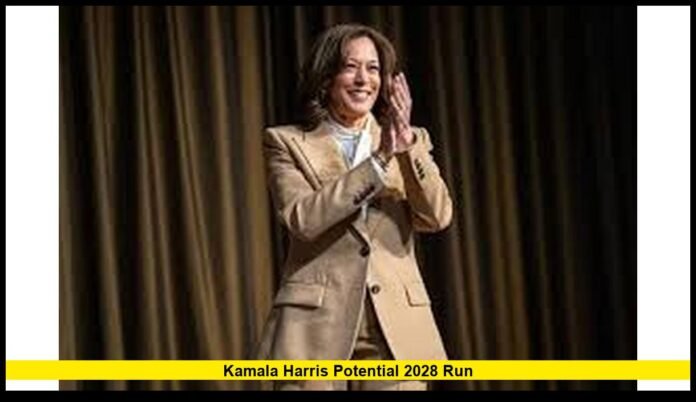

The discussion around a possible kamala harris potential 2028 run is gaining traction across the United States as Kamala Harris steps back into the national political spotlight. In recent public appearances, she has made it clear that she is seriously weighing her options for the next presidential election cycle, keeping political observers and voters closely focused on her next move.
Her statements have been careful and measured, but unmistakable. Harris has openly acknowledged that she is considering another run for the presidency, while emphasizing that no final decision has been made. That balance—between openness and caution—has kept her firmly in the conversation without locking her into a specific timeline.
Renewed Public Appearances Signal Political Intent
In recent weeks, Harris has increased her visibility through major speaking engagements, public forums, and party events. These appearances are not random. They reflect a deliberate effort to reconnect with voters and reinforce her presence within the Democratic Party.
At a prominent civil rights gathering, Harris addressed the possibility of running again. Her response was straightforward: she is thinking about it. The crowd reaction was immediate and enthusiastic, with supporters encouraging her to pursue another bid. Moments like these highlight her continued appeal among core Democratic constituencies.
Her speeches have focused on themes that defined her earlier campaigns—defending democracy, protecting voting rights, and addressing economic inequality. By returning to these issues, Harris is reestablishing the policy framework that could shape a future campaign.
If you’re following the early developments of the next presidential race, keep checking back as new updates continue to emerge.
Strategic Travel Points to Early Primary Focus
Harris’s travel schedule has drawn attention from political analysts. She has made appearances in key states that traditionally play an important role in presidential primaries. These visits are widely viewed as an early effort to rebuild grassroots connections and assess voter sentiment.
South Carolina, in particular, has been a focal point. The state holds significant influence in Democratic primaries, and Harris’s presence there signals an understanding of its importance. Engaging with voters in such locations allows her to test messages, strengthen alliances, and lay the groundwork for potential campaign infrastructure.
Her interactions during these visits have been notably direct. Rather than avoiding questions about her future, she has acknowledged them while maintaining flexibility. This approach allows her to stay relevant without committing prematurely.
Early Polling Reflects Strong Position Within the Party
Even before any formal announcement, Harris is already performing strongly in early hypothetical polls among Democratic voters. Surveys conducted in recent months show her leading or ranking among the top contenders in a potential primary field.
Several factors contribute to this early advantage:
- High national name recognition
- Experience at the highest levels of government
- A loyal base of support among key voter groups
Polling at this stage is not predictive of final outcomes, but it provides insight into how voters currently view potential candidates. For Harris, the numbers suggest she remains a central figure within the party.
Decision Not to Pursue California Governorship Keeps Path Clear
One of the most important political decisions influencing the kamala harris potential 2028 run narrative was her choice not to enter the race for governor of California. That decision preserved her flexibility and allowed her to remain focused on national opportunities.
Running for governor would have required a long-term commitment that could have complicated any future presidential ambitions. By stepping away from that option, Harris kept the path open for a return to the national stage.
This move was widely interpreted as a strategic decision, signaling that she is prioritizing broader political possibilities rather than shifting to state leadership.
Maintaining Influence Beyond the Vice Presidency
Since leaving office, Harris has continued to play an active role in public life. She has engaged in speaking tours, policy discussions, and advocacy efforts focused on issues such as civil rights, economic opportunity, and global partnerships.
Her post-vice presidency period has not been one of retreat. Instead, it has been marked by consistent engagement with both domestic and international audiences. These efforts have helped her maintain visibility and credibility as a national leader.
In addition to public appearances, Harris has worked to shape her narrative through writing and storytelling, reflecting on her experiences and outlining her vision for the future. This approach allows her to connect with voters on a more personal level while reinforcing her political identity.
Support From Core Democratic Constituencies Remains Strong
Harris continues to draw strong support from key Democratic voter groups, particularly Black voters and women, who played a crucial role in her previous campaigns. Her ability to energize these constituencies remains a significant strength.
At recent events, audience reactions have demonstrated enthusiasm and loyalty. Supporters have consistently encouraged her to run again, reflecting a belief that she still represents an important voice within the party.
This base of support could prove decisive in a primary election, where turnout and enthusiasm often play a critical role.
A Competitive Field Is Beginning to Form
While Harris is a leading figure, she is not the only Democrat considering a run. The early stages of the 2028 election cycle are already seeing increased activity from several prominent political figures.
This emerging competition adds another layer of complexity to Harris’s decision-making process. Entering a crowded field would require a strong strategy, clear messaging, and the ability to distinguish herself from other candidates.
At the same time, her experience and national profile give her a significant advantage over many potential challengers.
Measured Messaging Keeps Options Open
Harris has been consistent in how she discusses her future. She has avoided making definitive statements while acknowledging that she is seriously considering another campaign.
This measured approach serves several purposes:
- It allows her to gauge public reaction
- It provides time to build organizational support
- It keeps political opponents uncertain
By not rushing into an announcement, Harris retains control over the timing and direction of her potential campaign.
Key Issues Likely to Shape a Future Campaign
If Harris decides to run, several key issues are expected to define her platform. Based on her recent speeches and past positions, these include:
- Protecting democratic institutions
- Expanding access to voting
- Addressing economic inequality
- Strengthening healthcare systems
- Advancing climate initiatives
Her focus on these topics aligns with broader Democratic priorities and reflects the concerns of many voters heading into the next election cycle.
Challenges That Could Shape the Race
Despite strong early positioning, a potential campaign would come with challenges. Harris would need to address voter concerns, unify different factions within the party, and build momentum in a competitive environment.
Key challenges include:
- Reintroducing herself to voters in a new political context
- Responding to criticism from previous campaigns
- Competing against both established and emerging candidates
Navigating these challenges will require a disciplined strategy and effective communication.
Why Her Decision Matters Nationally
The significance of Harris’s potential candidacy extends beyond her personal ambitions. As a former vice president, her entry into the race would immediately reshape the Democratic primary landscape.
Her presence could influence:
- Fundraising dynamics
- Media coverage
- Policy debates
Other candidates may adjust their strategies based on whether she decides to run, making her decision a pivotal moment in the early stages of the election cycle.
What to Watch in the Coming Months
As the political landscape continues to evolve, several indicators may provide insight into Harris’s plans:
- Increased travel to early primary states
- Expanded political endorsements
- Additional high-profile speaking engagements
- Changes in campaign staffing or organization
Each of these developments could signal a shift from consideration to action.
A Decision Still Ahead
For now, Harris remains in a position of possibility rather than commitment. The kamala harris potential 2028 run continues to generate discussion, but no official campaign has been announced.
Her next steps will be closely watched by voters, party leaders, and political observers alike. Whether she decides to run or not, her influence on the direction of the Democratic Party and the broader political conversation is already evident.
As the path to the next presidential election takes shape, all eyes remain on Harris and the choices she will make in the months ahead.
Stay connected for ongoing updates as the race continues to develop and new details emerge.
What are your thoughts on her possible return to the presidential race? Join the conversation and share your perspective below.