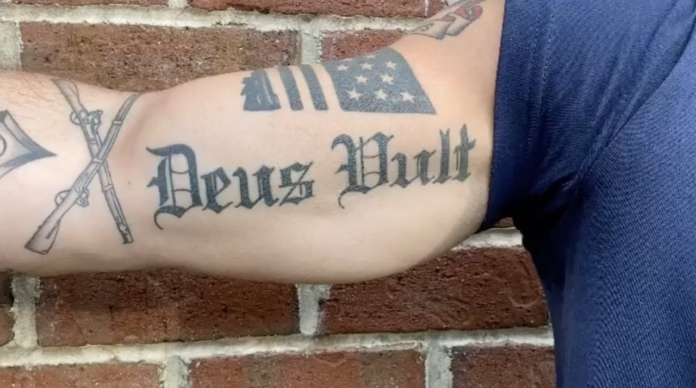

The topic of pete hegseth tattoos continues to gain traction as viewers and commentators take a closer look at the personal symbolism carried by Pete Hegseth. What might typically remain a private form of expression has, in his case, become part of a broader national discussion—blending identity, history, and public perception.
Hegseth’s tattoos are not subtle, nor are they hidden. Their visibility on national television has transformed them into a talking point that goes beyond aesthetics, touching on deeper themes like faith, military service, and how symbols are interpreted in modern America.
If you follow political culture or media personalities, this is one of those stories where personal choices intersect with public debate in a meaningful way.
Why the Conversation Around His Tattoos Keeps Growing
Unlike many figures in broadcast media, Hegseth does not present a neutral, image-controlled appearance. His tattoos are part of his identity, and that visibility naturally invites attention.
Several factors explain the ongoing interest:
- His role as a high-profile television personality
- The historical and religious depth of his tattoo designs
- The contrast between traditional media norms and personal expression
This combination has made his tattoos more than just body art—they’ve become a lens through which audiences interpret his beliefs and worldview.
If you’re tracking how cultural narratives evolve in media, stories like this offer valuable insight into shifting expectations.
Breaking Down Pete Hegseth’s Tattoos
Hegseth’s tattoos appear deliberate, each tied to a specific idea or influence rather than decorative design.
The Jerusalem Cross: A Symbol with Layers
One of the most recognized tattoos associated with Hegseth is the Jerusalem Cross. This historic Christian emblem features a central cross surrounded by four smaller ones.
Its meaning can vary depending on perspective:
- A representation of Christian faith
- A symbol tied to historical religious movements
- A broader expression of spiritual identity
Because of its deep historical roots, the symbol often sparks discussion about how past imagery is understood in today’s world.
“Deus Vult”: A Phrase That Carries History
Another widely discussed element is the phrase “Deus Vult,” which translates to “God wills it.”
Originating from medieval history, the phrase has taken on different interpretations over time. In Hegseth’s case, it has been described as a reflection of personal belief.
However, its historical associations mean it continues to generate strong reactions depending on how audiences interpret it.
Patriotism and Military Identity
Beyond religious symbolism, Hegseth’s tattoos also reflect his background in military service.
These include imagery tied to:
- National pride
- Service and sacrifice
- Personal experiences during his time in uniform
Such tattoos are widely recognized within military communities as expressions of identity and shared experience.
Tattoos and Military Culture: A Natural Connection
Tattoos have long been part of military life. For many service members, they serve as permanent reminders of key moments, values, or relationships formed during service.
Common themes include:
- Loyalty and brotherhood
- Faith and resilience
- Commemoration of missions or fallen comrades
Hegseth’s tattoos align with this tradition, though their prominence in a media setting gives them a different level of visibility.
Real-World Example
In many military units, tattoos are almost a rite of passage. They often mark deployment milestones or symbolize unity within a group. What’s different here is not the tattoos themselves—but the scale of the audience analyzing them.
Public Reaction: A Split Conversation
The response to pete hegseth tattoos reflects a broader divide in how people interpret symbolism.
Supporters Say
- Tattoos are a personal and meaningful form of expression
- His ink reflects authenticity rather than image management
- Public figures should not be expected to conform to outdated appearance standards
Many view his openness as a sign of consistency between his personal beliefs and public persona.
Critics Argue
- Certain symbols carry complex historical implications
- Public figures influence how those symbols are perceived
- Context matters when displaying historically rooted imagery
For critics, the concern is less about tattoos themselves and more about the broader meanings attached to specific designs.
How This Reflects Changing Social Norms
The attention surrounding Hegseth also highlights how attitudes toward tattoos have evolved in the United States.
A Shift Over Time
- Tattoos were once seen as unprofessional or unconventional
- Today, they are widely accepted across industries
- Even traditionally conservative spaces are adapting
Hegseth’s presence on television with visible tattoos illustrates how these norms continue to shift, even if debates still exist.
Meaning vs. Interpretation: The Core Issue
At the center of the discussion is a key tension—what a symbol means to the person wearing it versus how it is perceived by others.
Unique Perspective
A tattoo can hold deeply personal meaning, but once it becomes public, it is open to interpretation. That interpretation can change based on cultural context, historical awareness, or individual perspective.
This explains why the same tattoo can be seen as:
- A sign of faith by one viewer
- A historical reference by another
- A political statement by someone else
Comparing Public Figures and Personal Branding
Hegseth’s situation stands out when compared to other public figures.
- Athletes often use tattoos as part of their identity
- Entertainers incorporate them into their image
- News personalities typically maintain a more traditional appearance
By contrast, Hegseth blends elements of all three worlds—military, media, and personal expression—into one public image.
The Role of Media Exposure
Television plays a significant role in amplifying this discussion.
When someone appears regularly on screen:
- Visual details become more noticeable
- Public scrutiny increases
- Conversations spread quickly across social platforms
In this environment, even personal choices can take on broader cultural significance.
What Pete Hegseth’s Tattoos Represent Today
Ultimately, the conversation about pete hegseth tattoos is less about ink and more about what it represents.
It reflects:
- The intersection of personal belief and public life
- The evolving standards of professional appearance
- The power of symbols in shaping perception
As media continues to evolve, stories like this highlight how identity is communicated—and interpreted—in real time.
Looking Ahead: Will the Debate Continue?
Given the ongoing attention, it’s clear that discussions around symbolism, identity, and public figures are not going away anytime soon.
As more individuals bring their full identities into public spaces, similar conversations are likely to emerge across industries.
How do you interpret the meaning behind Pete Hegseth’s tattoos—do they reflect personal belief, or do they carry broader cultural significance? Join the discussion and follow for more insights into the stories shaping today’s headlines.