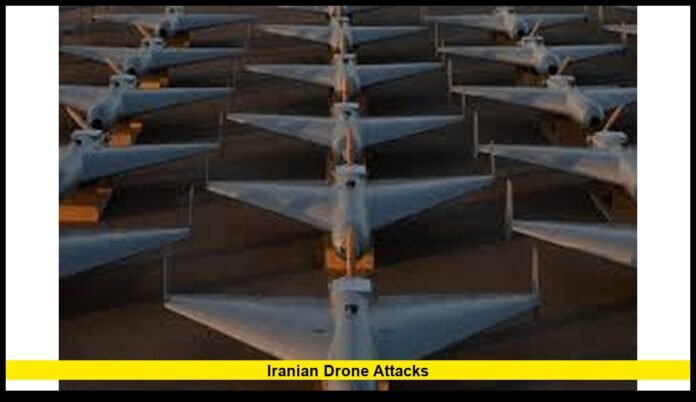

Iranian drone attack incidents have become a major focus in international security discussions as governments and military analysts track the growing role of Iranian-designed unmanned aerial vehicles in modern warfare. These attacks involve remotely operated or pre-programmed drones capable of surveillance, reconnaissance, and explosive strikes on military or infrastructure targets.
Over the past several years, Iranian drone technology has appeared in multiple conflict zones and regional security incidents. The systems have gained attention for their ability to travel long distances, operate at relatively low cost, and strike targets with precision. Defense officials across the Middle East, Europe, and North America continue monitoring the spread of these drones and their impact on regional stability.
The increasing use of unmanned aerial systems reflects a major shift in military strategy. Countries and armed groups now rely heavily on drones to conduct operations that once required manned aircraft or expensive missile systems.
Overview of Iran’s Drone Development Program
Iran’s drone program began several decades ago. Early development occurred during the Iran-Iraq war in the 1980s, when Iranian engineers experimented with small reconnaissance aircraft designed to observe enemy movements.
Over time, the program expanded significantly. Engineers began developing drones capable of carrying cameras, surveillance equipment, and eventually weapons.
Today, Iran produces a wide range of unmanned aircraft through domestic defense industries. These systems include surveillance drones, attack drones, and loitering munitions designed for one-way strike missions.
Key goals of the program include:
- Expanding long-range surveillance capability
- Developing precision strike technology
- Strengthening domestic weapons production
- Reducing reliance on foreign military suppliers
The program has evolved into one of the most extensive drone development efforts in the Middle East.
Major Drone Systems Associated With Iranian Military Operations
Several drone models linked to Iranian military technology have gained attention in global security discussions.
Shahed-136 Loitering Munition
The Shahed-136 is one of the most widely recognized drones associated with Iranian drone operations. It operates as a loitering munition, meaning the aircraft flies toward a target and detonates upon impact.
Key features include:
- Delta-shaped wings
- Propeller engine mounted at the rear
- Long operational range
- Built-in explosive payload
These drones often travel in groups, which increases the difficulty of interception.
Mohajer Series
The Mohajer family of drones includes both reconnaissance and armed variants.
These aircraft typically feature:
- Long wingspan for extended flight time
- High-resolution surveillance cameras
- Capability to carry guided munitions in some versions
Several versions of the Mohajer platform have appeared in military operations across different regions.
Ababil Drone Systems
The Ababil series represents another line of Iranian unmanned aircraft.
These drones are used for tasks such as:
- Intelligence gathering
- Target tracking
- Limited strike missions
The versatility of the platform has made it useful for multiple operational roles.
How Drone Attacks Are Conducted
Drone-based attacks follow a sequence of operational steps that differ from traditional air strikes.
The process usually begins with mission planning. Operators select a target and program the drone’s navigation system.
Launch Stage
The drone launches from a mobile launcher, runway, or concealed platform. Ground operators monitor the aircraft during the early phase of flight.
Navigation
Once airborne, the drone follows a programmed route using satellite navigation systems.
Some drones also transmit real-time data to operators who can adjust the flight path if necessary.
Target Identification
Surveillance drones use onboard cameras and sensors to identify targets.
Loitering drones typically follow pre-set coordinates.
Strike Phase
In attack missions, drones may release explosives or detonate upon impact.
These operations allow strikes without placing pilots in danger.
Why Drones Have Become Important Military Tools
Unmanned aerial vehicles offer several advantages compared with traditional aircraft and missile systems.
Key benefits include:
- Lower manufacturing costs
- Reduced risk to military personnel
- Ability to fly long distances
- High operational flexibility
- Capability for surveillance and attack in a single platform
Because of these advantages, drones have become central components of many military strategies.
Small drones also require less infrastructure than conventional aircraft.
This allows them to operate from remote or mobile launch sites.
Regions Where Drone Attacks Have Occurred
Drone technology connected to Iran has appeared in several regions experiencing military tension or active conflict.
Middle East Security Incidents
Several countries in the Middle East have reported drone attacks targeting military bases, airports, and energy infrastructure.
These incidents often prompt increased air defense activity and military alerts.
Regional governments continue strengthening defensive systems to protect critical facilities.
Eastern European Conflict
Iranian-designed drones have also appeared in the war between Russia and Ukraine. Ukrainian officials have reported repeated strikes using loitering drones aimed at energy infrastructure and military targets.
These attacks have drawn international attention because of the drones’ long range and relatively low cost.
Maritime Security Concerns
Drone incidents have also been reported near shipping routes in the Persian Gulf and Red Sea.
These areas serve as major global trade corridors.
Naval forces operating in the region monitor airspace closely to detect potential drone threats.
United States Response to Drone Threats
The United States views unmanned aerial systems as a growing challenge in global security.
Military planners continue developing strategies to detect and neutralize drone threats.
Air Defense Deployment
U.S. forces have deployed radar and missile defense systems in areas where drone attacks may occur.
These systems track aerial threats and intercept them before impact.
Counter-Drone Technology
New technologies help detect small drones that traditional radar systems may miss.
These systems include:
- Radio frequency detection equipment
- Electronic jamming systems
- Short-range missile interceptors
Many U.S. military bases now include specialized counter-drone defenses.
International Cooperation
The United States works with partner nations to strengthen drone detection and interception capabilities.
Joint exercises often focus on defending against unmanned aircraft.
Technology Used in Modern Attack Drones
Modern drones combine several advanced technologies.
Important components include:
- Satellite navigation systems
- Lightweight composite airframes
- Small fuel-efficient engines
- High-resolution imaging sensors
Navigation systems guide drones across long distances with high accuracy.
Composite materials reduce weight while maintaining structural strength.
These innovations allow drones to operate for extended periods while carrying payloads.
Challenges in Defending Against Drone Attacks
Defending against drones presents several technical challenges.
Traditional air defense systems were designed to intercept larger aircraft or ballistic missiles.
Small drones often fly at low altitude and produce limited radar signals.
These characteristics make detection more difficult.
Additional challenges include:
- Small radar signature
- Ability to fly close to terrain
- Slow but unpredictable flight patterns
- Capability to attack in groups
These factors have forced military planners to rethink air defense strategies.
Counter-Drone Defense Technologies
Governments and defense companies continue developing technologies specifically designed to counter unmanned aircraft.
Several approaches have emerged.
Electronic Warfare Systems
Electronic warfare tools disrupt communication signals between drones and their operators.
Signal interference may cause drones to lose navigation capability.
Laser-Based Weapons
Directed-energy systems use concentrated laser beams to destroy drones in flight.
These systems operate at high speed and do not rely on traditional ammunition.
Kinetic Interceptors
Missile systems designed for short-range defense can intercept drones approaching protected areas.
These systems protect infrastructure such as airbases and energy facilities.
Infrastructure and Economic Risks
Drone strikes can threaten critical infrastructure in several sectors.
Potential targets may include:
- Oil and gas facilities
- Power plants
- Military installations
- Transportation hubs
Damage to these facilities can disrupt economic activity and public services.
Energy infrastructure often receives special protection due to its importance to national economies.
Governments frequently increase security around these sites when drone threats rise.
Growing Influence of Drone Warfare
Drone warfare continues to transform military operations worldwide.
Advances in artificial intelligence and navigation technology may further increase the capabilities of unmanned aircraft.
Military strategists increasingly integrate drones into planning for surveillance, intelligence gathering, and precision strikes.
These systems can operate independently or alongside traditional aircraft.
As technology improves, drones will likely become even more prominent in global conflicts.
International Efforts to Limit Drone Proliferation
Many governments have begun discussing ways to control the spread of military drone technology.
Potential measures include:
- Export restrictions on drone components
- Monitoring supply chains for sensitive electronics
- Strengthening international arms agreements
However, drone technology has become widely accessible. This makes regulation difficult.
Many components used in drones also have civilian applications.
Balancing innovation with security remains a challenge for policymakers.
Future Outlook for Drone Security
Unmanned aircraft will likely remain central to military strategy in the coming years.
Rapid technological development continues to improve drone range, navigation accuracy, and payload capacity.
Security analysts expect increased investment in both offensive drone systems and defensive counter-drone technologies.
The topic of Iranian drone attack activity remains closely monitored by governments and military organizations because of the broader impact drones have on global security.
What are your thoughts on the growing role of drones in modern warfare and global security? Share your perspective and stay updated on this evolving topic.